A wig grip can feel secure and still be too tight. That is the product decision many shoppers struggle to make: is the pressure coming from the grip, the wig cap, a second liner, or the way the pieces sit together? For a small brand, the same uncertainty becomes a product-development problem. A single "one size fits most" claim does not tell you whether the fastening range, band width, edge finish, and closure position work across the people you serve.
Start with the wearer's actual setup, then change one layer at a time. If you are evaluating a sample, record the head circumference, wig construction, underlayer, closure position, and the point where discomfort begins. A grip should not be sold as a treatment for headaches or scalp symptoms. This guide offers a practical fit check, not medical advice or a guarantee that any design will feel comfortable for every wearer.
First identify what feels tight
People use "tight" to describe different sensations: pressure across the forehead, pinching at the temples, pulling behind the ears, a band that feels constrictive at the nape, or discomfort that builds after the wig has been on for a while. These clues are useful, but they do not diagnose the cause. One wearer asking whether a grip would help described a wig that felt comfortable at first and became painful as its elastic straps tightened with wear. Other wig wearers describe the opposite experience: a grip helps them avoid pulling the wig straps tight. Those are individual accounts, not controlled comparisons, but together they show why "add a grip" cannot be the only answer.
Before changing the product, note the exact location and timing. Does pressure begin as soon as the grip closes? Does it appear only after the wig is added? Does it worsen when glasses, a wig cap, or another liner is present? Write down what the wearer was using and how the closure was fastened. A useful report might say, "Pressure begins behind the right ear when the wig cap and grip are worn together," instead of simply, "The band is uncomfortable." That distinction points the next test toward a particular interface.
If a wearer experiences pain, numbness, skin irritation, or a worsening headache, remove the wig and grip rather than tightening or extending the test. Do not advise someone to tolerate symptoms to prove a product works. Persistent or concerning symptoms belong with a qualified health professional. For product research, record that the wearer stopped and which arrangement preceded the discomfort; do not interpret the report as a medical finding.
Separate the grip from the rest of the fit
A wig can feel tight because several layers are taking up room at once. The grip may be only one part of the stack. Begin with the wearer's usual wig without the added grip, using the wig's own adjustment straps in their ordinary position. Note how it feels at the forehead, temples, behind the ears, and nape. Then repeat with one added layer at a time: first the cap or liner, then the grip, then the wig over the full arrangement. Do not tighten every fastening between trials.
This is a comparison, not a clinical test. Its purpose is to find out whether the new band changes the fit. If the wig alone already feels constrictive, a grip may take up still more space. If the wig is loose and its own straps have been drawn tight to hold it, a well-positioned grip might let the wearer use a different setting. Neither outcome is guaranteed. The wearer's head shape, hair preparation, wig size, cap construction, and personal tolerance all affect the result.
Use the same mirror, placement landmarks, and glasses or hearing devices in each comparison. Ask the wearer to put the grip on without pulling it to maximum tension. Record the hook-and-loop overlap or other closure position, not just "tight" or "loose." If the band sits differently in one trial, reset it before comparing. Changing the wig, cap, closure, and band position together might feel better, but it will not tell a brand which change mattered.
Measure the usable closure range
A product listing may say "adjustable" or "one size," but those labels do not provide a usable fit range. For a sample brief, ask the supplier for the closed circumference at the smallest and largest intended settings, the amount of overlap at both ends, and the point at which the fastening remains secure. Ask whether the stated range refers to the band laid flat, stretched, or worn. Those are different measurements and should not be presented as interchangeable.
Measure the wearer's head around the path where the grip is designed to sit, using the same path each time. Do not assume that a standard wig circumference chart is also a grip-size chart. A band may sit on the hairline, behind it, or over a liner; each arrangement can change the circumference it needs to cover. Record the measurement method and placement photo so a second tester can repeat it.
For the smallest and largest settings, check whether the fastener has enough overlap to stay engaged without forcing the band to stretch. Check that there is no exposed scratchy hook surface against the wearer's skin or hair. A closure that technically closes may still leave a bulky tab near the temple or ear. Note where the overlap lands relative to these pressure-sensitive areas. Do not claim a numerical head-size range until it has been measured and validated on samples; a product photo and open-strip length cannot establish one.
Treat band shape and edges as testable features
Some listings use a wider front, a narrower back, or a contoured shape. Those features may change where material sits, but a product description cannot establish that they distribute pressure better for everyone. Ask for the band width at the forehead, each temple, above the ears, and nape. Photograph the sample laid flat and worn. Then check whether the edge rolls, folds, or presses into a particular spot during ordinary head movement.
A wider band might cover more of the front hairline, while a narrower section could reduce material near the nape; either shape could suit one wearer and bother another. The question for a brand is not whether one outline is universally best. It is whether the design stays in its intended position without creating a new pressure point in the intended setup. Include head shapes, wig sizes, and underlayers relevant to your customers in the sample panel.
Inspect seams, labels, and fastener ends as carefully as the fabric. A seam allowance or label that is harmless on a tabletop can become noticeable when it lands near an ear or temple. Ask the supplier to identify the inner face, pile direction, fabric composition, stretch construction, and care instructions. If the supplier describes a fabric as breathable, soft, or skin-friendly, treat that as a claim to verify against the delivered sample and the buyer's own requirements, not as a measured performance result.
Comparing two adjustable fabric examples
The Dreamlover two-piece velvet grip set is listed as two tan velour bands with hook-and-loop fastening. Its product page describes a thinner fabric, a wider front, and a narrower back; it also gives a specific wearing-orientation instruction. Those are listing details to check on arrival, not independent findings about comfort. On 18 October 2026, the listing showed 4.3 stars from 28,144 ratings. Public review summaries include both favorable comfort reports and comments about stretch or fit changing. The review total is large, but it does not prove that the tan option will suit a particular wearer.
The Milano Collection Original WiGrip in nude is listed as an adjustable, one-size fabric band. Its page showed 4.3 stars from 5,262 ratings on the same check date. The page describes comfort and tension relief, but those are seller claims, not clinical evidence. Public review samples include comfort praise and individual complaints about bulk, discomfort, or movement. They should not be treated as a current defect rate or a prediction for every buyer.
These products are useful as retail examples of how two adjustable fabric bands are presented. They are not a controlled head-to-head test, and neither item was physically tested for this article. Before ordering, confirm the colour, pack count, seller, availability, and the product reached by the link. If you are evaluating a brand sample, compare the construction fields above rather than choosing by star rating alone. No commission rate was independently verified for these links.
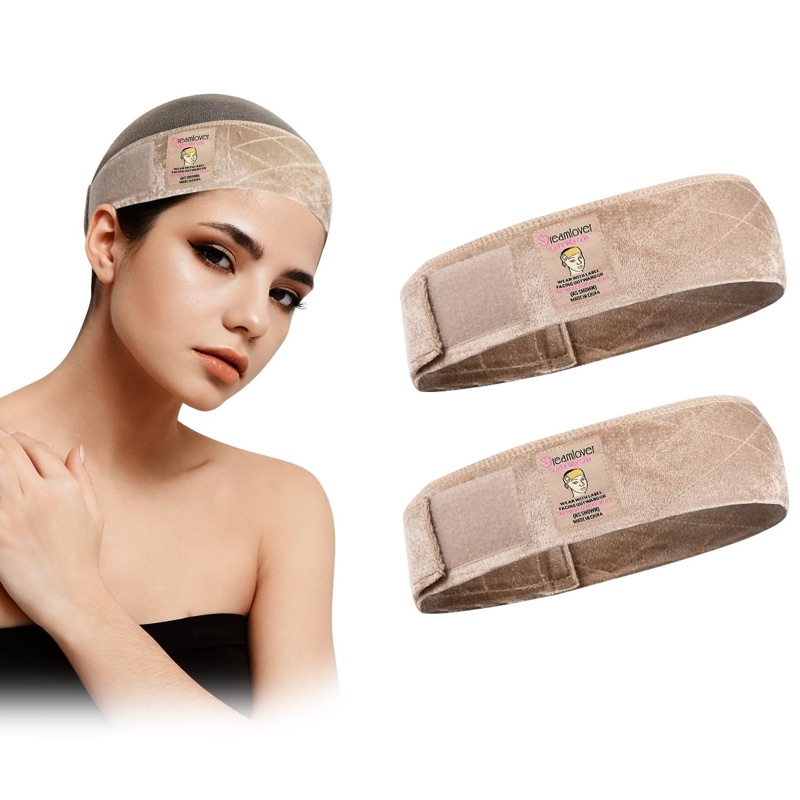
Velvet wig grip headband, 2 pc, tan
Two tan velour bands with a thinner fabric, wider front and narrower back, plus a stated wearing orientation. A retail example of an adjustable set — the listing details are what to check on arrival, not findings about comfort on your head.
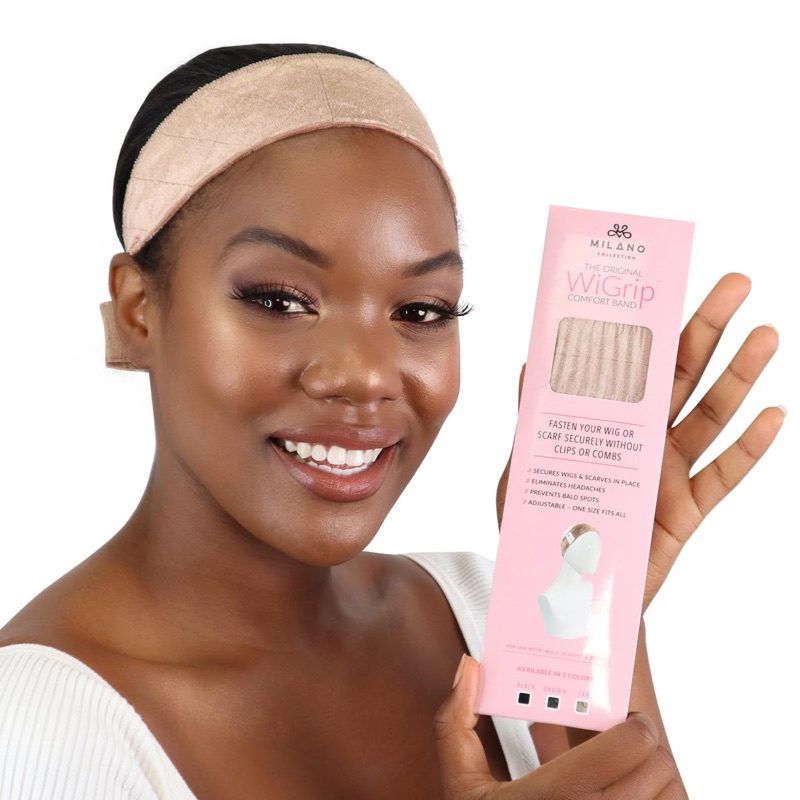
Original fabric wig grip band, nude
An adjustable one-size fabric band sold with manufacturer fitting guidance, which is the more useful part for a comfort test. The listed comfort and tension claims are seller wording, so ask for the closed-circumference range before treating one size as a fit specification.
Card photos are the current marketplace listing images and may differ from the delivered product; confirm details on the live listing.
Build a short, repeatable sample check
A brand does not need to improvise a dramatic all-day challenge to compare two samples. Write down a small protocol that stops when discomfort appears. Use a sample card with the product code, colour, size or stated range, wearer's head circumference, wig type, cap or liner, glasses or hearing devices if relevant, closure position, and the wearer's comfort notes. Ask the wearer to describe the sensation in their own words rather than selecting from a leading prompt such as "Does this feel better?"
Start with a brief fitting while seated. Check whether the band stays in its intended position as the wearer looks left and right, looks down, speaks, and makes normal facial movements. These movements can reveal a closure edge or seam that presses when the head turns. They do not reproduce every activity or prove all-day comfort. If the initial fit is acceptable, the wearer can decide whether to continue with ordinary use and stop if discomfort develops. A brand should never set a required wear time that asks people to ignore pain.
When comparing samples, keep the rest of the arrangement constant. If the grip feels different, record the exact point of change: closure overlap, width, seam location, fabric face, or whether a liner was added. Test more than one wearer if the intended audience covers a range of head sizes. A few samples are exploratory feedback, not statistically representative evidence. Report what the participants tried and what they said; do not convert a small panel into "comfortable for everyone."
What to ask for before a production order
A useful supplier brief is specific enough to check against a physical sample. Ask the supplier to state the fabric composition and construction, band width at defined points, usable closed-circumference range, fastening type and dimensions, intended orientation, seam and label placement, colour, pack quantity, care method, and packaging. Request a sample made to the same construction as the proposed bulk order. If the sample uses a different fabric or closure, it cannot verify those production details.
Keep an approved sample with a dated specification sheet. When the next batch arrives, compare its measurements, fastener overlap, edge finish, stitching, labels, and packaging to that reference. If you accept a change, record it as a new version rather than quietly replacing the original. This makes customer feedback more useful: a complaint can be tied to a known construction instead of a vague product name.
Ask the supplier how they measure the usable circumference and whether they can label the sample with its version. Do not assume a supplier can hold dimensions, supply a particular material, or support small replenishment until those details are confirmed for the specific order. If a supplier cannot provide a measurement method, you can still inspect a sample yourself, but keep your finding limited to what you measured. Avoid medical or performance promises such as "prevents headaches," "zero pressure," or "safe for sensitive scalps" unless you have appropriate evidence and review for the exact claim.
Make comfort a specification, not a slogan
A brand can respond to discomfort reports without promising that one band works for every head. First identify the layer and location involved. Next, record the fit variables that changed. Then ask whether the sample's circumference range, closure position, width, edges, or materials address the reported problem. If not, revise the brief and request a new sample. That process is more useful than responding to every complaint with "tighten it" or "try a different wig."
The same evidence discipline applies to product copy. Say what the product is made from, how it closes, what sizes or measured ranges are available, and how the wearer should position it. Avoid broad claims about preventing pain or fitting all heads. If a review says a band feels comfortable, attribute that observation to the reviewer and keep it individual. If a sample panel reports a preference, state who tried it and under what arrangement.
A well-documented fit test cannot eliminate every mismatch, but it gives the customer and the product team a practical next step. For a wearer, that means removing pressure rather than tightening through it. For a brand, it means specifying the construction, testing the actual combination, and keeping later batches tied to an approved reference. A wig grip should make the fit easier to evaluate, not conceal a wig that is too small or force the wearer to accept discomfort.