A wig grip can move even while the wig above it stays exactly where you put it. That distinction matters. Tightening the wig in response may leave you with two uncomfortable layers and the same wandering band underneath.
Start by finding the moving layer. Then check the velvet direction, the space inside the wig, and how the closure sits at your actual wearing circumference. A replacement makes sense when those checks reveal a feature your present band cannot provide, such as a flatter closure or a more usable adjustment range.
This guide covers reusable external velvet or velour bands worn beneath a wig. The aim is a comfortable arrangement you can put on again consistently. A grip cannot be assumed to correct an unsuitable wig size, and a product described as non-slip still needs a trial with your own wig and usual hair preparation.
1. Find out which layer is moving
Before changing anything, take a photograph of the front hairline and note where the grip sits behind each ear. Use the same landmarks when you check again. Otherwise, pulling the wig forward can hide what happened to the band beneath it.
One community discussion describes a particularly useful example: the wearer's band moved towards the crown while the wig stayed put. They had already tried different caps and two synthetic wigs. That account establishes a real problem; it does not establish that a brand fails generally. Replies describe different outcomes, including improvement after reducing tightness.
Observe the grip briefly without the wig, then repeat with the wig in place. Turn your head normally and look down. Do not yank the wig to imitate a sales demonstration. You need to learn what happens during ordinary movement, without dislodging the arrangement yourself.
| What moves | What to examine next | What the observation cannot prove |
|---|---|---|
| Grip alone | Direction and closure position | That a tighter wig will help |
| Wig over a stable grip | Cap fit and contact with band | That the band is universally unsuitable |
| Wig and grip together | Underlying layer and placement | Which layer started moving |
If both move, reset them and change one variable. Switching the cap, fastening position and hair arrangement together may produce a better result, but you will not know which change to repeat tomorrow. Record the first visible movement rather than waiting until everything has shifted.
Also distinguish front recession from a lifting nape. Check the front photograph even if the only sensation is movement at the back. If the hairline remains aligned while the rear edge rises, tell the seller or fitter exactly that. A report saying only that the wig slips leaves several different fit problems mixed together.
2. Check the fabric direction and where the band sits
Velvet and velour have a pile that feels different when brushed in opposite directions. Follow the instructions for the particular band rather than assuming every label belongs in the same place. Turn a new band over, identify its intended inner surface, and read the package before fitting it.
For example, the Dreamlover listing instructs the wearer to keep its logo facing outward on the right side of the head. That is a product-specific instruction, not a rule to transfer to an unlabelled band from another supplier. If the stitching or packaging leaves the orientation unclear, ask the seller for a photograph showing it on a wearer.
The Milano installation guide places its grip slightly behind the hairline and comfortably around the nape. Use that as the starting position for that product. Check the rear in a mirror: a band that starts higher on one side is a different arrangement from an evenly seated band, even when the front looks right.
The position must also work visually. An opaque strip may be visible beneath a transparent part or lace area. Moving it farther back can hide it, but changes where the wig contacts the fabric. Check both appearance and movement after repositioning. A matching colour alone cannot remove a raised edge or make an opaque strip transparent.
3. Recheck the wig with every layer you intend to wear
A grip adds material inside the wig. If the wig already feels close-fitting without it, adding an undercap and band can change the fit substantially. Conversely, extra material might occupy some space inside a loose wig without correcting its overall shape or depth.
A fitting video on wigs sliding back discusses both oversized wigs and over-tightened rear bands, and separates a grip that slides on the head from a wig that moves over the grip. A stated preference for a particular brand in that video is personal experience, not proof that it will suit every viewer.
Measure for the wig using its maker's instructions. The Milano guide, for example, checks circumference, front to nape, and ear to ear, and explicitly tells buyers of other brands to use those manufacturers' sizing guidance. A single circumference figure cannot describe every aspect of cap fit. Do not adopt another retailer's petite or average label as an exact equivalent.
Prepare your natural hair as you normally would, keeping avoidable lumps out of the area being assessed. Then compare the intended arrangement with the simplest comfortable alternative permitted by your wig's instructions. If you need an undercap to contain hair, keep that requirement in the comparison rather than removing it just to obtain a better result.
Watch the outline as well as the hold. A separate community thread about thin grips describes bands making wigs appear raised above the scalp. That is a different purchase problem from slipping. A thicker replacement could worsen the feature you actually dislike.
4. Assess the closure at your wearing circumference
The useful size of a grip is the size at which it closes properly on you. Its open strip length, package dimensions or maximum stretch does not tell you whether the fastening remains flat and secure at that point.
With a hook-and-loop band, inspect how the two fastening surfaces overlap. They should engage as the maker intends, with the rough portion covered and loose hair kept clear. Check whether excess material folds behind an ear or creates a ridge at the nape. A small head may require substantial overlap; a larger head may leave little fastening area. Neither situation is resolved by the words one size.
Fasten the band comfortably without pulling it progressively tighter in pursuit of a stronger hold. Then inspect the wig's own adjustment straps separately. If movement changes after loosening the wig slightly, note that result before altering the grip again. You are comparing a complete arrangement, so the two adjustments need separate records.
When requesting measurements from a seller, ask for a photograph of the band fastened at the circumference you need. A simple paper-strip example explains why: a 22-inch strip overlapped by two inches forms a 20-inch loop. That arithmetic describes an unstretched strip, not the fit range of either product below. Actual bands have different fastening locations and stretch, so an overall length cannot substitute for the closed measurement.
Try your glasses and any other usual items around the ears. A closure can feel acceptable by itself and become awkward once a wig's ear tabs and spectacle arms share the same space. One older customer review of the Milano band specifically reports crowding with glasses and hearing aids; it is a useful inspection prompt, not a prediction of your experience.
Remove the arrangement if it hurts or irritates. A band that remains stationary only at an uncomfortable setting has not passed a useful fit check. Ask a wig fitter to assess persistent problems instead of buying successively tighter bands.
Two Amazon options worth comparing for different reasons
The Dreamlover tan two-piece velvet grip set is a reasonable candidate if you want an adjustable fabric band and a spare for rotation. Its listing specifies a wider front, narrower back and hook-and-loop fastening. The page displayed 4.3 stars from 28,144 ratings when checked on 18 October 2026. That total belongs to the listing and includes different colours; it is not evidence that the tan version fits a particular head circumference.
The public review sample included recent positive reports, alongside a brown-variant buyer reporting one band instead of two. Another buyer, reviewing the nude version in June 2026, reported more slipping with a nylon undercap and described a stiffer fastening area. Those individual reports support checking the delivered count and your chosen layering. They cannot establish a defect rate. No verified numeric minimum wearing circumference was available in the details checked.
The Milano Collection Original WiGrip in Nude offers a plain fabric alternative with manufacturer fitting guidance. The selected option was the one-pack Original, not the Lace WiGrip. Its page displayed 4.3 stars from 5,262 ratings. Recent reviews in the available sample were positive; some older reviews describe bulk, discomfort or migration. Read the dates and purchased option before treating any comment as evidence about current stock.
The manufacturer's own guide distinguishes its original opaque band from its lace version for transparent top areas. If showing through the part is your main concern, investigate that construction difference before choosing this Original. Neither candidate is presented here as independently tested, universally secure or specifically sized for petite heads.
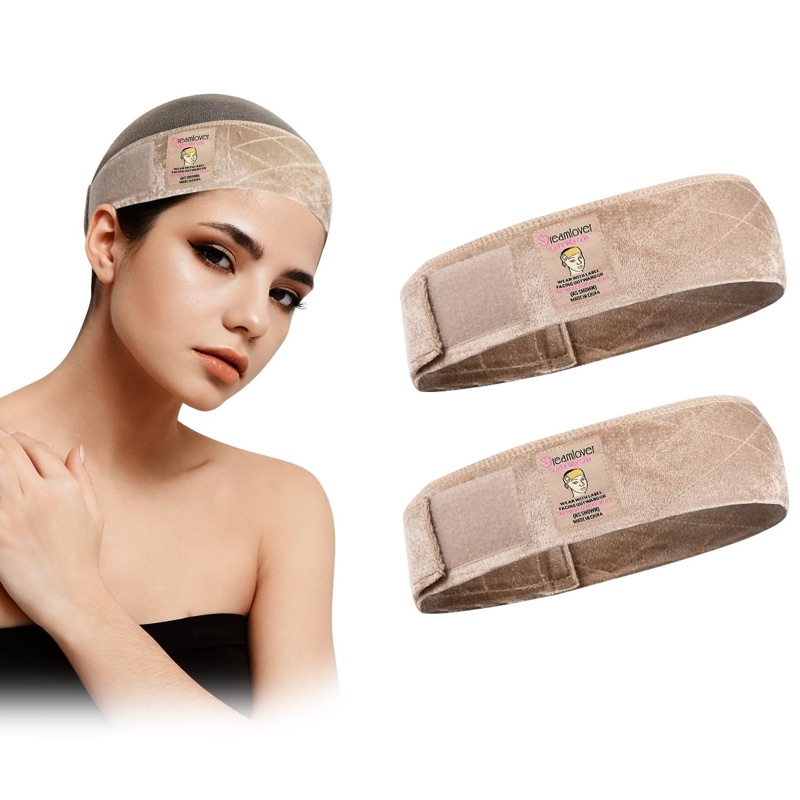
Velvet wig grip headband, 2 pc, tan
A two-piece velvet grip set with a wider front, narrower back and hook-and-loop fastening, which gives you a spare for rotation. The rating shown belongs to the listing and spans several colours — it does not tell you whether the tan version closes properly at your circumference.
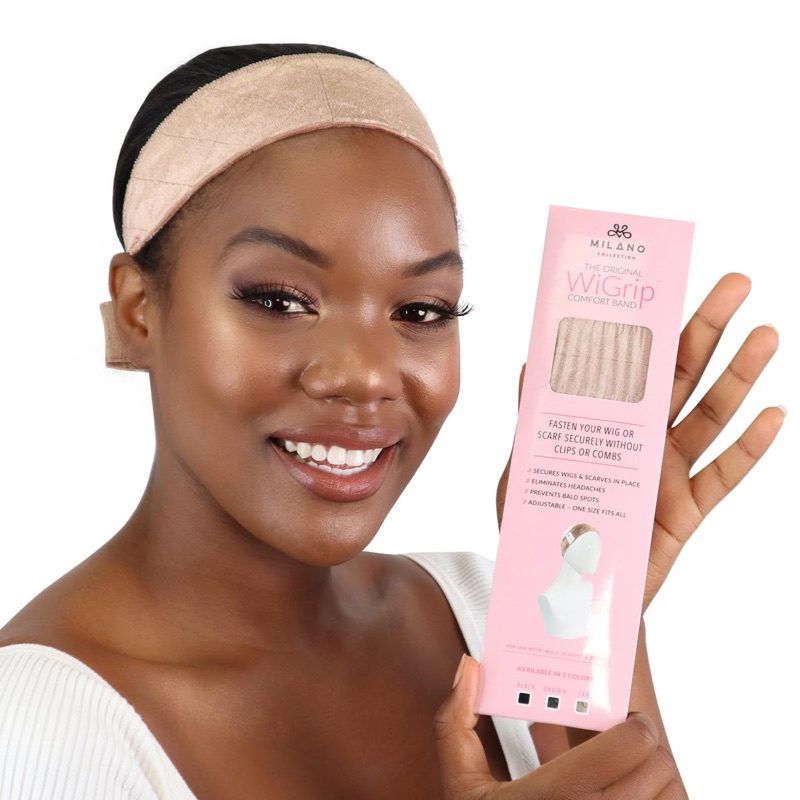
Original fabric wig grip band, nude
The one-pack Original fabric band with the manufacturer's own fitting guidance. An opaque alternative to a lace version, useful when you want documented measuring instructions — some older reviews describe bulk or migration, so read the dates and which option was purchased.
Card photos are the current marketplace listing images and may differ from the delivered product; confirm details on the live listing.
Check the selected colour and pack quantity again immediately before ordering. Reviews can refer to another option even when they appear on the same page. On arrival, compare the delivered labels, fastening layout and count with the order, then retain the packaging while assessing fit. Read the seller's current return conditions before opening or wearing an item if the ability to return it affects your decision.
5. Repeat normal movement and check the band after care
Use a short indoor trial before relying on a new combination outside. For a practical comparison, try ten minutes of ordinary seated activity, head turns and looking down, then inspect the same landmarks. Ten minutes is a convenient initial observation period, not a validated security test or a guarantee of longer wear.
Record the wig model, undercap, grip orientation and closure position. Note whether the front moved, the nape rose, or the grip rolled beneath an otherwise stable wig. Also record comfort and visible bulk. A phone photograph of the fastening position can be more useful than describing it as medium tight.
If that first trial is comfortable, assess a longer period suited to your routine. Check again after putting on glasses or a coat, since the completed outfit is what you will actually wear. Avoid testing several new products on the day of an important event.
Give each arrangement its own line in your notes. For example, compare the same wig and grip with your usual undercap against an alternative undercap you already use comfortably. Keep the grip closure unchanged for that comparison. If the alternative performs better, repeat it before concluding that the first cap caused the movement. A single good attempt may reflect a different starting position.
For a band that used to work, inspect it before replacing it. Look for loose stitching, a curling edge, trapped hair in the closure, or a fastening that opens during ordinary handling. Compare its fit after cleaning and drying according to its own care instructions. Do not apply another brand's washing or heating advice to it.
Keep a spare only after confirming the first band's fit. Alternating two suitable bands can make cleaning easier, but buying a multipack does not resolve an unsuitable closure. If you replace one, retain the model and colour details so the next comparison starts with an identifiable product.
What an independent brand should specify in a sample brief
For a brand developing this accessory, useful differentiation begins with a reproducible fit description. Ask for the fabric construction and composition, intended pile direction, band width at the front and nape, and fastening dimensions. Request the usable closed circumference range and the overlap needed at each end of that range. An unexplained strip length is insufficient.
Specify where labels and seams should sit and require the rough fastening surface to remain covered in intended use. Ask for instructions showing orientation, closure and care. Confirm those details against physical samples; a supplier's statement that the band is adjustable does not establish how it behaves on different wearers.
Keep a reference sample and compare later deliveries for dimensions, edge finish, closure engagement and the stated care procedure. Use several relevant head sizes and wig constructions for fit feedback, recording the arrangement each time. Report the scope of those observations rather than converting a small trial into an all-day or all-heads promise.
For the individual buyer, the same principle keeps the decision manageable. Order the band whose construction addresses the problem you observed, then repeat the five checks with your usual wig. Replace a slipping grip because you can identify what needs to change, rather than because the next listing uses stronger promises.