The most useful night-hair product is not automatically the one with the most persuasive material claim. It is the one a customer can use consistently without turning bedtime into a negotiation. For some people, that is a bonnet that keeps hair in one place. For others, it is a pillowcase that changes the surface under the head without putting anything around it. A third group needs a simple combination, but only after each part has been chosen for a distinct job.
This distinction matters to shoppers and to small product brands. A shopper who says, “My bonnet falls off,” is not necessarily asking for a more expensive fabric. She may be reporting a closure, fit, heat, or movement problem. A shopper who says she cannot tolerate a slippery pillowcase may not need to be persuaded to use one. She may need a different night routine altogether. Treating all of these comments as requests for the same product leads to returns, vague reviews, and product pages that promise too much.
This guide is a decision framework, not a promise that either option will change hair or skin. Use it to identify the task a sleep accessory must perform, then use the same questions when selecting or developing a bonnet, pillowcase, or bundle for sale.
Start with the problem, not the fabric name
“Satin” describes a weave or finish, while “silk” identifies a fiber. Neither word answers the practical questions a buyer has at night: Will the item stay in place, feel acceptable, fit the hairstyle, and be easy to wash? Material information comes after the use case.
There are two different systems at work. A bonnet creates an enclosure around the hair. Its performance depends on the interior volume, opening, closure, seam placement, and the wearer’s movement. A pillowcase leaves hair unenclosed. Its role is limited to the pillow surface; it cannot contain braids, keep long ends together, or prevent hair from moving away from the pillow during the night. It can, however, avoid pressure from an elastic edge or tie because nothing is worn on the head.
The comparison should not be framed as “which is better?” Ask instead: where is the friction, where is the discomfort, and what must be contained? A person who sleeps mostly still may choose differently from a side sleeper who changes position repeatedly. A customer who finds headwear distracting has a different constraint from one who dislikes a pillowcase moving under her face.
For a product brand, this is the first content and merchandising opportunity. Replace a universal headline with a short chooser. Explain the job of each item in plain language, then let customers select an option based on use rather than aspiration.
Choose a bonnet when containment is the primary task
A bonnet is usually the more logical starting point when the customer needs hair to remain together rather than spread across the pillow. That can include loose curls, rollers, a gathered style, braids, or long ends that need space. The key word is “space.” A roomy-looking photo is not evidence that a style will fit. Capacity depends on usable depth, opening circumference, extra fabric, and hairstyle volume.
Containment does not mean compression. A customer with long braids may need room for length, but she may also need a closure that does not bunch or pull at the hairline. A very large bonnet can create a different problem if excess fabric shifts around the head. A small bonnet may feel secure at first and then creep upward after the wearer turns over. The useful product question is not “oversized or standard?” It is whether the size, opening, and closure are compatible with the intended hair load.
Before buying, a shopper should inspect four things:
-
The stated dimensions and where they were measured. Diameter alone can be ambiguous. Ask whether it is measured flat, across the opening, or as a finished circumference.
-
The closure type. A covered elastic, adjustable drawcord, tie, or broad band each creates a different feel and adjustment range. “Adjustable” is not a complete specification.
-
The interior construction. Seams, labels, and bulky joins matter because they may land against the forehead, neck, or scalp.
-
The intended hairstyle. A product that works for loose medium-length hair may be the wrong scale for long braids, rollers, or a high-volume protective style.
Brands should not bury these details in an image carousel. Put them beside the variant selector, and show the bonnet both flat and in use. If the product is designed for a particular length or volume range, describe that as a fit intention rather than a guarantee. If it has not been tested on a certain style, say so. Clear limits are more useful than a broad “fits all hair” claim.
Choose a pillowcase when headwear is the barrier
A pillowcase is often the more practical option when the barrier is the feeling of something around the head. People describe this in several ways: a band feels too tight after an hour, the bonnet gets warm, the tie is noticeable at the neck, or the item simply comes off while they move in their sleep. These are use problems, not evidence that the shopper has chosen the wrong identity as a bonnet user.
The advantage of a pillowcase is straightforward: no opening, elastic, tie, or crown fabric has to be tolerated. It also keeps the routine simple for a person who wants to lie down without arranging hair first. That simplicity can be especially valuable for travel, fatigue, or a household where several sleepers use the same bed.
Its limits need equal emphasis. A pillowcase only affects the area where the head contacts the pillow. It does not hold hair in place, and it cannot replace the capacity of a bonnet for long braids or a bulky style. A restless sleeper may move away from the pillow. Some customers also dislike the feeling of a smooth, slippery surface against the face, or notice that the pillow itself shifts more easily. These are legitimate reasons not to force a pillowcase-only solution.
Check the construction before treating a pillowcase as an easy alternative. An envelope closure, internal flap, or zipper influences whether the insert stays in place. The dimensions must match the pillow insert rather than merely look generous in a photo. If a zipper is used, its placement and finish affect whether it is felt during sleep. A two-pack can help with laundry rotation, but only if the customer actually needs a spare and both cases are the same construction.
For brands, pillowcases should be sold with clear product specifications: finished size, closure, supplied fabric composition, care instructions, and contents. Avoid turning a comfort choice into a medical, skin, or hair-performance promise.
Use a combination only when the two products solve separate problems
“Use both” is common advice, but it can be lazy advice. A combination makes sense only when each item has a defined job. For example, a wearer may prefer a bonnet to contain a large hairstyle yet want a pillowcase as a fallback for nights when headwear is not comfortable. Another person may use a pillowcase regularly and reserve a bonnet for a hairstyle that requires containment. Those are two different routines, and they should not be marketed as a compulsory double purchase.
A bundle is most credible when it addresses a documented handoff between uses. It might include a bonnet plus a matching pillowcase, explain when to choose each, and keep the care routine manageable. It should not imply that two accessories will compensate for a poorly fitting bonnet or an uncomfortable pillowcase. Fix the basic product first.
For a small brand, the bundle is also a product-development decision. The pillowcase needs a pillow-size option; the bonnet needs a separately stated fit and closure. Shared color can create a coherent set, but each item should stand on its own.
Make the decision with a bedtime trial, not a morning assumption
The most useful test happens across several ordinary nights. A product can feel fine for five minutes while the customer is standing in front of a mirror and become unacceptable after turning over, getting warm, or waking briefly. A trial should focus on use signals rather than on a promise of a visible result.
Ask these questions after each night:
-
Did the bonnet remain on, and if not, where did it move first?
-
Was there pressure at the forehead, ears, neck, or crown?
-
Did the wearer need to readjust hair before sleep?
-
Did the pillowcase stay on the insert and feel acceptable against the face?
-
Was the chosen item easy enough to use again the next night?
These observations produce much better buying decisions than a single online review. They also reveal which part of a product needs attention. A bonnet that slides only after a few hours may need a different opening adjustment, not more depth. A pillowcase that feels fine but comes off the insert may need a closure change, not a new material claim. A routine that is repeatedly skipped is a signal that convenience is part of the product specification.
Brands can turn this logic into better post-purchase education. A small card or QR-linked page can show how to test fit, how to position an adjustable closure, and when to switch to a pillowcase instead of forcing a bonnet. This reduces the chance that a customer interprets one uncomfortable night as proof that the entire category is useless.
A product-development brief for brands selling sleep accessories
Consumer comments are useful only when they are translated into checkable product requirements. “It slips” should become a defined test around closure range, opening stability, and wear across different movements. “It is too hot” should become a question about layers, fabric construction, and whether the product page is setting realistic comfort expectations. “It will not hold my braids” should become a volume and length test with representative hairstyles, not a larger adjective on the packaging.
Create a one-page brief before requesting samples. It should state the intended wearer, hair arrangement range, garment or pillow dimensions, closure construction, allowable seam placement, labels, care-label text, and packaging components. Include a list of claims that are not allowed unless the brand has substantiation. This is important because supplier listing language can be broad and may not match what a new brand can responsibly say.
For a bonnet, sample review should check the opening after repeated adjustment, the comfort of the seam and label placement, usable interior depth, and the way the product behaves after normal washing according to the supplied care instructions. For a pillowcase, check finished dimensions, closure function, zipper or flap placement, seam consistency, and how the case fits the specified insert. Photograph the sample with a ruler and record the measurement method. A later production check is much easier when the approved sample is documented.
Do not assume a supplier can offer every size, closure, custom color, private label, or low minimum order simply because a similar listing exists. Ask for the exact configuration in writing, compare the reply with the sample, and retain the product identification and quoted specification.
Practical routes
These links are starting points for comparison. Confirm current product details, dimensions, material, pack configuration, pricing, and affiliate terms on the live destination before relying on them.
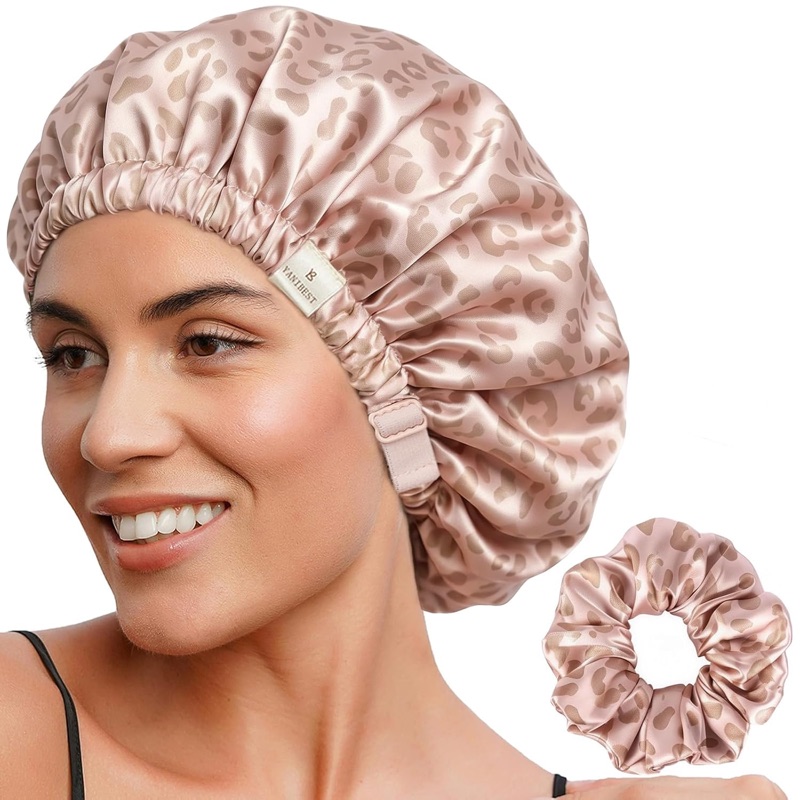
Adjustable satin sleep bonnet with a reversible double layer
A double-layer adjustable satin bonnet listed as reversible — the headwear side of this decision. Use it to check band adjustment, how the layers are joined, and how much hair the cap actually contains before comparing it with a pillowcase.
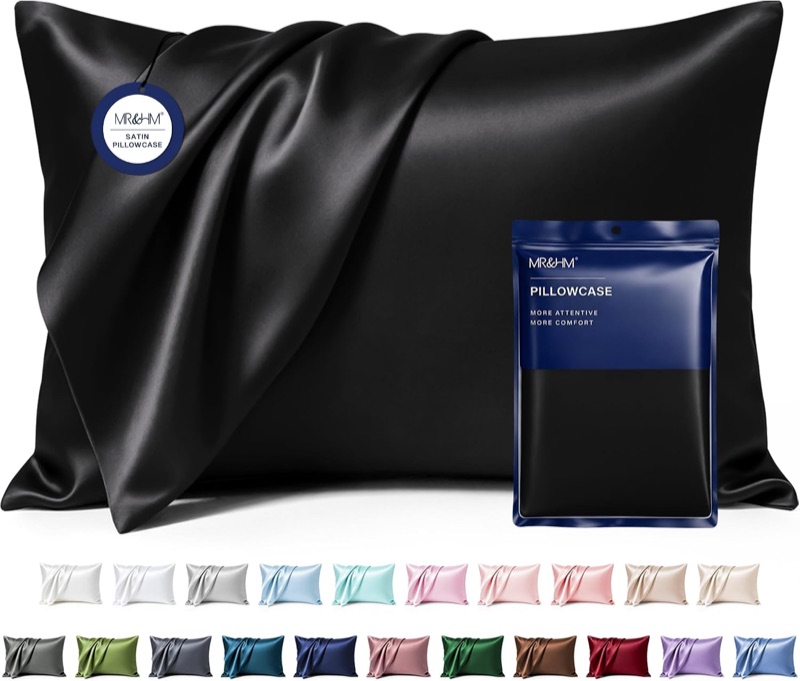
Satin pillowcase, queen 20 × 30 in, pack of two — black
A two-piece queen satin pillowcase set, listed at 20 × 30 inches. Useful as the pillowcase comparison when you check whether the pack size and stated dimensions match the pillows in the routine you are planning.
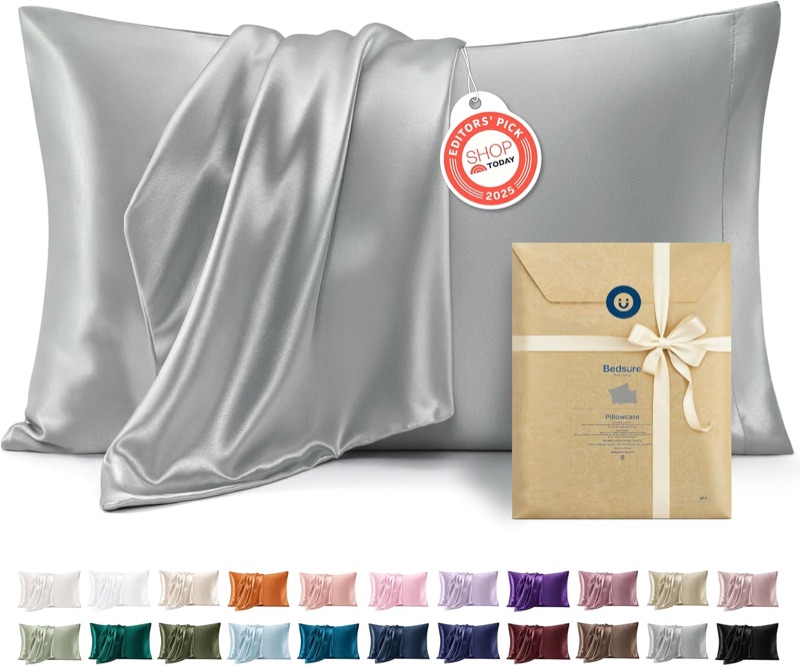
Satin pillowcase, queen, set of two — grey
A second two-piece queen satin pillowcase set, in grey, sold as a lower-friction alternative to headwear. Useful as the second listing to compare against the black set when fabric, finish, or price decides the choice.
Card photos are the current marketplace listing images and may differ from the delivered product; confirm details on the live listing.
Packaging should explain the routine, not overstate the outcome
Sleep accessories are small products, so packaging often becomes the customer’s first instruction sheet. That makes it a practical place to prevent mismatched expectations. A bonnet package can show the closure type, stated fit range, and a simple note that long or high-volume styles should be checked against the product dimensions. A pillowcase package can state finished size, closure type, and insert compatibility. A two-piece set should make clear that the items have separate functions.
Avoid oversized “one size fits all” language or vague before-and-after promises. Better packaging tells the buyer what to check before opening: pillow size, hairstyle volume, closure preference, and care routine. It can also explain the hygiene policy and return conditions without hiding the product limitations.
For brands developing custom packaging, start with protection and clarity. The package must prevent a bonnet closure from snagging and keep a pillowcase clean. Add printed claims only after the product, measurements, and care instructions are approved. A polished box cannot correct a confused fit message.
The practical choice
Choose a bonnet when containing a particular hairstyle is the central task and the wearer can tolerate headwear. Choose a pillowcase when headwear itself is the barrier and the customer accepts that hair will not be enclosed. Consider a combination only when each item has a distinct role in a routine the customer will actually repeat.
For shoppers, that decision avoids buying an idealized version of a product. For brands, it creates a better assortment: clear fit information, honest use cases, and samples tested against the problems customers actually report. The goal is not to declare a winner between two categories. It is to make bedtime easier enough that the chosen product remains in the routine.
Retail options
Use these Amazon product links to review current retail listings after deciding which setup fits the routine. Check the listing’s stated dimensions, closure, included quantity, and care information before purchase; listings and variants can change.
View the current Amazon bonnet option
View the current Amazon black satin pillowcase set
View the current Amazon grey satin pillowcase set
Affiliate disclosure: Some links in this guide are affiliate links. HerBrandKit may earn a commission at no extra cost to you.