Stop using a bonnet against valued bedding if it keeps leaving color behind. Before buying another, check whether the mark comes from the bonnet fabric, hair color, or residue on the bonnet. Washing may remove residue, but a clean-looking bonnet has not necessarily stopped transferring color. If transfer continues after care-label-directed washing, contact the seller about a return or replacement instead of repeatedly experimenting on your pillowcase.
That distinction matters when choosing the replacement, too. A pale lining, a double-layer construction, or the word "silk" in a listing does not establish colorfastness. The useful question is whether the exact color and construction you will receive have been checked under relevant conditions.
For a shopper, the decision is whether to keep, return, or replace an individual bonnet. For a small brand, the same complaint should lead to checks on each color and production lot. This guide separates those decisions. It does not present the linked products as independently tested, non-bleeding bonnets.
First identify what is leaving the mark
The problem is real, but an online photograph rarely establishes its cause. In a community discussion about a bonnet staining other belongings, the wearer reported that washing had not resolved the transfer. A separate pillowcase-staining discussion describes a similar frustration. These are reports of individual experiences, not controlled evidence that a particular fiber, brand, or hair product always causes staining.
Start with the recent changes. Did the marks appear after a new bonnet, a hair-color appointment, a different leave-in product, or a change in laundry routine? Check which surface touches the pillow: the outer fabric, a reversible side, the band, or a long tie. A pale interior will not protect a pillow from a dark outer panel that rests directly against it.
Look inside the bonnet as well. Makeup around the band and accumulated products can make rinse water discolored without proving that fabric dye is escaping. A cleaning demonstration of a bonnet and pillowcase identifies foundation and oily residue during washing. That is a care demonstration, not a colorfastness test or a universal cleaning prescription.
| What you observe | What it can tell you | What it cannot establish |
|---|---|---|
| Color transfers from a clean bonnet onto a white cloth before it touches your hair | The bonnet warrants further investigation | The dye identity or overnight performance |
| Marks appear only after contact with recently colored hair | Hair color remains a possible source | That the bonnet itself is colorfast |
| Greasy or makeup-like residue collects near the band | Cleaning and product buildup need attention | That every colored mark is removable residue |
| The pillow stains but the pale lining looks unchanged | Examine the outside, ties, and band separately | That a pale lining prevents all transfer |
Keep these possibilities separate when contacting the seller. "Color transferred from the washed outer panel" is more useful than "my pillow looks dirty."
A white cloth can reveal a problem without certifying the bonnet
You do not need to sacrifice another pillowcase to make an initial observation. If you are considering a return, check the seller's terms before washing or testing, since those actions may affect eligibility. Save the label, packaging, and order details first.
Use a clean, plain white cotton cloth you can spare. Keep an unused section as a comparison. On a clean, fully dry bonnet, gently rub a small area of the outer fabric, then examine the cloth. Use fresh sections for the lining, band, and ties so you can identify where a mark originated. Avoid abrasive scrubbing, which may damage the fabric and tells you little about normal use.
If the care instructions permit contact with water, you can make a separate observation with a lightly dampened cloth. Do not soak the bonnet or leave a wet cloth pressed against it for hours. Photograph any mark beside the relevant panel and record whether the check was dry or damp. Stop if the fabric surface changes.
Visible transfer is a reason to pause use and speak to the seller. No visible mark means only that you did not observe transfer during that check. It does not predict every combination of overnight moisture, friction, hair products, or repeated washing.
Use the same lighting when comparing the cloth before and after, and photograph it while dry. A wet patch can look darker even without transferred color. Keep the dry and damp observations separate rather than combining them into one photograph. If you already used the bonnet, say so: product residue on a worn item makes the observation harder to interpret. You are gathering information for a buying or return decision, not proving exactly which chemical moved.
Textile laboratories distinguish dry and wet rubbing under controlled conditions. AATCC TM8 describes a method for evaluating rubbing-related color transfer. A household cloth check lacks its controlled procedure and grading system. Do not describe a home observation as an AATCC result or assign it a laboratory grade.
When washing is reasonable and when to stop
If the bonnet needs cleaning and its return conditions allow it, follow its own label. Wash separately from valued light-colored items and dry it as directed before checking again. Record what you did; otherwise, neither you nor the seller can distinguish label-directed care from an improvised treatment.
Do not keep escalating to hotter water, longer soaking, or stronger chemicals because the first wash did not help. Online suggestions involving salt or vinegar are not enough to establish compatibility with an unknown fiber, dye, elastic, or finish. Ask the manufacturer for a method appropriate to that exact item rather than borrowing a recipe from a different textile.
Persistent transfer after the recommended care is a reasonable point to request a remedy. Include photographs, the selected color, order date, care-label image, and a short account of the conditions. You do not need to diagnose the supplier's dyeing process to report that the bonnet repeatedly leaves color on another surface.
For the affected pillowcase, use its separate care instructions. A treatment suitable for a polyester bonnet may be unsuitable for silk bedding. Avoid extending a bonnet-cleaning experiment to an expensive pillowcase without checking compatibility.
Choose the replacement by the exact variant
A replacement should meet your fit requirements as well as address the staining concern. Check the body capacity, closure, care information, and both fabric surfaces. Look for recent reviews of the selected color, but treat them as individual experiences rather than evidence that the whole range performs identically.
Light colors are an option to investigate, not a guarantee. Cream fabric may still be dyed or printed. Contrasting bands and ties introduce additional surfaces to check. Likewise, "double layer" describes construction; it does not establish that either layer resists transfer.
Buy one first if possible. Inspect it before adding hair products, keep its order information, and observe the particular item through the permitted care routine. Buying a multipack before you know whether the color and closure suit you can leave you with several versions of the same problem.
Retail and sourcing references
The following links are retail and sourcing references for this guide. We may earn a commission from qualifying purchases through these links. The linked products are not presented as independently tested, non-bleeding bonnets, and a listing's use of "satin" or "silk" does not establish a fiber composition or a colorfastness result. Check the selected color, care instructions, sample terms and CPS eligibility on the live page before ordering.
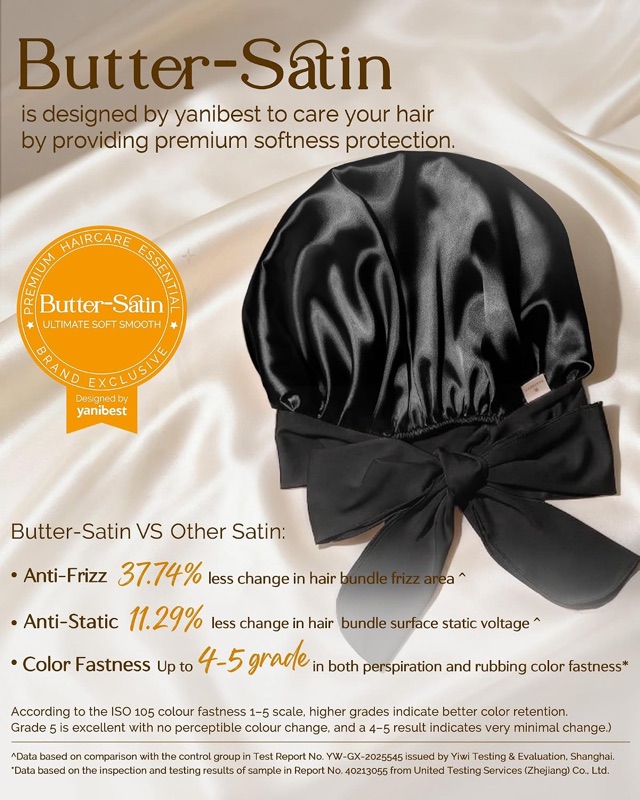
Adjustable double-layer satin sleep bonnet
A ready-to-buy adjustable double-layer satin bonnet. A comparison entry for the replacement decision above — check the selected colour and the care instructions on the live page, and do not read the listing's fibre wording as a colorfastness result.
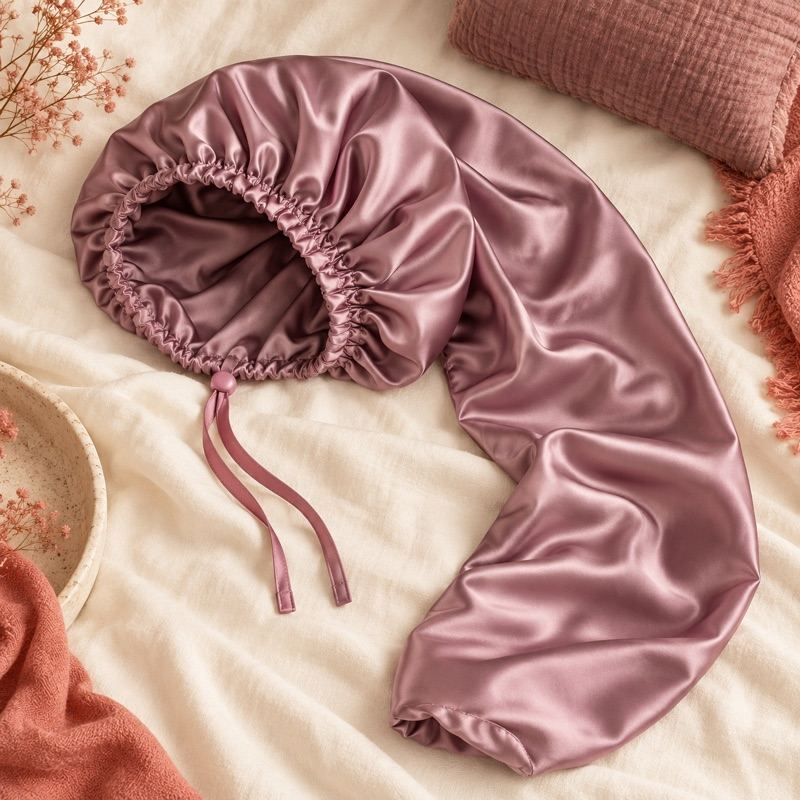
Wholesale satin bonnet with a long elastic tie, large size
A wholesale satin sleeping bonnet with a long elastic tie in a large size. A sourcing route for requesting colour-specific samples, the band and tie specification, and colorfastness documentation before you approve copy. The supplier's own product photo was not usable, so this card shows the site's editorial bonnet visual.
Card photos are the current marketplace listing images and may differ from the delivered product; confirm details on the live listing.
For brands, approve the color as well as the shape
A bonnet brand can approve a comfortable sample and still miss the customer's staining problem. A sample in pale pink does not establish the performance of black, navy, or a printed version. Neither does last year's report automatically describe a new fabric or dye lot.
Build the sample request around the intended use: repeated overnight contact with hair and bedding, with care performed according to the proposed label. Ask the supplier to identify the body fabric, lining, band, ties, and any print separately. "Satin" alone does not give the fiber composition or the colorfastness evidence you need.
Keep an approved physical sample for each color being launched. Identify the item, color code, construction, sample date, fabric or lot reference where available, and label version. Photograph the inside and outside together so a report cannot later be attached to a visually similar but different bonnet.
Ask for evidence that matches the complaint
"Colorfast" needs a defined test scope. A rubbing result does not answer the same question as a laundering or perspiration result. The AATCC standards catalog lists these separately; use the complaint and intended care routine to discuss suitable testing with the supplier and a qualified laboratory.
| Question to investigate | Relevant test discussion | Report detail to inspect |
|---|---|---|
| Does color transfer when the fabric rubs another surface | Dry and wet rubbing, such as AATCC TM8 | Conditions, tested side, color, and staining result |
| Does perspiration affect color or transfer | Perspiration, such as AATCC TM15 | Specimen identity, test conditions, color change, and staining |
| What happens during laundering | Laundering, such as AATCC TM61 | Procedure used, care compatibility, and reported outcomes |
AATCC TM15 addresses textile colorfastness under simulated acid-perspiration conditions. It is distinct from a plain-water wipe. Its public summary describes assessing both changes in the specimen and transfer to other materials; a report should make clear which outcome is being shown.
AATCC TM61 concerns accelerated laundering. A result under a specified procedure should not be translated into a promise that the bonnet will never stain bedding or tolerate any wash method. Ask the laboratory which method and conditions fit your product, and agree acceptance criteria before production. There is no universal passing grade established here for all sleep bonnets.
Check that the report names the tested material and color, laboratory, date, method, and results. If it covers only the body fabric, do not assume it covers a differently colored band. A photograph of a certificate without specimen details gives you little basis for accepting a shipment.
In your inquiry, specify which colors you intend to sell and request a sample of each, including its final band, ties, and lining. Ask whether the submitted samples can be linked to the materials used in your order and how later changes will be communicated. Request the proposed care label at the same time. This gives the supplier a concrete task: provide traceable samples and evidence for those variants, rather than agree to an undefined request for "premium, non-bleeding satin." Keep that written response with your sample record.
Make the next reorder traceable
For a small launch, a useful internal record can be simple: sample code, color, delivery reference, care version, observations before and after permitted washing, photographs, and the decision. Keep separate records for home-style observations and laboratory results. They serve different purposes.
If users report staining after a new delivery, hold the affected color apart while you investigate. Compare it with the approved sample and ask whether the fabric source, dyeing, printing, lining, or band changed. Do not mix the remaining units into older stock before recording their identity.
Where a lot has several colors, investigate the reported variant rather than assuming every color failed or that the whole order is acceptable. A repeat complaint tied to one delivery is more actionable than an average product rating that combines unrelated variants.
Your customer reply should request the product color, order reference, affected surface, and care steps without making the buyer prove a chemical mechanism. Use the returned information to decide whether to replace, refund, or investigate further. A clear remedy is more useful than telling every customer to wash the bonnet again.
For the wearer, the next step is equally concrete: stop exposing valued bedding, check the source without aggressive treatment, and contact the seller if transfer persists. For the brand, approve and track the exact color customers receive. A bonnet that feels smooth and fits well still needs evidence for any claim about leaving other fabrics unstained.