A satin or silk pillowcase can look like a simple purchase: choose a color, select Standard, Queen, or King, and add it to the basket. In use, however, the closure becomes part of the product. An open end can allow an insert to shift. An envelope flap can feel unobtrusive but may not suit every pillow shape. A zipper can keep an insert enclosed, yet it introduces a seam, tape, slider, and a potential tension point. None of those outcomes can be judged from the word "satin" alone.
This is especially relevant when a customer is trying to solve a bedtime problem. Some people report that a smooth pillowcase moves with the pillow or slides out from under their head. Others dislike the feeling of a smooth surface against the face. A community discussion about a silk pillowcase tearing at the zipper shows why construction and fit deserve attention. These reports establish user tasks; they do not prove that one closure or fabric will work for everyone.
For an independent brand, the same issues become a sourcing brief. A supplier can make a pillowcase with a zipper, but that alone does not define the zipper location, tape, seam allowance, finished dimensions, insert allowance, or wash performance. The aim of this guide is to help consumers choose the closure they are more likely to use, and help product teams request samples that can be compared honestly.
First, decide what is actually moving
"My pillowcase slips" can describe several different failures. The pillow insert may be coming out of the case. The case may be rotating around the insert. The entire pillow may be moving on the bed. Or the person's head may be sliding on the sleep surface. These need different responses. A zipper will not solve a pillow that is too soft for the sleeper's preferred position, and a tighter envelope flap will not stop a slick surface from feeling uncomfortable.
Before buying, take the pillow out of its case and measure it as normally used. Include loft, not just the flat, unfilled dimensions on a label. A very full insert occupies more volume and puts more strain on any closure. Note whether the problem happens at the opening, seam, or only when the pillow is propped upright. This prevents a shopper from replacing the surface fabric when the mismatch is size.
For brands, this is also the right time to separate a product claim from a construction fact. "Secure closure" is a broad marketing phrase. "Hidden zipper on the side seam, with an insert-size specification and a stated finished case size" is a checkable specification. The second kind of language is more useful for a sample approval sheet and for a customer choosing a variant.
1. Match the finished case to the real pillow insert
The first closure check is size. Standard, Queen, and King are category labels, not a universal measurement system. Pillow inserts vary in height, fill, and stated dimensions, while pillowcase listings may use finished measurements, nominal fit ranges, or measurements taken before sewing. A shopper should compare the product's stated finished size with the actual insert, then read whether the listing expects a close or relaxed fit.
An oversized case can allow the insert to wander toward the opening, whatever closure is used. A case that is too small can create stress along the seams, zipper ends, and flap edge. It may look smooth when first fitted yet become tight when the pillow is compressed during sleep. That is why a closure complaint can sometimes be a fit complaint in disguise.
For a product-development sample, record four measurements: flat finished width and length, opening length, and the practical insert dimensions used for testing. Photograph the pillow fitted into the sample. Do not approve a pattern only from a flat sample photo. If a brand plans several pillow sizes, test each size separately.
2. Know what an envelope closure can and cannot do
An envelope closure overlaps two layers of fabric at the opening. It removes a hard closure component from the sleeping surface and can be convenient for people who do not want to feel a slider or pull. It can also be easy to remove for laundry. Those are real usability reasons to prefer it.
Its limitation is not that it is inherently poor. It is that its holding power depends on overlap depth, the direction of the opening, the fit of the insert, and how the pillow is used. A shallow flap may not provide much coverage when a large insert is compressed. A generous overlap may work well for one insert and still shift if the case is much too loose. An open-end case is a different construction from a true envelope closure, even when a listing uses loose language around both.
When shopping, look for a clear photograph of the back opening, not only a front view. Check whether the flap is described or measured, and whether the product specifies the pillow size it is meant to hold. If that information is missing, treat the closure as unknown rather than assuming it will behave like the version you have used before.
For a brand sample, test the flap with the intended insert after making the bed, sitting up against the pillow, and turning the pillow over. Inspect whether the insert is visible and whether the flap distorts or pulls the edge seam. These are ordinary use tests, not a guarantee that the product will never shift.
3. Treat a zipper as a construction system, not a feature badge
A zipper can keep the insert inside the case more completely than an open end. That may help when an insert repeatedly works free. But a zipper is only as suitable as the surrounding construction.
Start with placement. A zipper positioned on a narrow side edge creates a different feel and stress pattern from one placed along the back or a larger seam. The location should be visible in the listing or sample. Next, look at the zipper tape and the stitching that attaches it. The tape should sit smoothly rather than pulling the fabric into ripples. At each end, the zipper needs a tidy finish and enough seam support so that repeated opening does not immediately concentrate stress at a single point.
The slider matters too. "Hidden" does not automatically mean unnoticeable. The slider can still be felt if the zipper sits at a pressure point or if its pull projects beyond the seam. A product page should show the closure closed and open, including the pull. A consumer who sleeps with one side of the face against the pillow may reasonably prioritize location over the word "invisible."
For sourcing, request the zipper specification instead of approving a generic product photo: closure length, location, type of zipper, tape color, pull orientation, and whether there is a fabric guard. Do not claim the zipper is snag-proof, durable, or gentle unless the finished product has been tested sufficiently to support that language.
4. Check the seam beside the closure
The closure seam is often the point where thin, smooth fabric is asked to handle the most force. A pillow insert expands toward it; the zipper tape or envelope flap changes the seam construction; and laundry adds repeated bending. A case can have an attractive surface and still fail early if the closing seam is poorly supported.
For a consumer, a close-up product photo may reveal puckering, skipped stitches, uneven stitch spacing, or a visibly strained corner. It cannot prove durability, but it can show whether the listing makes construction inspectable. Reviews that mention a tear near the zipper should be read as a reason to examine fit, care, and construction, not as proof that every zippered case will fail.
For a brand, sample inspection should include the inside and outside of the closure seam. Look for consistent stitching, tidy thread ends, and an even seam allowance. Fit the sample around the intended pillow insert and compress it gently at several points. After a wash following the supplied care instructions, compare the seam, zipper action, and dimensions with the approved pre-wash sample. Keep the sample photographs and measurement record with the production brief.
If a seam problem appears, describe the observed failure rather than guessing the manufacturing cause. For example: "The right zipper end separates after the insert is fitted and compressed" is a usable finding. "The factory used weak thread" is an unsupported conclusion unless the specification and testing establish it.
Retail options
Use these Amazon links after deciding which closure and case dimensions fit the actual pillow. Confirm the live listing's closure type, finished size, included quantity, and care instructions before purchase because variants can change.
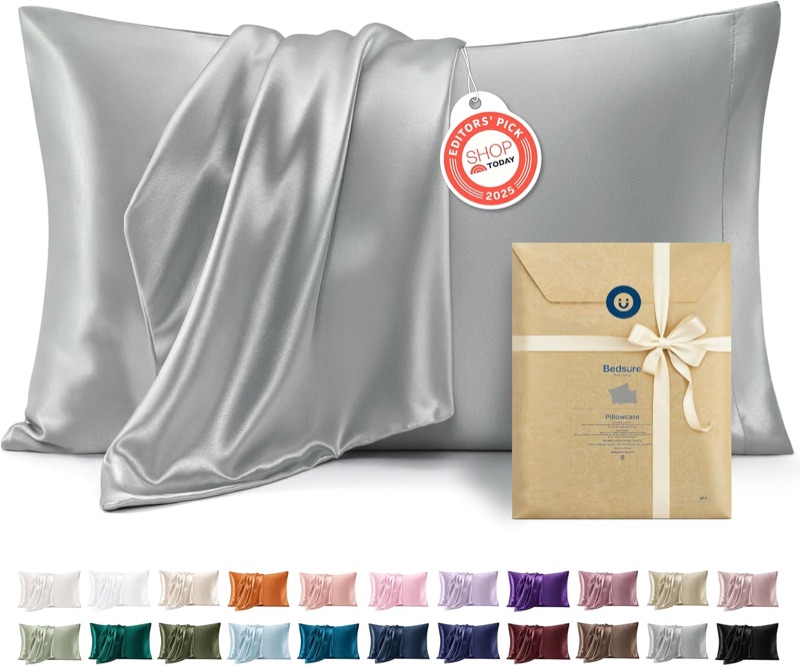
Satin pillowcase, queen, set of two — grey
A two-piece queen satin pillowcase set in grey. Use it as the closure-check reference here: confirm on the live listing whether the opening is an envelope flap or a zipper, and compare the finished size with the pillow insert you actually use.
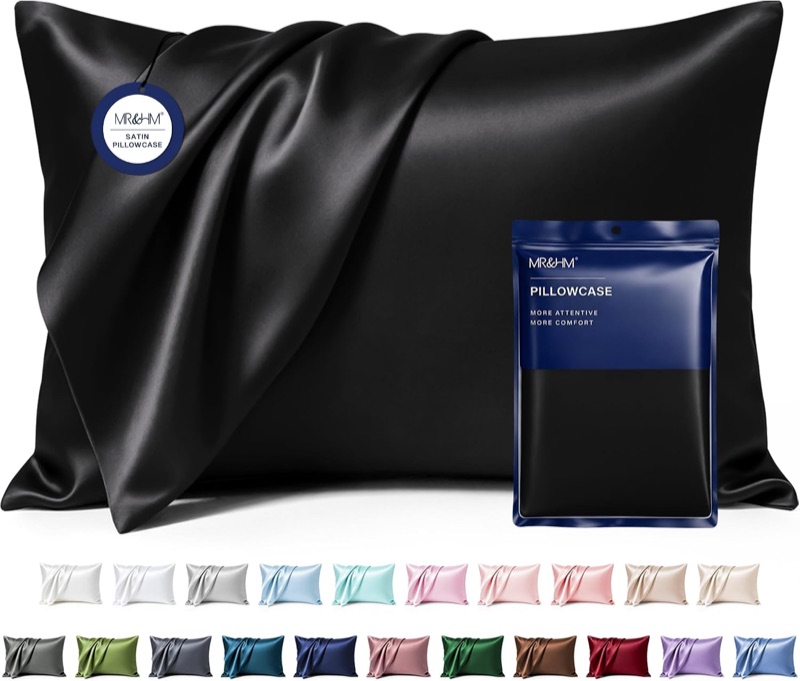
Satin pillowcase, queen 20 × 30 in, pack of two — black
A two-piece queen satin pillowcase set listed at 20 × 30 inches in black. Use it as the second closure comparison — check the stated closure type, the seam beside it, and the care instructions before purchase.
5. Put comfort and sleep position ahead of a universal recommendation
Closure choice has a sensory component. One person may never notice a small side zipper. Another may find any textured edge distracting. One person likes an envelope opening because there is no hardware; another dislikes the extra fabric layer or wants the insert more enclosed. Smooth pillow surfaces can also feel too slippery or warm for some sleepers, regardless of closure.
This is why a good buying guide should not say that a zipper is always more secure or an envelope closure is always more comfortable. Instead, connect the feature to the task. If the priority is keeping a particular insert contained, compare a well-fitted envelope with a zipper in a location the sleeper will not press against. If the priority is avoiding hardware, examine the flap depth and overall fit. If the priority is a simple laundry routine, compare the closure with the care label and whether a spare case is available.
Brands can use a brief decision table on the product page. It should show closure type, product dimensions, closure location or flap construction, included quantity, and care instructions. It should not promise that the case will solve breakouts, hair loss, pain, or any medical concern. A clear choice architecture is more valuable than a large set of beauty claims.
6. Read care instructions as part of the closure decision
The closure is handled every time the case is removed, washed, dried, and refitted. A zipper can be damaged if it is left open and catches in a wash load. An envelope flap can lose its neat shape if the case is dried or ironed in a way the supplied material does not allow. The product page should therefore state the care instructions rather than rely on a generic "easy care" label.
Consumers should follow the instructions attached to the specific product, particularly when the listing identifies silk, a blend, or a delicate finish. Close a zipper when the label directs it, inspect the seam before and after washing, and avoid assuming that one product's routine applies to another. A second case can make wash-day rotation easier, but it should be the same finished size and construction if consistent fit matters.
For a brand, wash testing should be part of sample approval. Photograph and measure the case before and after the agreed care method. Check whether the zipper still runs smoothly, whether the flap retains its overlap, whether color transfers, and whether the dimensions still fit the intended insert. Report what happened in the sample record; do not convert one wash test into a universal durability claim.
7. Build a sourcing brief before requesting custom pillowcases
Custom packaging, a logo, or a color card should not be the first line of a pillowcase brief. Start with the construction the customer will actually use. State the finished size for each variant, the intended insert size, the closure type, location or overlap, permitted zipper hardware, seam position, material description supplied by the manufacturer, care-label wording, included quantity, and packaging format.
Then request a sample that represents the quoted configuration. A stock pillowcase with a different zipper, different seam position, or different dimensions is useful only as an initial reference, not as approval for a custom order. Compare the sample with the written specification and record every difference. If the supplier cannot confirm a requested closure, fabric, customization, or order quantity in writing, leave that item as unconfirmed rather than building it into a customer promise.
The final quality check should compare production units against the approved sample: finished dimensions, closure operation, seam consistency, logo placement if used, packaging contents, care label, and color. Pull a small, documented sample of units for inspection and retain the approved reference. This is more useful than relying on a marketplace title that changes after the purchase decision.
The practical choice
Choose an envelope closure when you prefer no hardware near the sleep surface and the case has a clear, adequate overlap for the actual insert. Choose a zipper when the insert needs to be more fully enclosed and the zipper's location, seam, and fit have been checked. In either case, begin with real pillow dimensions and the bedtime problem you are trying to solve.
For consumers, that means less chance of buying a material label without a workable construction. For brands, it means a clearer sample request, better product-page information, and a quality check based on facts that can be observed. The useful question is not whether a zipper or envelope is inherently superior. It is whether the finished case, insert, closure, and care routine work together.