A bonnet can look glossy, smooth, and almost identical to another at a very different price. That is exactly why material language deserves more attention than it usually gets. “Silk,” “satin,” “silky,” “silk-feel,” “mulberry silk,” “satin-lined,” and “double-layer” can all appear around the same product category. They do not all tell you the same thing.
For a shopper, the practical job is to understand what is actually being offered before spending more than intended. For a small brand, the job is more demanding: turn a supplier’s material wording into a specification that can be sampled, labelled, and repeated without creating a misleading customer promise.
There is also a useful distinction between a purchase decision and a product claim. A buyer can decide that a clearly disclosed polyester-satin bonnet is the right budget or style choice. A brand, however, must be able to explain precisely what its own language covers. The two decisions are connected, but neither needs exaggerated performance claims to be useful.
The useful starting point is simple. Silk is a fibre. Satin describes a weave or surface construction, not a fibre by itself. A satin fabric may be made with silk, polyester, or another fibre. That means a phrase such as “satin bonnet” does not, on its own, establish that the product contains silk. Conversely, “silky” is a description of feel or appearance, not a fibre-content declaration.
This guide is not a verdict that one fibre is always right for every person or brand. It is a checklist for reading claims carefully, comparing like with like, and knowing what must be confirmed before a purchase or bulk order.
Start by separating the fibre from the finish
A product title is designed to be short and attractive. A purchase decision needs more detail. When you see a sleep bonnet, look for two separate answers:
-
What fibre or fibre blend is used?
-
What fabric construction or finish is being described?
“100% mulberry silk” is a fibre-content claim. It says more than “silky satin,” but it still does not answer every practical question. You may still need to know whether that claim applies to both layers, only the hair-facing layer, the body of the bonnet but not the band, or a removable lining.
“Polyester satin” is clearer because it names both a fibre and a construction. It does not make the product automatically poor, nor does it make it equivalent to silk. It gives the shopper and the buyer a defined comparison point. A responsible listing should make that distinction easy to locate rather than forcing customers to infer it from photos or price.
The phrase “silk satin” needs special care. It may describe satin woven from silk, but it should be backed by a specific fibre-content statement. If the listing only repeats “silk satin” without a composition field, care label image, or answer from the seller, treat the fibre as unconfirmed.
The five material phrases that need a second look
“Silk” or “real silk”
These phrases are marketing-level signals unless the listing states fibre content in a specification field, on a label, or in written seller confirmation. A consumer does not need a technical textile audit to shop responsibly. They do need one clear question: does the stated silk content apply to the exact colour, size, and version in the cart?
For a brand, do not copy “real silk” from a supplier page into a product page. Ask for the fibre composition, the layer to which it applies, and the wording shown on the sewn-in care label. Keep the reply with the sample record.
“Mulberry silk”
This is more specific language, but the same verification principle applies. Check whether the listing gives a percentage and whether it names the part of the bonnet covered by the statement. A product can have a silk layer and non-silk trim, elastic, thread, or outer fabric. That is not necessarily a problem; it becomes a problem when the customer cannot tell what the headline refers to.
“Satin”
Satin alone is incomplete material information. It can indicate a smooth-faced fabric construction, but it does not tell you the underlying fibre. A shopper who has a firm fibre preference should keep looking until a composition is disclosed. A seller who wants to use satin as the product category should state the fibre content nearby in plain language.
“Silky,” “silk-feel,” or “vegan silk”
These expressions describe positioning, not a substitute for composition. They can be useful style language once the factual content is clear. They should not be the only answer to “what is this bonnet made of?” For a product page, put the fibre statement before optional feel-based copy.
“Satin-lined” or “silk-lined”
A lining claim tells you that at least one layer may differ from another. It does not automatically reveal the outer material, the closure material, or whether the lining covers every hair-contact area. Ask which side faces the hair when the bonnet is worn and whether the stated content applies throughout that side.
A shopper’s fast label check
Before buying, take thirty seconds to scan the listing in this order.
First, look below the title for a material or fabric-composition field. Then check the product description, care instructions, and images of tags or packaging. If the wording changes between sections, use the more specific composition statement as the point to clarify rather than assuming the most appealing phrase is correct.
Second, check the exact variant. Different colours, sets, or versions can have different constructions. A broad title can cover several options, and a generic image is not proof that the selected version shares the same material.
Third, decide what you actually need to know. If your aim is simply to try a bonnet at a comfortable entry price, a listing that clearly says “polyester satin” may give more useful information than a vague listing that says “silky.” If you are specifically seeking silk, do not substitute a texture word for an explicit fibre-content statement.
Finally, keep the purchase evidence. Save the listing screenshot, order confirmation, and any written answer from the seller. This is helpful if the item arrives with a label that does not match the listing, and it is a good habit for product researchers as well.
You can use this Amazon bonnet listing as a live example of where to look for material language, care details, variants, and customer questions before buying. Confirm the listing’s current facts directly on the product page; product pages and variant information can change.
What a brand must put in the sample brief
A brand cannot build a reliable material claim from a marketplace title. The sample brief should make the claim testable. Add a short material block before discussing colours, logo placement, or packaging.
Use this structure:
| Item to specify | What to write | What to retain |
|---|---|---|
| Hair-facing layer | Fibre content and fabric description | Supplier confirmation and sample photo |
| Outer layer | Fibre content and fabric description | Supplier confirmation and sample photo |
| Band, ties, and trim | Fibre content where relevant; construction and width | Close-up photo and measurement |
| Claim language | Exact words intended for listing and packaging | Approved copy version |
| Care label | Fibre statement and care wording | Label artwork or photo |
| Sample identity | Colour, size, revision, and date | Sample log and order record |
The table is deliberately plain. It prevents a common failure: a supplier describes one layer, while the brand’s page makes a statement about the whole bonnet. It also avoids an opposite mistake—copying a premium fibre claim when the sampled product has a mixed construction.
Do not ask only “Is this silk?” That question is too easy to answer loosely. Ask: “Please confirm the fibre content of the hair-facing layer, outer layer, band, ties, and trim for sample revision A. Please show the wording that will appear on the care label.” The answer is more likely to be usable later.
Compare the sample, not just the message
When a sample arrives, compare three things side by side: the enquiry, the physical product, and the proposed customer-facing copy.
Inspect the care label and packaging insert first. If they say something different from the quotation or product page, pause the approval. A mismatch may be a simple artwork error, but it can also show that the supplier’s information is not being carried through consistently.
Next, inspect layer placement. Turn the bonnet inside out. Identify which surface would contact hair in normal wear. Look at the band, seam allowances, ties, and any contrasting panel. You are not trying to judge fibre content by touching it; feel is not reliable proof. You are checking whether the construction matches the written description and whether every material claim has a defined scope.
Then review the copy. Avoid broad claims such as “pure silk bonnet” if only a lining is silk. Avoid “100% silk” if the statement refers only to the body fabric and excludes a visibly substantial contrasting layer. The better approach is precise: “silk-lined,” “polyester satin,” or “100% mulberry silk body with [specified] trim,” only when the sample evidence supports that exact wording.
A second sample is worthwhile whenever the material declaration, layer arrangement, label artwork, or closure changes. A colour change alone may also deserve a recheck if it changes the fabric source or printing process. Keep the new sample under a new revision name; do not silently treat it as the same approval.
Practical routes
These links are starting points for comparison. Confirm current product details, dimensions, material, pack configuration, pricing, and affiliate terms on the live destination before relying on them.
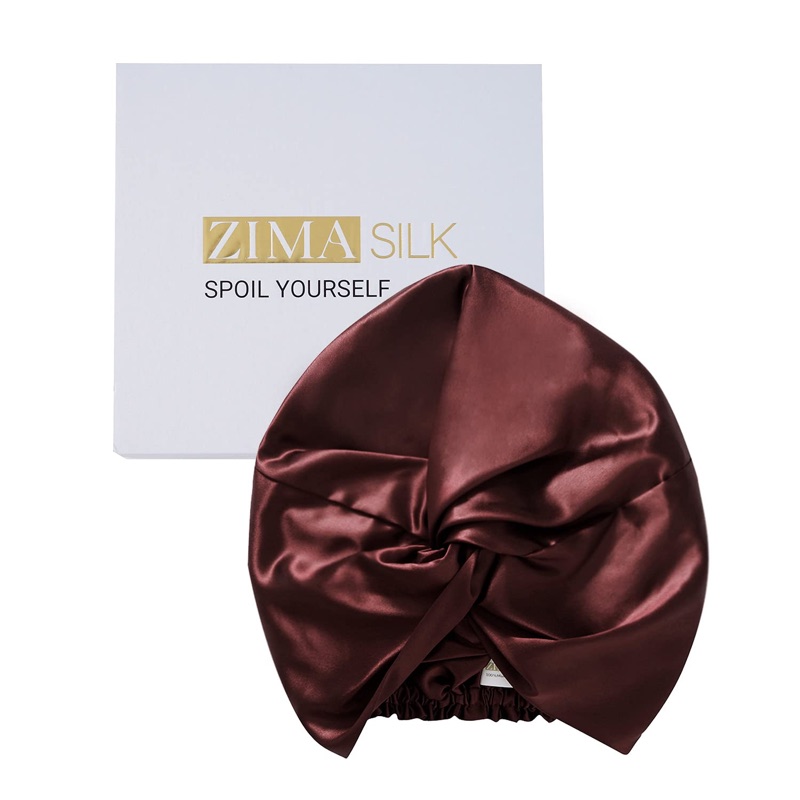
Mulberry silk bonnet, 22 momme, double layer
A double-layer 22-momme mulberry silk bonnet — the silk side of this material comparison. Check the stated momme and fibre content on the live listing before repeating the claim in your own product copy.
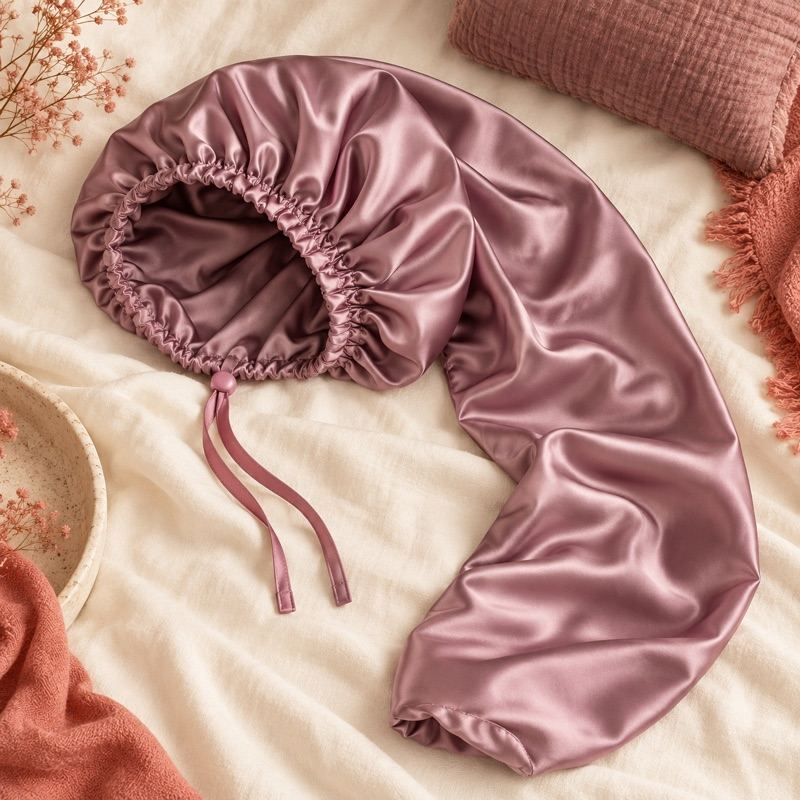
Wholesale silk sleep bonnet, listed as 100% organic silk
A wholesale silk bonnet listed for sleeping as 100% organic silk. A sourcing route for asking what fibre content, weight, and lining the supplier can actually evidence for a silk claim.
Card photos are the current marketplace listing images and may differ from the delivered product; confirm details on the live listing.
Why packaging belongs in the material check
Packaging is often where a good material record is lost. A carton may lead with “silk” in large type while the care label is harder to find, or a hangtag may use “satin” without saying what the satin is made from. Those choices create customer questions before the product is even worn.
For a consumer, choose the listing and seller that makes composition clear before checkout. For a brand, align three places: the sewn-in label, the package or insert, and the online product description. They do not need identical wording, but they must not conflict.
The cleanest front-of-pack approach is usually a product name plus an accurate, scoped material statement. The fuller breakdown can sit on the back, an insert, or the product page. Do not add unsupported performance promises merely because a fabric is described as smooth. Fit, care practices, hair type, temperature preference, and individual experience all vary.
Use a sourcing link as a starting point, not proof
For a brand exploring a silk-positioned bonnet, this Alibaba CPS listing is a starting point for product comparison and supplier contact. The link includes a product ID and CPS parameters, but it is not a completed verification of the listing’s current material statement, supplier capability, or final landed product.
Before any bulk commitment, request the current specification, confirm the exact fibre wording in writing, order a sample, and compare the delivered item with the agreed material block. Confirm minimum order quantity, lead time, label placement, packaging, and the supplier’s ability to keep the same construction in a reorder. If the reply changes the claim, revise the copy before—not after—the product reaches customers.
Make the choice by clarity and fit
A useful purchasing decision is not “silk wins” or “polyester wins.” It is “I know what this version is made of, what the statement covers, and whether it suits my budget and intended use.” For brands, the equivalent is “our sample, label, packaging, and product copy all describe the same product.”
That clarity is the real product-development advantage. It reduces avoidable customer-service questions, makes sampling more purposeful, and gives you a clean foundation for future variants. A bonnet does not need inflated language to be appealing. It needs a claim that is specific enough to trust.
Affiliate disclosure: Some links in this guide are affiliate links. HerBrandKit may earn a commission at no extra cost to you.