A bra strap that keeps sliding off one shoulder is irritating, but the accessory aisle can make the problem look simpler than it is. A silicone shoulder pad, a small racerback clip and a sewn-in grip strip are not interchangeable fixes. One may hold a strap against the shoulder; another pulls the straps together at the back; a third changes the garment itself. And if the bra band or cups are not fitting well, adding grip can make an uncomfortable bra harder to tolerate without correcting why it moves.
Start with the bra, then match the accessory to what remains. That is useful advice for a shopper with one troublesome bra and a product-development rule for a brand considering a strap accessory or a non-slip construction. The goal is not to promise that a particular pad will solve every slipping strap. It is to identify the movement, choose one intervention, and test whether it stays comfortable through ordinary wear and washing.
First separate a fit problem from a strap problem
Published bra-fit guidance lists a too-large band and narrow or rounded shoulders as possible reasons for straps slipping, and recommends checking fit before changing styles. Lingerie fit guidance also says straps should not fall or press, and that most support comes from the band. Those are starting points, not a diagnosis from a single symptom. Check the whole bra before changing size based only on a slipping strap.
Put on the bra the way you normally wear it. Make sure the band is level rather than riding up at the back, the cups contain breast tissue without obvious spill or empty space, and the centre front sits as intended for that bra. Adjust the straps so they stay in place without digging. Then raise your arms, reach forward, rotate your shoulders and walk for a few minutes. Note whether the whole bra shifts, one strap slides, or the strap hardware itself lengthens.
A strap that slips on one bra but not others points toward its strap placement, construction, elastic recovery or age. Straps that slip across several bras may reflect shoulder shape or a broader fit issue. The distinction matters. A racerback clip gathers straps behind the body; it cannot make an incorrectly sized cup fit. A shoulder pad can increase friction at the contact point; it cannot stabilise a band that is riding up. If adjustment causes pressure, numbness, skin irritation or persistent discomfort, take the accessory off and reassess the garment rather than tightening it further.
Five checks to make before you shop
-
Does the whole bra move, or only the strap? Watch the back band and cup position while reaching and turning. If the band climbs, twists or the cups shift, begin with fit and bra style. If the band remains steady and a strap walks off the shoulder, a strap-position or surface-grip solution may be relevant.
-
Is the strap too loose, stretched or set too far out? Tighten the adjuster gradually, then inspect whether it holds its length. If the slider creeps back down, the hardware or elastic may have lost its hold. If the strap is already snug and still slides off, tightening it further may create pressure without changing where it meets the shoulder. For a recurring issue, compare the strap attachment position with another bra that stays put.
-
What clothing sits over the bra? A slippery blouse, a wide neckline or a uniform with a fixed shoulder seam can affect how often you notice the strap. If the strap needs to stay within a particular neckline, a small strap keeper sewn or clipped to the garment may solve a different task from a pad worn between skin and strap. Identify whether the goal is to keep the strap on the shoulder, hide it under clothing, or route it into a racerback position.
-
How wide is the strap, and where will the accessory sit? Measure the strap where the accessory will contact it, not at the slider. A holder with a narrow channel may pinch a plush strap; a loose channel can let a narrow strap twist. A shoulder pad must have a usable opening or fastening method that matches the strap width and does not roll when the wearer moves. Product listings often use broad “one size” language. Check dimensions and opening design against the actual bra.
-
How long will it be worn, and how will it be cleaned? A solution worn for a short event has a different comfort test from one used through a workday or exercise session. Sweat, body products, fabric, heat and repeated laundering can change feel or retention. If the listing gives no cleaning directions, do not assume the accessory is machine washable. Ask the brand or seller how to clean the specific material and fastening method.
Choose the mechanism that addresses the observed movement
A racerback converter joins or draws the straps together across the upper back. It is a reasonable trial when the straps tend to drift outward from the shoulder and the bra remains otherwise stable. It changes strap geometry and may be visible beneath some tops. A user should be able to attach and remove it without overstretching the straps, and it should not pull the back of the bra upward or create an uncomfortable concentrated tension point. If that is the mechanism you need, choosing and attaching a racerback clip goes into strap-width matching, attachment styles and the sample test in detail.
A silicone or fabric shoulder grip sits beneath or around the strap to increase friction or keep the strap centred. It may suit a strap that slides across a stable shoulder. Designs vary: some are pads with a slit, some wrap around the strap, and others clip onto the garment. Wearers often report that pads roll, shift or feel tacky after several hours. Those reports are anecdotal, but they identify useful tests: does the pad stay flat, migrate, or feel comfortable after movement?
A strap keeper attached to clothing anchors the bra strap to a shirt, dress or uniform. It addresses visibility or position relative to clothing, rather than shoulder friction. Check whether the keeper can be sewn or clipped on the intended fabric without pulling a delicate seam. If a clip has teeth or a small contact area, inspect for snagging or a visible bump on lightweight fabric.
A sewn-in silicone gripper or elastic is a product-construction choice for brands, lingerie makers and garment alterations. It is not a ready-to-use consumer patch unless sold that way. Its performance depends on placement, width, attachment method, fabric compatibility and how the skin-contact side feels. A strip that grips firmly in a flat sample may curl or irritate when sewn into a curved strap. Any skin-contact claim needs evidence for the finished construction, not just a supplier’s raw-material description.
Run a wear test that compares like with like
For an individual shopper, test one accessory on one bra first. Use the same top, strap adjustment and ordinary movement pattern for a short trial. Note the time it begins to shift, whether the strap stays in place, whether the accessory itself moves, and whether the skin feels distracted, itchy or compressed. Stop if it causes discomfort. Do not add two different grip products at once; you will not know which one changed the result.
For a brand assessing a sewn-in or packaged accessory, make a sample card with the exact strap width, base fabric, lining, elastic and attachment method. Keep a no-grip control and change one variable at a time. A useful trial sequence can include raising and lowering the arms, reaching forward, turning the shoulders, walking, and sitting for a normal work period. If the item is intended for exercise, define the relevant movement and garment use separately instead of borrowing a casual-wear result.
Record observations, not impressive-sounding claims. “Stayed centred during this sample’s 30-minute movement check” describes a specific test. “Never slips all day” is a broad performance promise and should not be made from one wear test. Note the wearer, garment size and style, strap width, grip version, duration, movement, cleaning history and any irritation or migration. If several wearers are involved, preserve individual results instead of averaging away a fit problem.
Washing needs its own check. Follow the care instructions for the garment and accessory; do not apply a hot iron or solvent to silicone or elastic unless the maker explicitly directs it. Compare the grip before and after the stated cleaning cycles, including edge lift, tackiness, cracking, discoloration, adhesive failure and changes to the bra strap. A home test is not a standardised durability test, but it can show whether a sample suits the routine you plan to recommend.
Strap accessory options
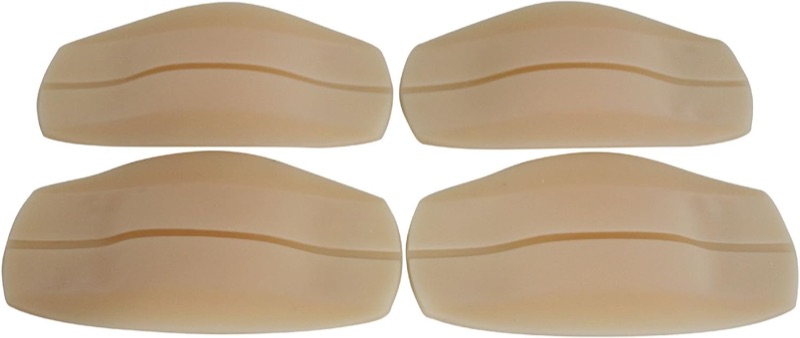
Soft silicone bra strap cushion holder, two pairs
Silicone cushions that sit between the strap and the shoulder to add friction. Before ordering, check the opening width against the strap you measured and whether the pad is described as staying flat in movement.
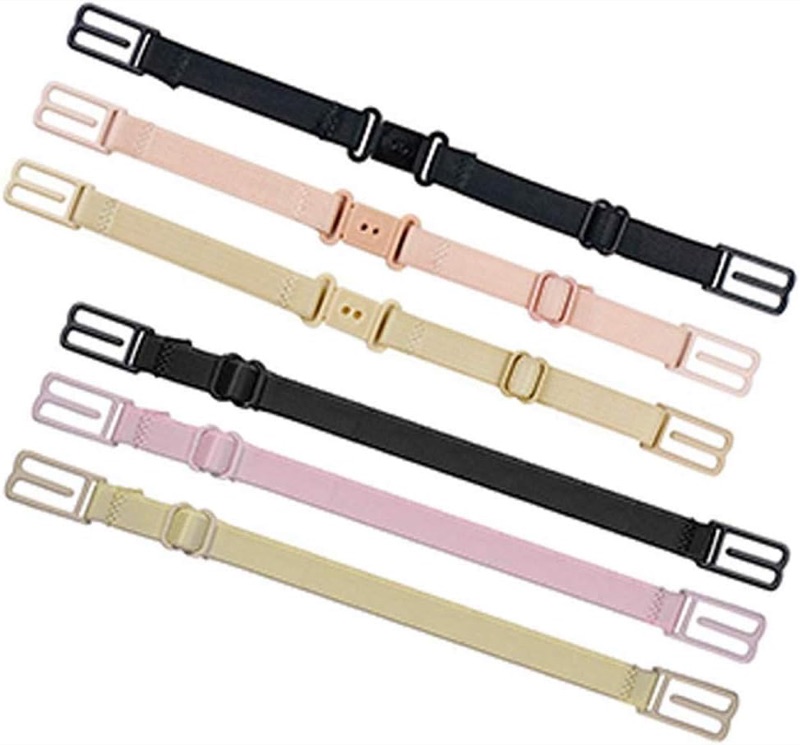
Adjustable bra strap clips with elastic section, three colours
Strap clips that shorten or reposition the strap instead of adding friction. Check the pack contents and colour options on the listing, and confirm the clip width suits the strap rather than assuming one size fits all.
Card photos are the current marketplace listing images and may differ from the delivered product; confirm details on the live listing.
A sourcing brief for a reusable strap-grip product
A buyer sourcing strap accessories should define the mechanism before asking for a quote. “Anti-slip bra accessory” is too broad: it could mean a racerback clip, a strap-to-shirt keeper, a shoulder pad or a sew-in gripper. State which problem the item is designed to address and what garments it should fit. Add the target strap width range, desired colours, fastening method, dimensions, pack count, packaging and target market.
For a clip, specify the strap-width range, contact edges, closure force, material and any metal or plastic components. Ask whether the clip stays closed under repeated attachment and removal, whether its edges snag fabric, and whether it can be cleaned. For a pad, specify the channel or opening dimensions, thickness, shape and how it stays attached to the strap. Ask for a sample in the stated material and colour, plus any available material documentation relevant to the intended skin-contact use. Do not convert a seller’s “skin-friendly,” “hypoallergenic” or “non-irritating” wording into a verified safety claim without supporting documentation.
For a sewn-in grip, include the finished strap sketch, cross-section, stitch route, placement and the fabric that touches skin. Ask the supplier to identify the gripper composition and its attachment process. Compare samples after sewing and laundering; a roll of raw silicone elastic is not equivalent to the finished garment. If a supplier proposes a material or construction change, request a new finished sample before approving bulk production.
Keep a golden sample and versioned specification. Record supplier, component code, width, thickness if measured, colour, placement, stitch type, cleaning instructions and approval date. At reorder, compare the new sample against that reference and check the dimensions and tactile condition before packing. The aim is repeatability: if the material changes, the product team should notice before customers do.
Compare total cost per usable unit, not only the quoted price. Include accessory, packaging, assembly time, expected rejects and the cost of returns or replacements you actually observe. For low-cost removable clips, the consumer purchase is often straightforward; for sew-in material, wholesale minimums and a garment sample process may make more sense. Do not assume a marketplace listing supports customisation, private labelling, small trial quantities or a particular affiliate arrangement until the seller confirms it.
What social posts and search results can and cannot tell a brand
Recent discussions include a sewing-community question about adding a non-slip strip, a user asking whether non-slip straps work, and recurring posts about straps that fall despite adjustment. In one recent thread, a wearer said a silicone strip held the strap but began to feel tacky after several hours of movement. Another sewing discussion suggested strap keepers or a grippy material. These are direct user signals about language and failure modes, not representative survey results.
Search results include fit advice from lingerie brands, a breast-health nonprofit’s fit guide, product listings for racerback clips and shoulder grips, and accessory explainers. That means a generic “how to stop bra straps slipping” article would face established advice pages. A more useful page answers the decision after the basic fit check: which accessory works by changing strap geometry, which anchors to clothing, and which adds friction at the shoulder? The product-development layer can add sample dimensions, wear observations and wash checks that a generic fix list rarely documents in a repeatable format.
Video results and short-form demonstrations are useful for seeing how clips are attached, but a video appearance does not verify all-day comfort, skin compatibility or wash durability. A brand should treat any creator demonstration as an illustration of use, then confirm the precise product and test condition before adopting its claims. Social language helps identify the problem; it does not replace a product test.
Decide whether to buy, alter or redesign
If the band or cups move, revisit fit or try a different bra style before adding a grip. If the bra is stable and the strap slides off a shoulder, trial one accessory whose mechanism matches the movement. If the strap adjuster loses its setting or the elastic is stretched, replacing or repairing the bra may be more appropriate than adding grip. If the issue occurs across an entire product line, a brand can test strap placement, elastic recovery and a carefully specified gripper construction on a new sample.
For a buyer, the release decision should be simple and documented: the sample fits the target strap; the attachment stays put in the defined movement check; the wearer can remove it without damage; and the contact remains comfortable for the intended duration. The sample passes only the checks actually performed. A well-chosen strap grip can address a narrow, annoying failure. A well-designed product brief helps make that small fix repeatable without claiming it can correct every bra-fit problem.