A bra strap cushion is meant to solve a small, irritating problem: the strap that leaves a line across the shoulder, or the one that slides away whenever you reach forward. Those are two different problems.
A soft pad may make pressure feel less sharp, but it will not fix a loose band or a strap pulled too tight to hold the cup in place. And a cushion that fits the strap poorly becomes one more thing to adjust.
Before comparing silicone, fabric or "non-slip" claims, work out what the bra is doing. Then choose a pad by the strap it has to hold and the movement it must tolerate. If the strap is drifting outward rather than hurting, the mechanism you want is a geometry change, not padding — see bra straps that keep slipping for that comparison, and racerback clips if the fix you need is drawing the straps inward.
Separate a slipping strap from a sore shoulder
Put on the bra you would normally wear and leave the straps at their usual setting. Look at the band from the back: does it stay level, or ride up? Check whether the cups sit smoothly, and whether the straps have been shortened until they feel tight. A strap that only stays put when pulled hard may be compensating for a bra that does not fit well.
Fit guidance from lingerie brands and from bra-fit organisations treats a too-large band and narrow or sloping shoulders as likely reasons straps slip, and recommends adjusting the bra before adding an accessory. A cushion cannot make an unstable bra support weight correctly.
Now notice where the discomfort sits. Is it the strap edge pressing into one small spot, or the strap repeatedly sliding toward your arm? Does it happen in one bra or all of them? Is one side worse?
A cushion is a reasonable experiment when the bra otherwise feels stable and the irritation stays close to the strap's contact point. If one shoulder alone is affected, compare strap length and bra position on both sides before ordering a pair of thicker pads.
A wearer asking about padding after a strap left a sore spot on a long hike got a mix of replies: shoulder pads, a bra-size check, a different strap width, another style. Individual accounts cannot predict your result, but they capture the fork in the road — padding for a local pressure point, fit work when the bra itself is moving.
What the research can and cannot tell you
There is a small but relevant study on bra strap orientation and design in active women fitted for D-cup-or-larger sports bras. The conditions included vertical and cross-back straps, standard and wider straps, and a gel-pad design.
In that test, straps around 4.5 cm wide produced lower pressure readings than the standard-width and gel conditions. The gel pad did not significantly improve discomfort over the strap designs, and the authors said it needed more investigation. Pressure data covered 15 participants and the exercise trials were short.
That is a much narrower finding than "silicone cushions stop shoulder pain". The participants were a selected group in specific sports bras during treadmill activity. The study does not show that a removable cushion prevents slipping, works for every shoulder shape, or stays comfortable through a workday. Its practical lesson is modest: the area carrying the strap matters, and soft material alone does not guarantee a better fit.
If a well-fitted bra leaves one strap edge uncomfortable, a cushion is worth testing. If the discomfort continues, a bra with a wider or differently placed strap may be the better answer than more padding. Persistent pain, numbness or skin injury deserves a qualified professional's advice; a lingerie accessory is not treatment.
Test movement before counting on it for a long day
Start with a clean, dry shoulder and a bra you already regard as a good fit. Follow the maker's instructions for placing the pad, and thread the strap without twisting it. The cushion should lie flat, with the strap sitting in its intended channel rather than bending sharply or pulling the flaps taut.
Check both sides in a mirror. The pad should not push the strap toward the neck or the outside edge of the shoulder. Raise and lower your arms, reach forward, turn your upper body. Those movements quickly reveal a cushion that rotates, creeps inward or folds at one end. If it moves, reposition once; if the same movement sends it out again, the shape or channel is wrong for that strap. Tightening the strap further makes the pressure worse without fixing the mismatch.
Wear it for a short, ordinary activity at home before relying on it for a long shift. This is a first screen, not an all-day comfort test. Notice whether the strap stays centred and whether the pad creates a new hot spot or edge. If the skin becomes irritated, remove it; do not place it over broken skin. After removal, check whether the channel still holds the strap flat and whether the pad has folded or picked up lint. Follow the maker's cleaning and drying instructions before the next test.
The intended use should shape the trial. For a hike, a dance class or a job with repeated reaching, wear the exact bra and clothing combination you plan to use. A few arm raises cannot reproduce hours of sweat and movement, but they can reveal a saddle that flips when the strap is pulled forward.
Record what happened rather than "didn't work" — for example, "right side, 1.2 cm strap, shifted toward neck on forward reach". That gives a product team something to investigate.
Change one thing at a time: first confirm the strap is centred and threaded; then compare a different channel width or a wraparound design; if the cushion stays put but the strap still hurts, trial a wider strap or revisit the bra fit instead of ordering a thicker pad.
For a shop comparing samples, keep the bra, wearer, clothing layer and movement sequence consistent. Record strap width, cushion dimensions, channel opening, surface texture, movement direction, skin response and what happens after washing as directed. That produces useful comparisons without claiming one person's result predicts every customer's.
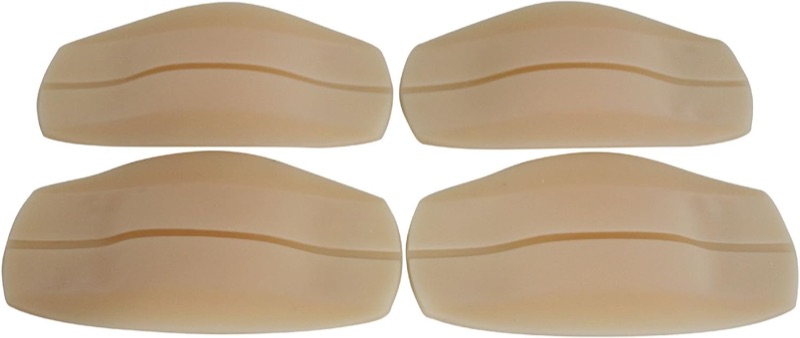
Soft silicone strap cushions, two pairs
A softer cushion that sits between strap and shoulder. Useful as a comparison against a saddle-style pad: the wraparound shape may turn less, but a loose channel can let the strap slide inside it.
Questions to send a supplier
Ask for the exact material and SKU, finished length and width, channel width, thickness at the shoulder, available colours and care instructions. Request top and side photos with a ruler visible.
If the listing says "non-slip", ask what feature creates the grip and whether the seller has a test method or result. Do not turn an adjective in a product title into a packaging promise.
For a fabric sleeve, find out whether its pad can be removed and whether the sleeve fits fixed or detachable straps. For silicone, ask whether both sides have the same texture, whether the flaps are moulded as one piece, and whether a material declaration exists for the exact SKU. "Hypoallergenic" is not a guarantee for every wearer; if that phrase matters, request the supporting document and keep any public claim within its scope.
Order samples in the construction and colours you expect to sell, and check them on more than one strap width and shoulder shape where possible. Marketplace pages often group variants, so confirm that the listed material and dimensions apply to the selected option.
Choose the shape around your actual strap
Reusable cushions fall into two broad designs:
- A silicone saddle sits on the shoulder with flexible flaps that fold around or under the strap. It can often be installed without unhooking the bra.
- A fabric sleeve encloses the strap and is less prone to turning sideways, but usually has to slide over the strap end or be used on a detachable strap.
The product photo rarely tells you which behaves better on your bra.
Measure where the strap crosses the top of your shoulder. Some straps taper, so a measurement at the back attachment can mislead. Compare the width at the contact point with the cushion's usable channel — the space that actually holds the strap, not the outside width of the pad. The strap should pass through without stretching the flaps tight. Too much room is also a problem: during a reach or a shoulder roll the strap can wander inside the channel or slip out.
Ask for that channel measurement when a listing says only "one size". Also check the pad's full length and width: a short pad may leave the strap pressing at both ends, and an oversized one bunches near the neckline or shows under a sleeveless top. The target is a strap centred on a pad that lies flat, not maximum shoulder coverage.
Material is a trade-off, not a contest. Silicone is advertised as non-slip, but unless the seller describes a defined test, that is a claim rather than a measured result. Look for the detail behind it: a textured surface, a tacky face, flaps that retain the strap, or simply a smooth pad. A soft glossy sample can feel pleasant in the hand and still move against skin or fabric. Texture may help grip but collects lint or feels sticky; a fabric-covered pad feels less tacky, can absorb sweat, and needs more careful washing.
Colour and visibility need a separate check. Clear or nude cushions are less noticeable under some clothes, but "transparent" does not mean invisible under every fabric or light. View the sample beneath a pale, close-fitting top if that matters. A narrow neckline may call for a different bra or a clip instead; a shoulder pad can solve pressure and still be visible.
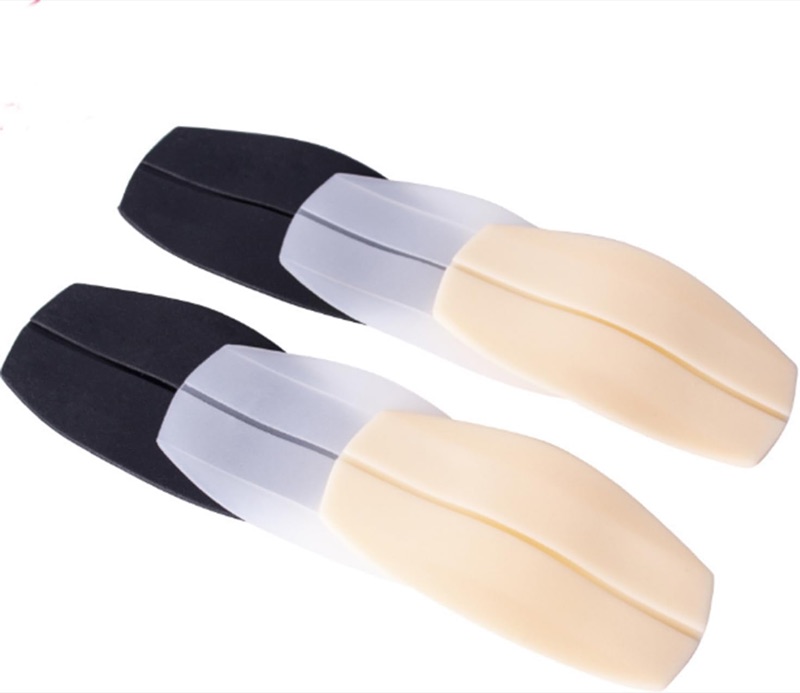
Silicone bra strap cushions, three pairs
A saddle-style pad with flexible flaps that fold around the strap, sold in a multi-pair pack across several colours. Check the channel width against your strap rather than assuming the pair will suit every bra.
A listing to evaluate, not an endorsement
One supplier page shows an adjustable silicone bra-strap cushion in nude, black and white, with a unit price range around US$0.59–0.79 and a minimum order quantity of 200. Treat those as listing fields, not a delivered quote. The visible page did not establish channel width, shoulder thickness or performance across different straps — ask for those details and test the exact variant before considering a bulk purchase.
A demonstration video of a similar cushion shows the strap being tucked under the flaps. It explains the installation; it does not test comfort or retention on different shoulders.
The decision
If the bra is unstable, start there. If it fits and the problem stays at the strap-to-shoulder contact point, choose a cushion whose channel matches the strap and whose position survives normal movement.
It should stay centred without creating a new pressure point. That is a more useful standard than softness in a product photo.