“Double-layer” can make a sleep bonnet sound immediately more substantial. It may also appear alongside “reversible,” “satin-lined,” “silky,” or “two-sided.” Those phrases can describe useful construction details, but they are not interchangeable. A shopper who wants to know what will touch their hair, or a small brand preparing a product sample, needs more than a label on the front of the package.
The real question is not whether two layers are automatically better than one. It is whether the two layers are clearly described, correctly assembled, comfortable in the intended use, and consistently represented in the sample, packaging, and product page.
For a shopper, this means checking what the two sides are made from, how the bonnet can be worn, and whether the closure and seams still make sense when it is turned. For a brand, it means turning a visual product feature into a written specification that a supplier can repeat.
This article is a practical inspection guide. It does not make a universal performance claim for double-layer bonnets. People differ in hair volume, comfort preferences, sleep temperature, and sleeping movement. The aim is to make the next purchase or sample decision more specific.
Double-layer and reversible are not the same claim
A double-layer bonnet has two fabric layers in its body. That statement alone does not tell you whether both layers have the same fibre content, colour, finish, or intended use. One layer may be smooth satin and the other may be a different fabric. Both may be the same material but different colours. The layers may also meet at the edge in a way that changes the feel of the band.
Reversible means that the product is intended to be worn with either side facing outward. A reversible bonnet may be double-layered, but a double-layered bonnet is not automatically reversible. The distinction is useful because a product can have an inner lining for hair contact without being designed to look or fit the same way when flipped.
For a shopper, do not infer reversibility from a photo that shows two colours. Look for explicit instructions or a product image showing both wearable orientations. For a brand, do not use “reversible” in the copy unless both orientations have been sampled and approved. A product that technically turns inside out is not necessarily a finished reversible product.
The same care applies to “satin-lined.” That wording can be accurate and useful, but it should identify which surface is satin and what the other layer is. A shopper should be able to answer: when I wear this bonnet as intended, which material faces my hair? A supplier should be able to answer the same question for each sample revision.
1. Start with the hair-facing surface
The first inspection point is simple: identify the surface that will normally contact the hair. Do not rely on the shinier side in a product image. Fabrics can look different under lighting, and a photo can be styled in a way that hides the inside of the bonnet.
When shopping, look for a clear inside photo, a material field, and care-label images. If the product is described as double-layered but never explains the two layers, treat the material scope as unclear. This is especially important if a listing uses words such as “silk,” “silky,” or “satin” without a fibre-content statement.
When a sample arrives for a brand, turn it inside out and photograph the hair-facing side in good light. Record the sample colour, date, and revision. Then compare the photo with the product-page wording and proposed packaging. This small step helps prevent a common mismatch: the listing describes a smooth inner surface while the approved sample has a different construction or a seam placement that changes the contact area.
Do not try to prove fibre content by touch. Smoothness, shine, and hand feel are not reliable evidence of a fibre claim. Use written supplier confirmation, the specification, and the care label for that question.
2. Inspect how the layers meet at the edge
The edge is where a two-layer design becomes a construction question. Look at the band, the opening, the seam allowance, and any trim. These points affect how the bonnet sits on the head and how it behaves when it is turned or adjusted.
For a shopper, check close-up product photos for a visibly bulky edge, an exposed inner seam, uneven gathers, or an opening that looks different from one side to the other. None of those details proves that the bonnet will be uncomfortable, but they are worth noticing before you buy. A double-layer design can still have a narrow, well-finished edge; it can also have extra bulk concentrated where the band meets the body.
For a brand, specify the edge construction. “Double layer” is too broad for a sample request. Add the band width, whether the edge is bound or turned, where the seam sits, and whether the two layers are joined continuously or only at selected points. Ask for close-up sample photos before the physical shipment if possible, then compare them with the delivered item.
If the bonnet is marketed as reversible, inspect both sides at the edge. The stitching, printed pattern, and logo placement should remain acceptable in either orientation. A label that is comfortable in one direction but exposed in the other is a signal that the reversible claim needs rethinking.
3. Check whether “reversible” changes the closure
The closure deserves its own review because turning a bonnet can move a tie, elastic channel, drawstring, or decorative bow into a different position. A product may look reversible from the body fabric but have a closure that clearly favours only one orientation.
For a shopper, ask where the adjustment sits when each side faces out. Will a tie, knot, or drawstring toggle fall in a comfortable place for your normal sleep position? Does the elastic edge remain covered? If the listing gives no view of the closure from both sides, use the product’s stated wear direction rather than assuming you can reverse it freely.
For a brand, test the closure in both orientations before printing “reversible” on an insert or hangtag. Adjust the bonnet, wear it with the intended hair volume, and look for twisting, trapped ties, exposed seam allowances, or an awkward band position. The test does not have to be elaborate. It does have to be documented well enough that the next sample or reorder uses the same approved arrangement.
This is also the point to separate a two-colour option from a reversible design. A bonnet can offer multiple colourways without being intended to turn inside out. Clear terms reduce customer-service questions and make product photos easier to plan.
4. Compare body layers with the intended capacity
Two layers add fabric to the bonnet body. That does not automatically tell you how much hair the bonnet can hold. Capacity depends on the pattern, depth, length, opening, gathers, and closure—not simply the number of layers.
For a shopper with long braids, locs, extensions, or a high-volume style, check capacity separately from the double-layer claim. A compact reversible bonnet may still be intended for lower-volume hair. A larger style may have enough space but need a different closure position to stay placed overnight. Match the listing’s dimensions and intended use to the hairstyle you wear most often.
For a brand, do not approve a long-hair or braid version based on a standard-size sample. Put the intended capacity into the sample note. For example: “Test with long braids,” “test with loose curly hair,” or “test with a low-volume protective style.” Then inspect whether the layers pull, twist, or compress the opening when filled. The sample should reflect the use case that the product copy will promise.
Use this double-layer bonnet listing on Amazon as a live example of what to review: material wording, inside and outside images, closure placement, dimensions, care details, and current customer questions. The listing can change, so check the exact version before purchasing rather than treating the link as a fixed specification.
Practical routes
These links are starting points for comparison. Confirm current product details, dimensions, material, pack configuration, pricing, and affiliate terms on the live destination before relying on them.
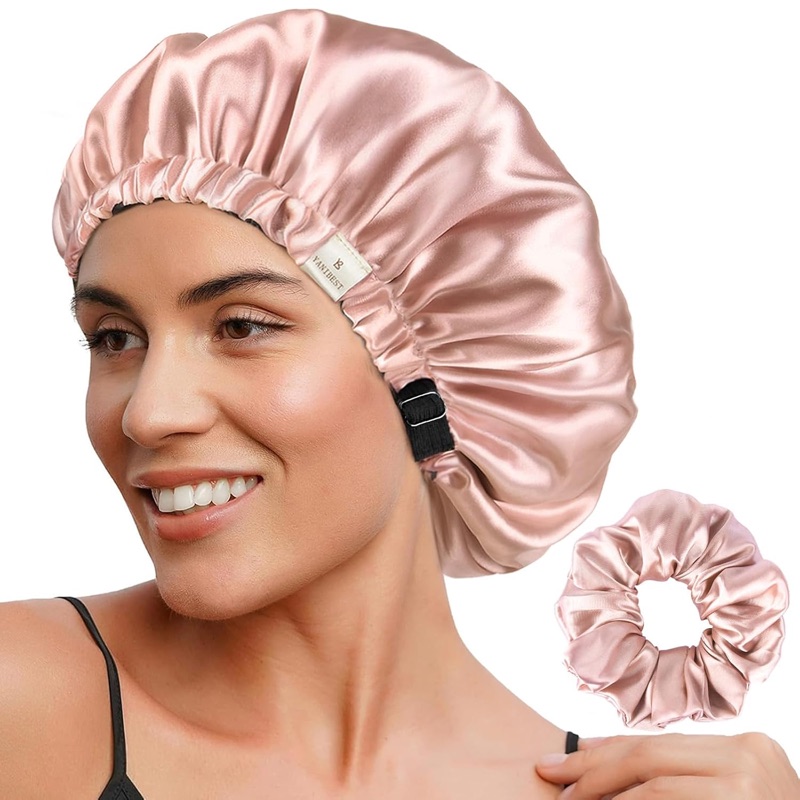
Adjustable double-layer satin bonnet for sleeping
A double-layer satin bonnet with an adjustable band — the construction this checklist is about. Use it to examine how the two layers are joined, whether the bonnet reverses cleanly, and how the band behaves when it is adjusted.
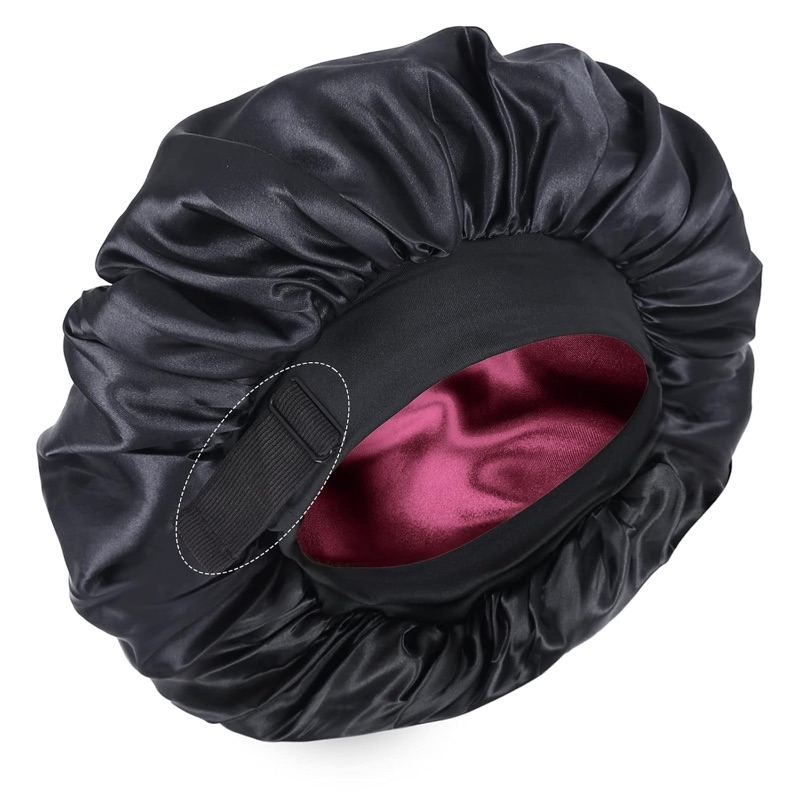
Double-layer adjustable satin bonnets, two-pack — black and wine
A two-pack of double-layer adjustable satin bonnets in two colours. Useful when you want two samples from one listing so you can compare finishing and band tension side by side.
Card photos are the current marketplace listing images and may differ from the delivered product; confirm details on the live listing.
5. Match the label, packaging, and page
Double-layer products often become confusing at the packaging stage. The carton or insert may lead with “silk” in large type, while the product page says “satin,” or the sewn-in label does not distinguish the two layers. The problem is not that marketing must list every seam. The problem is when the claims conflict or leave the customer unable to identify what they bought.
For a shopper, favour listings with a clear material statement and a product image that supports the construction description. Save the page and order record if material information is important to your decision. If the delivered care label does not match the listing, contact the seller before relying on an assumed composition.
For a small brand, make a three-column check before final approval:
| Location | Required statement | Approval question |
|---|---|---|
| Sewn-in label | Fibre content and care wording | Does it match the sampled layers? |
| Packaging or insert | Product name and scoped material claim | Does it avoid implying more than the product contains? |
| Product page | Full material and construction explanation | Can a shopper identify the hair-facing surface and intended use? |
If the body is double-layered but only one layer has a specific composition claim, say so. If both layers are the same material, the wording can be simpler—but only after the supplier confirms it for the exact product revision. Keep screenshots of the final copy with the sample record. That makes a future reorder easier to compare.
6. Look for sample-to-sample consistency
The biggest product-development benefit of this topic is repeatability. A double-layer construction has more variables than a single-layer body: two fabric lots, two surfaces, edge joining, printing or colour alignment, and possible changes to the closure. A product can look fine in one sample yet change when a fabric source, colour, or sewing method changes.
Before a bulk order, ask the supplier to confirm which components are fixed and which may vary. This does not mean every detail must be locked forever. It means the buyer knows which change would require another check. Material content, body layers, closure type, label placement, and the orientation of a reversible product should not change silently.
Create a compact sample log with the product name, revision, date, colour, material statement, closure description, intended orientation, and notes from the inspection. Add photos of both sides and the edge. If a later sample differs, compare it line by line rather than relying on memory.
Use this second Amazon listing for comparison when looking at how different products show double layers, product images, closure details, and care information. It is an affiliate link, not a guarantee of quality, fit, or current construction; read the current listing and variant details before buying.
A short double-layer sample checklist
Before approving a product, answer these questions in writing:
-
What is the fibre content and fabric description of each layer?
-
Which layer faces the hair in normal use?
-
Is the product genuinely designed to be reversible, or simply double-layered?
-
Does the closure work in every marketed orientation?
-
Does the edge remain neat and comfortable-looking when the bonnet is filled as intended?
-
Do the label, packaging, and product page use the same scoped material wording?
-
What changes require a new sample approval before a reorder?
This checklist is intentionally not a list of beauty promises. It is a way to make the design observable. It also makes a useful return or replacement policy easier to write later, because the product description will have clearer boundaries.
Choose clarity over a bigger feature list
A double-layer bonnet may be the right product for a shopper who values two finished surfaces, a two-colour look, or a specific construction. It may also be the right starting point for a brand that can document and maintain that structure. But “double-layer” should not be used as shorthand for every benefit a customer might want.
The strongest purchase decision is based on the construction you can actually identify: which surfaces exist, how they meet, how the closure works, what size and capacity are intended, and what the label says. The strongest sourcing decision uses the same answers, backed by a sample record rather than a marketplace title.
When those details are clear, “reversible” becomes a meaningful design feature instead of a word that leaves the buyer guessing.
Affiliate disclosure: Some links in this guide are affiliate links. HerBrandKit may earn a commission at no extra cost to you.