A standard sleep bonnet can work for short hair yet fail for long braids, locs, twists, extensions, or high-volume curls. The failure is rarely just “the bonnet is bad.” It is usually a mismatch between the space available, the way the closure works, the distribution of hair weight, and how the wearer actually moves during sleep.
Customers describe the result in practical terms: the bonnet slides off, braids escape from the opening, the tie leaves a mark, the weight gathers at the nape, or the ends have to be folded so tightly that the style is uncomfortable. For a product brand, they are design signals.
This guide helps a customer choose a long-hair bonnet more thoughtfully and helps a small brand define a product brief for one. It does not promise a universal “non-slip” result. Head shape, hair volume, braid length, sleep movement, tying method, and the product’s actual dimensions all affect the outcome. The goal is a better fit between the task and the product—not a dramatic claim that one bonnet works for every head and hairstyle.
Long braids create a different volume problem
A bonnet designed around hair volume near the crown behaves differently from one designed to contain length. Long braids have mass and direction. When they are gathered into a shallow round cap, they may stack at the back, press against one point, or pull the opening out of position. When the braids extend beyond the cap’s working length, the ends can be exposed or forced into a tight bend.
That is why “extra large” is not enough information. It may describe circumference, overall fabric volume, or a loose one-size claim. It does not tell a customer whether the product has a long tube-like body, a deep rear pouch, an adjustable length, or enough room for the specific amount of braid hair.
A better product page describes the intended style category in plain language: long braids, locs, twists, extensions, long curls, or high-volume hair. It should show the product on more than one hair configuration, rather than a single model whose hair volume happens to fit. A brand also needs to explain whether the bonnet is intended to contain length downward, gather it upward, or allow the wearer to fold a portion inside. Those are different use patterns and should not be treated as interchangeable.
The four product tasks a long-braid bonnet must solve
A useful design brief begins with tasks rather than decorative features.
1. Contain the full style
The bonnet must give the wearer a realistic route to place the full style inside without pulling, over-folding, or leaving the ends outside. That does not mean making every bonnet enormous. Excess fabric can move, twist, and feel cumbersome. It means matching the form to the intended hair length and volume.
For a long braid bonnet, measure the usable interior shape, not only the flat fabric before sewing. A long tail, pouch, sleeve, or expandable body may create a more useful containment route than adding width to a round cap. If the brand uses an approximate size label, pair it with a photographed capacity demonstration and a note that individual braid thickness and hair volume vary.
2. Stay positioned without becoming painful
Customers often face a false choice: a loose bonnet comes off, while a tight one creates pressure around the forehead or ears. A better product does not guarantee that it can erase this trade-off. It gives the wearer a way to adjust fit while keeping the adjustment separate from the hair compartment.
Common closure concepts include elastic, a wide tie band, a drawstring, snaps, buttons, or a combination. Each creates a different risk. Elastic can simplify use but may become less secure or less comfortable for some head sizes. Ties allow adjustment but require enough length and a clear tying method. Drawstrings and cord locks need to be positioned so they do not become an uncomfortable pressure point during sleep.
The important buyer question is not “does it have a no-slip band?” It is “where does the force sit, and can I change it without crushing my hair or tightening against the same skin area all night?” A product page should show the closure from the side and back, not only a polished front image.
3. Keep the opening controlled
A bonnet can have plenty of fabric and still fail at the opening. If the opening is too wide for the wearer, it may migrate during sleep. If it is too narrow, the wearer may stretch it over braids repeatedly or create a tight edge at the hairline. If the opening and the body are not balanced, the weight of the contained style can pull the bonnet backward.
For a brand, this is a sampling question. Test the opening with the lightest intended hair configuration and with a fuller, longer configuration. Test with the closure in more than one position. Observe whether the product pulls forward, backward, or sideways after normal movement. Do not convert a small test into a universal comfort claim; use it to identify the configurations that need another pattern, size, or instruction.
4. Make the nighttime routine simple
A bonnet that requires a complicated tying sequence every night can create a support burden, even if it looks excellent in a launch photo. Customers need to understand what to do with their braids before they put it on. Should the length be left loose, placed in a low bundle, folded once, or fed into a tail section? The right answer depends on the design, so the brand should show its tested route.
Keep the instructions visual. A three- or four-panel card can show: place the opening at the hairline; guide the braids into the length compartment; adjust the closure; check that the ends are inside and the edge feels comfortable. If the brand has not tested a special method, do not invent one to make the product sound more versatile.
Capacity, security, and comfort must be tested together
A common product-development mistake is to solve each attribute in isolation. A larger body may hold the hair but pull backward. A tighter band may reduce movement but become uncomfortable. A smooth lining may be desirable but not compensate for an opening that does not fit the wearer. The prototype needs a combined test.
Create a simple test matrix before ordering inventory:
| Configuration | What to observe |
|---|---|
| Shorter braids or twists | Excess fabric, opening control, and whether the closure can adjust down |
| Long braids | Whether ends fit without a sharp fold or exposed length |
| Full locs or extensions | Rear weight, closure migration, and pressure points |
| High-volume curls | Interior crowding, flattening, and ability to place hair without force |
| Active sleeper | Position after movement and whether the closure shifts |
| Sensitive hairline wearer | Marks, discomfort, and the placement of ties or hardware |
This is not a clinical test and it does not justify a health claim. It is a practical product test. Record the pattern, garment dimensions, closure type, fabric construction, wearer feedback, and any observed failure. A brand that repeats this process can distinguish “we need a bigger bonnet” from “we need a different closure” or “we need separate long and jumbo products.”
Do not use silk and satin as interchangeable product claims
“Satin” describes a weave or surface appearance; “silk” identifies a fiber. In product listings, those words are often used loosely, which can confuse customers. A brand should identify what it actually sells: for example, a polyester satin, a silk fabric, a blend, or another specified textile. Do not call a synthetic satin product “silk” just because it feels smooth.
Material description is only one part of the product promise. A customer with long braids also needs to know whether the product is single or double layered, how the seam is positioned, whether the closure contacts the same fabric as the hair, and what care instructions apply. Those details are more useful than an unsupported claim that a material will solve all dryness, breakage, or style-retention problems.
For an Amazon consumer comparison, review this user-supplied long-hair bonnet option: Amazon long-hair bonnet option or second Amazon bonnet option. This is an affiliate link. Confirm the live material description, dimensions, closure, and current listing details before buying; the link is not a claim that the item will solve every long-braid fit problem.
Turn customer complaints into product requirements
A long-braid bonnet has unusually clear complaint-to-specification links.
If customers say the bonnet comes off, record their hairstyle category, closure route, approximate hair volume, and whether it slipped forward, backward, or sideways. That may indicate a closure problem, a weight-distribution problem, or an instruction problem.
If customers say their braids do not fit, do not immediately answer “choose the larger size.” Ask whether the limitation is circumference, usable length, the opening, or the way the braids must fold. A wider round bonnet and a longer sleeve bonnet solve different problems.
If customers report a painful band or forehead mark, do not assume that greater tightness is the solution. Record the band width, elastic tension, tie position, and wearer's fit adjustment. The next version may need a different adjustable range rather than a stronger band.
If customers say the product feels bulky, identify where the bulk gathers. A long style may need to distribute hair down a tail rather than stack it at the back of the head. This is a pattern and geometry question, not only a fabric question.
Create a simple feedback log with the product version, hair category, stated issue, return or support outcome, and photo only when the customer chooses to provide one. Review the log before every production change. The customer’s language may reveal that two apparently similar complaints are actually different failure modes.
Practical routes
These links are starting points for comparison. Confirm current product details, dimensions, material, pack configuration, pricing, and affiliate terms on the live destination before relying on them.
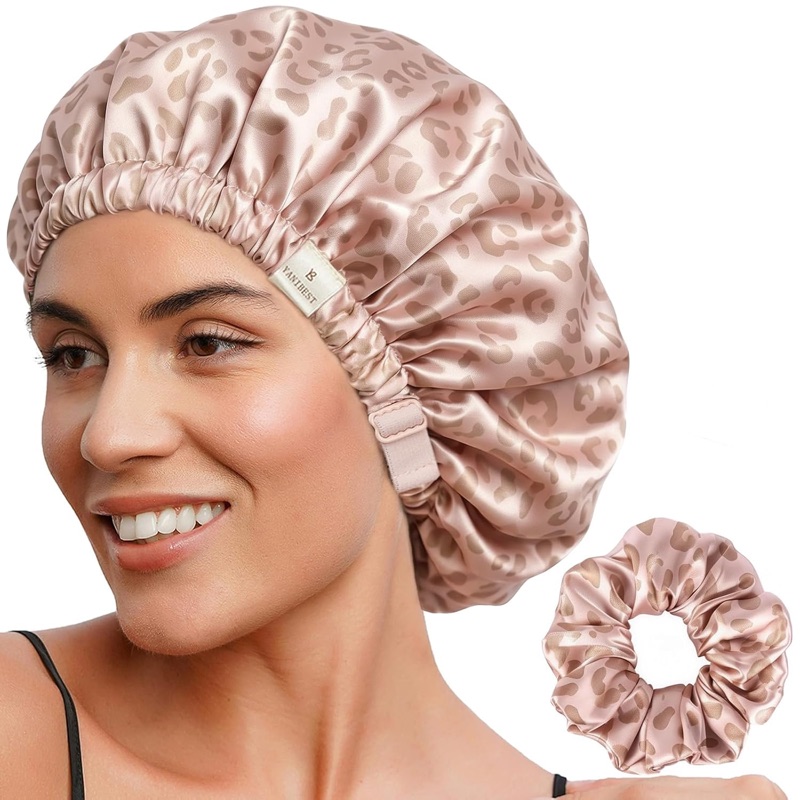
Adjustable satin bonnet, double layer, reversible
An adjustable double-layer satin bonnet listed as reversible, closed with a tie band. Use it as the retail reference for the specification fields in this guide: measured length, opening, band type, and layer count.
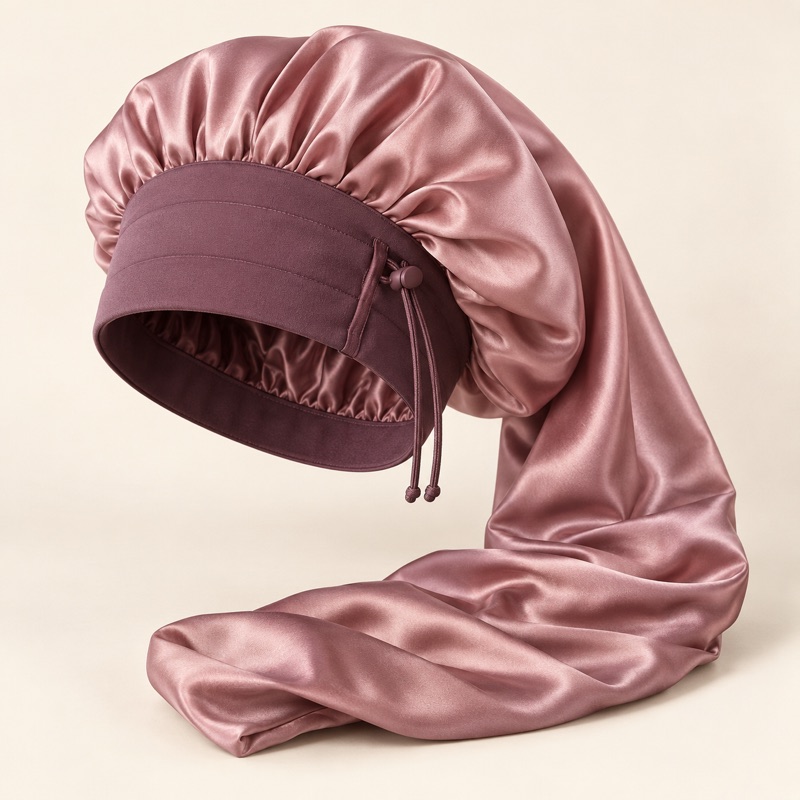
Long satin braid bonnet with an adjustable tie band — wholesale
A wholesale long satin bonnet for braids with an elastic tie band, listed for sleeping and braid wear. A sourcing starting point for confirming finished dimensions, closure construction, fabric composition, and sample terms.
Card photos are the current marketplace listing images and may differ from the delivered product; confirm details on the live listing.
Build the product page around a fit decision
Most competitor pages lead with color, print, or a broad promise to work for every hair type. A stronger page for long-braid customers starts with the decision:
Who is this for? State the intended length and volume category without pretending to measure every person.
How does it contain hair? Show the inside shape and the intended placement route.
How does it adjust? Show the closure and where the wearer can change tension.
What is it made from? Name the textile and construction accurately.
When might it not fit? Explain that very short hair, very high volume, or a different style distribution may require another shape or size.
A short comparison table can help:
| Customer situation | Product feature to inspect |
|---|---|
| Braids escape from a standard cap | Usable interior length and opening control |
| Bonnet slips during active sleep | Adjustment range and where the closure sits |
| Hair gathers painfully at the nape | Long-tail or distributed-length construction |
| Band leaves marks | Band width, adjustability, and closure placement |
| Style is short but very full | Interior volume rather than only length |
This framework helps the customer see whether the product matches her task before purchase.
Source the product as a system, not a fabric tube
For a small brand, sourcing questions should follow the same logic. Ask the supplier to confirm the finished dimensions, the body pattern, the opening construction, closure type, fabric composition, seam placement, and packaging. Request a sample in the exact intended configuration before approving any custom color or logo work.
For the Alibaba candidate you supplied, use the link only as an inquiry path: long-braid bonnet sourcing option on Alibaba. This is an affiliate link whose product ID matches the candidate listing. Its current landing-page details could not be independently reviewed in this browser because Alibaba presented a verification challenge. Confirm the final material, finished dimensions, closure, sample terms, MOQ, packaging, customization, and CPS landing page directly before you make a customer-facing claim.
Keep an approval sheet that separates confirmed facts from open questions. “Adjustable” is not enough; note how it adjusts. “Satin” is not enough; note the fiber and construction. “Long” is not enough; note the usable internal geometry. This protects the brand from turning a marketplace title into a product specification.
The better bonnet solves a visible mismatch
The opportunity is not to claim that every customer needs an expensive or complicated sleep bonnet. It is to acknowledge that long braids and high-volume styles have a different containment and fit task from short hair.
A better product gives the wearer room for the full style, a closure she can understand and adjust, an opening that stays controlled, and instructions that make nightly use realistic. A better brand tests those functions together, names the material honestly, and collects feedback in a way that improves the next version.
When the product is designed around that real task, “for long braids” becomes more than a label. It becomes a specification the customer can inspect before she buys.
Affiliate disclosure: This guide may contain affiliate links. If you use one, HerBrandKit may earn a commission at no extra cost to you.