A customer opens a press-on set, uses the included glue once, then comes back for a replacement nail two weeks later. The adhesive may still be liquid. The cap may nevertheless refuse to turn, the nozzle may dispense sideways, or a crust on the neck may stop the cap from closing. For a small brand, that is a packaging failure with a predictable consequence: a product sold for several applications becomes a single-use accessory.
This guide is for a seller deciding which small nail-glue format to include with repeat-use press-ons. It separates three faults that customers often call "dried-out glue," then sets out a sample test for the bottle, applicator, cap and filled adhesive as one system. It does not assume that a precision nozzle, a brush, or a "no-clog" claim will solve every failure.
Three failures that look alike in a review
Start with what the customer actually observed. A blocked outlet means the cap comes off but liquid does not emerge normally. A bonded cap means adhesive residue has joined the cap to the nozzle or neck. A cap that turns without releasing, or will no longer tighten, suggests damaged or misengaged threads or a closure assembly fault. The fixes and supplier questions differ. Do not classify all three as glue that cured inside the bottle.
The distinction is visible in customer discussions. One press-on user described wiping the nozzle after use yet finding that residue eventually prevented the lid from closing tightly; the bottle was still far from empty. Another said a cap kept spinning while the adhesive remained liquid. These are individual accounts, not a defect-rate estimate, but they expose the difference between adhesive condition and closure usability.
Look at the return or complaint photo before choosing a remedy. A white deposit at the outlet suggests a blockage at that point; crust around the bottle neck points to sealing and cleanup; an intact, clean neck with a rotating cap calls for a closer look at the cap and neck fit. If the user has cut the nozzle, pried open the cap, or transferred the contents, record that too. Those interventions can change the evidence and make a subsequent leak hard to attribute.
Why the package deserves its own approval test
Many nail glues contain cyanoacrylate adhesives. Their use instructions and warnings matter because they can bond skin quickly; a clogged bottle should never be treated as an invitation to squeeze harder or aim the outlet toward the face. Poison-control guidance also documents the heat produced when cyanoacrylate contacts cotton or wool, a reason to avoid casual cleanup advice involving those fabrics. Read the actual formulation label and safety instructions for the candidate product rather than assuming every adhesive sold as nail glue has the same composition.
One brand sells a small precision-nozzle nail glue; other brands sell brush-in-cap versions. Both formats are real retail options. Their product pages establish the applicator formats, but do not establish that one will resist clogging better under your brand's actual use and storage conditions.
Specify the job before choosing a format
Write the intended customer use on the sample request. A tiny glue tube enclosed for one manicure has a different job from a separately sold bottle promoted for multiple press-on sets. If the brand promises reusable nails and later replacement applications, it should test access to usable adhesive at those later sessions. A larger nominal fill is no advantage if the user cannot reach it after the first opening.
For a precision outlet, note the bottle material, fill amount, outlet shape, cap construction, tamper feature if any, and whether the nozzle is supplied open or sealed. Ask the supplier to show how the customer first opens it. For a brush-in-cap bottle, record the brush reach at low fill, the neck wiper geometry and whether the brush returns to the bottle without coating the outer thread. These observations are format questions, not claims that a particular design is superior.
Keep the specification tied to the exact adhesive that will be sold. An empty bottle can feel excellent in a showroom; the filled unit can behave differently when product reaches the threads, when viscosity changes across storage conditions, or when a customer pauses with the cap open. A packaging-only sample is useful for fit and artwork, but it cannot approve repeated use of the finished glue. Request production-intent adhesive, fill, bottle, applicator, cap, seal and label together.
Do not substitute a generic industrial adhesive because its bottle looks convenient. Request ingredient information, warnings, directions, shelf-life basis and destination-market review appropriate to the actual nail product. The US Food and Drug Administration's nail-care overview discusses labelling and safety concerns for nail products, but it is not an approval of any candidate glue or the seller's packaging. A brand planning retail distribution should have its responsible team review the exact finished product and local requirements.
A repeat-use test that reveals the defect
Order at least two sample lots if the supplier can provide them, and retain each lot identifier. Before opening, photograph the cap and seal, weigh or otherwise document the filled unit if the supplier's specification permits it, and check for leaks or damaged packaging. Reserve unopened controls. Work with an appropriate, ventilated setup and follow the product's directions and safety precautions. The number of units and pass limits below are a proposed brand protocol; they are not a published industry standard.
First, ask several people unfamiliar with the bottle to open and dispense it using only the supplied instructions. Record whether a tool was needed, whether adhesive emerged as a controlled amount, whether it dripped down the neck, and whether the cap could be replaced with normal hand pressure. If a nail seller tests only its own experienced staff, it can miss the opening behaviour of a first-time buyer.
Next, simulate separate application sessions rather than squeezing the entire bottle in one afternoon. Dispense the amount needed for a small set, recap according to the instructions, store in the instructed orientation and reopen after an interval that reflects actual use. Repeat several cycles. Log each opening attempt, first-drop behaviour, visible residue, cap engagement and whether a normal user can still apply the adhesive. A cap that turns but fails to seal should be recorded separately from one that cannot be removed.
Do the same after shipping simulation appropriate to the finished kit. A miniature bottle lying on its side in a mailer may leave adhesive at a different part of the closure than one stored upright on a shelf. Inspect for leaks, label damage and cap displacement before the next use cycle. If the brand uses a rigid display box, test with the real insert and surrounding accessories; a bottle pressed against a file or card may move differently during transit. Record the actual packaging configuration rather than describing a loose bottle as an approved kit.
Then leave a sample in the conditions specified for the product and reopen it at realistic intervals. Document the room conditions, date of first opening, recapping method and whether the product remained usable. Do not turn an accelerated storage experiment into an unsupported claim such as "will last six months in every bathroom." The purpose is to expose weaknesses and compare candidates under the same protocol. A formal shelf-life statement needs a separate substantiation plan.
A simple log can use five outcomes: opens normally; needs extra grip but opens; outlet blocked; cap bonded or spinning; and leaks or cannot reseal. Photograph representative failures and keep the failed unit, cap and packaging together. A supplier can investigate a physical unit and lot more effectively than a sentence saying "the glue dried."
Decide what counts as a pass
Set the acceptance criteria before looking at results. For example, a brand might require every tested unit to open by hand, dispense controllably on the first and later sessions, close fully after wiping as directed, and arrive without leakage. The actual sample size, failure threshold and duration should match the order value, claims and risk tolerance; a handful of flawless prototypes cannot establish a population-wide defect rate.
Do not accept a candidate because the adhesive holds well on day one if half the sample bottles cannot be reopened later. Conversely, do not reject a whole formula because an early cap prototype has a poor thread fit. Keep the formula, bottle and closure identifiers separate so the team can identify which change fixed which failure. When the supplier revises the cap or nozzle, repeat the use test on the new combination. A change to an applicator is a new sample for this decision.
Ask the supplier how it checks fill, torque or closure seating, leakage and cap/nozzle assembly, and what records can be tied to a production lot. A supplier's claimed quality-control procedure is a starting point for questions, not proof that your order will perform the same way. Request an agreed reference sample from the approved lot, the component identifiers and a plan for investigating complaints. If a buyer changes adhesive source, cap mould, neck finish or assembly location, the original sample approval may no longer represent the delivered product.
Retail and sourcing references
The two links below are format references for a compact precision-nozzle tube and a brush-in-cap bottle. We may earn a commission from qualifying purchases through these links. Neither product has been physically tested for this article, so use them to compare package types, not as evidence of clog resistance.
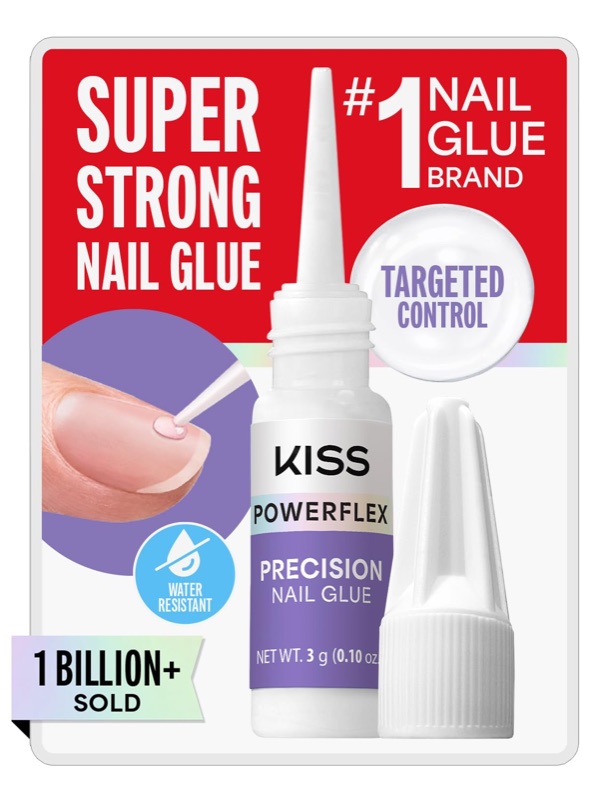
Nail glue with precision tip, fast dry
A compact bottle with a precision nozzle, the format this article's opening and dispensing test is written for. Compare the outlet shape, cap threads and first-open experience — a product page states the format, not how the closure behaves after three sessions.
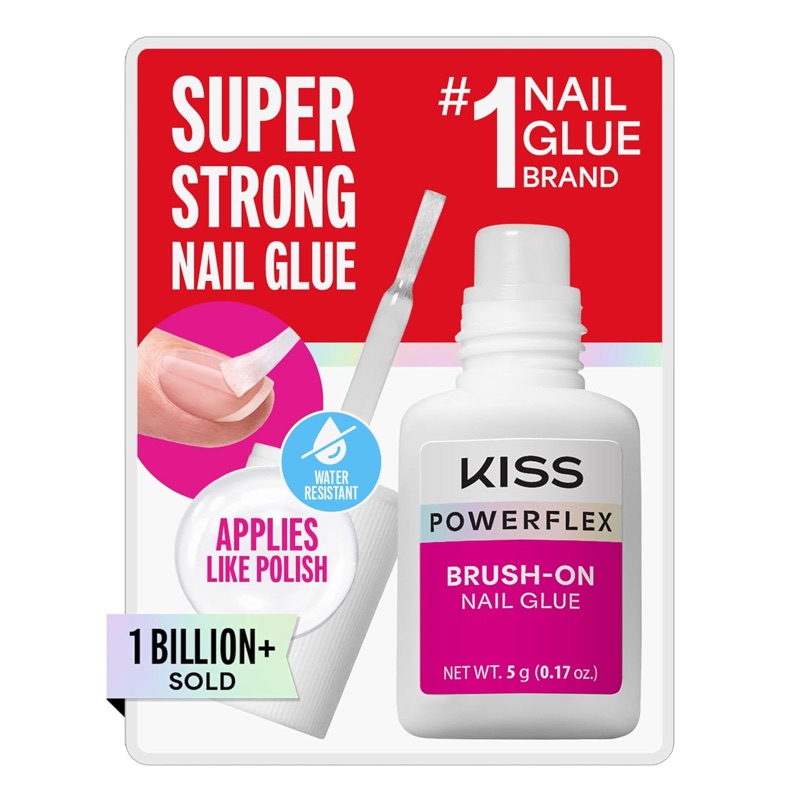
Brush-on nail glue for press-on sets
A brush-in-cap bottle, where the brush reach at low fill and the neck wiper decide whether the remaining adhesive stays usable. Use it as the second format in the repeat-use test: reopen both, wipe as directed, and compare which one still closes cleanly.
Card photos are the current marketplace listing images and may differ from the delivered product; confirm details on the live listing.
Rating, review count, price and availability can change, so check the live listing and delivery location before purchasing.
Instructions should prevent predictable misuse
Customers cannot perform a secret factory ritual. Put the necessary steps in the kit instructions in plain language, then observe whether first-time testers can follow them. Tell them how to close and store the exact format supplied. If wiping is required, specify the material and method approved for that adhesive; do not copy an unrelated glue-maker's instruction. One adhesive company recommends clearing and wiping its nozzle after each use, while a lash-adhesive maker describes its own bottle-specific routine. Neither procedure automatically validates a press-on glue from another supplier.
Avoid dangerous "hacks" in a branded insert. Do not tell customers to force a blocked squeeze bottle, cut the tip wider, pry the closure near their eyes, or use their teeth. Do not suggest solvents, heat or a pin unless the exact supplier has reviewed that process for the filled bottle and the instructions address the associated hazards. If the container is damaged, leaking or bonded shut, replacing it is often a more sensible customer-service decision than asking a purchaser to repair it.
The card also needs to distinguish application from storage. A customer may understand how to attach a nail yet have no idea how to keep the remainder usable. State whether the product is intended for multiple sessions, how to recap it, where to find the lot code and what to do if a cap or outlet fails. Do not promise that the adhesive will remain usable for a fixed period after opening unless that claim has support for the finished package.
What to compare when buying small quantities
If you are private-labelling, ask whether the quote covers a complete filled nail glue or only an empty package. Confirm the adhesive, the fill facility, cap compatibility, seal, label, warnings, batch marking, minimum order, samples and shipping restrictions separately. An empty 2 ml adhesive container offered by a packaging maker demonstrates a possible component category; it says nothing about the finished glue or its fit with your formulation.
Do not pay for a custom cap simply because a listing calls it "anti-clog." Ask for the proposed mechanism and run the same repeat-use protocol against a stock closure. A proprietary mould increases the cost of changes if the first design fails. Equally, the cheapest included glue can be expensive if customers discard it, request replacements or lose confidence in a reusable nail set. Record usable applications per bottle and complaint type alongside unit price, rather than comparing only cost per millilitre.
The decision to take back to the supplier
Send the supplier a short fault report: product and lot identifiers, filled-package photos, opening-cycle log, storage orientation, transit configuration, number tested, number failed and one representative failed unit. Ask whether it can identify the cap, nozzle and bottle components delivered in the order, and whether the production lot uses the same combination as the approved sample. Request a corrective sample before agreeing to a substitution or a larger reorder.
For customers, the standard is simpler. They should be able to open the package, apply the glue according to its directions, close it normally, and use the remaining adhesive as the brand claims. The bottle should not need a repair tutorial to complete that ordinary task. A repeat-use test makes that promise testable before the next batch is bought.