An empty bin in the stall makes a routine change feel like a logistics problem. The disposal rule itself is simple: fold the used surface inward, wrap the pad in its wrapper or toilet paper, and put it in an appropriate rubbish bin. If you cannot reach a bin right away, close it in a small bag and carry it until you can.
Do not flush the pad, its wrapper, wipes or the bag. Public health guidance in several countries says to wrap a used pad securely in its wrapper or toilet paper and place it in a trash bin, and environmental agencies list pads among the things that should never go down the toilet.
So a special bag is optional. With a waste bin in the room, a wrapper is usually enough. A small bag is useful for the awkward stretch between the stall and the next bin, on a trip where no bin is available, or when you want an outer layer before the wrapped pad goes into shared waste.
First, check what disposal option is actually available
Take a quick look around before you start. Some stalls have a small sanitary receptacle attached to the wall; others have a lined bin by the sink, and some have neither. If there is a designated container, use it and follow the posted instructions.
Wrapping the pad first helps keep it together. Pad makers point out that the adhesive strip can catch on a sanitary-bin door, which is one reason not to drop a pad in loose.
No special bin? Wrap the used pad in the wrapper or toilet paper and put it in the ordinary trash. Purpose-made bags are another way to seal it before it goes in, but the important part is the destination: a bag gets the waste to a bin; it is not the disposal method by itself.
Follow local rules and restroom signs where they differ. Some venues collect sanitary waste separately. If there is no receptacle in the room, wrap or bag the pad and carry it to the next suitable bin. Leaving it beside the toilet or in a sink only moves the problem to someone else.
How to wrap a pad without making a mess
There is no elaborate technique. Fold the pad so the absorbent side is on the inside, then roll or fold it into a manageable shape. The wrapper from a fresh pad often works as an outer wrap; if it does not cover the whole thing, a little toilet paper can hold the fold. Put the wrapped pad in a disposal bag only when you need to carry it, or want a second layer before it goes into a shared bin.
Try to keep the adhesive strip from catching on the bin liner or the inside of a pocket. Fold it against the pad or cover it with the wrapper. Once a bag has touched the used product, do not reopen it to adjust the wrap. If the wrapper tears or the bag leaks, add another layer and use the next suitable bin. The goal is ordinary containment, not an airtight package for something going straight into a trash can.
Wash your hands after changing. A disposal bag only helps with handling; it does not replace handwashing.
When a personal disposal bag is worth carrying
A personal disposal bag earns a place in a purse when you regularly change somewhere with no bin, or when you are away from home on a commute, a hike or an event and cannot find one quickly. It gives you a closed carrier for the short walk to a waste bin, and it can make the trip less conspicuous if privacy matters to you.
In period-care forums the gap gets described plainly: someone asks whether small bags exist, and the replies mention spare wrappers, small bags, or simply adding a bathroom bin at home. Those are individual workarounds, not evidence that everyone needs a dedicated product.
At home, a small lined wastebasket may be easier than keeping a separate bag for every change. At a friend's house, a wrapped pad can go into the bathroom bin if there is one. It is on travel days, or in a restroom with no bin, that a personal bag has a clear job: carry the wrapped pad until disposal is possible.
Keep used products apart from clean supplies. A regular zip pouch for pads and tampons is not automatically a suitable waste container. If you carry a reusable pouch with a separate washable compartment, follow the maker's cleaning directions; otherwise use a disposable liner or a dedicated disposal bag.
What to do if there is no bin nearby
If you have a disposal bag, place the wrapped pad inside, close it as instructed, and carry it until you reach a suitable rubbish bin. Keep it separate from food, clean menstrual supplies and anything that could be damaged by contact. Avoid leaving a used pad in a car, locker or bag for longer than necessary: the bag is a short-term carrier, not a storage container.
If you do not have a bag, wrap the pad securely in its wrapper or toilet paper and carry it discreetly to the nearest bin. A clean spare bag, a small paper bag or another suitable wrapper can stand in, but do not use a container that can leak or open during the trip. Forum users mention dog-waste bags and sandwich bags for exactly this reason — practical anecdotes worth checking for closure and tears before you rely on them.
Outdoor trips need a little more planning. Backcountry guidance in several countries tells visitors to pack out used menstrual products and not to put pads into long-drop or flush toilets. Those rules are written for specific parks and routes, so follow the guidance for the area you are visiting rather than assuming every site is set up the same way. A small closed bag carried separately from clean supplies keeps waste contained until you reach a bin.
If a venue has staff or a first-aid station, ask where sanitary waste should go instead of leaving it in an unsuitable container.
Why pads and disposal bags should never be flushed
A menstrual pad is built to absorb fluid and is not designed to break apart in a toilet. Health agencies warn that flushing pads can clog plumbing and damage sewage systems, and environmental agencies list sanitary pads among items that should not be flushed, distinguishing them from toilet paper intended to disperse in water. A plastic bag, wipe, wrapper or tampon applicator should not be flushed either.
Even if a toilet appears to clear the waste, that does not mean it has passed through the plumbing safely. The blockage may occur farther down the line, or in a pump, septic system or wastewater equipment. Follow local signs and plumbing guidance; if a toilet has no sanitary bin, wrapping and carrying the pad to a rubbish bin is a better fallback than flushing it.
Choose a bag by the job, not by the word "odor-proof"
Marketplace titles are not always helpful. One seller calls an item a personal disposal bag, another a sanitary napkin bag, and a hotel listing may use a third label. Ignore the category name long enough to answer a simpler question: will this hold the pad you use, and will you be able to close it?
Look for dimensions, count, material and closure in the listing itself. If those details are missing, ask before ordering.
The closure matters most when you are away from a bin. A flap with adhesive, a fold-over top, a drawstring and a zipper all work differently. A zipper can be cleaned and reused only if the manufacturer designed it for reuse — do not assume every small pouch is washable. A roll of tear-off bags saves space, but check that you can separate one without ripping the next. Try it at home with a clean folded pad before depending on it in a restroom.
Size is easy to underestimate from a product photo. Fold the pad you actually wear, then compare it with the stated bag dimensions. A liner and an overnight pad do not take up the same space. Opaque film can feel more private than clear film, but that choice is personal; if privacy is not a concern, there is no reason to pay extra for opacity alone.
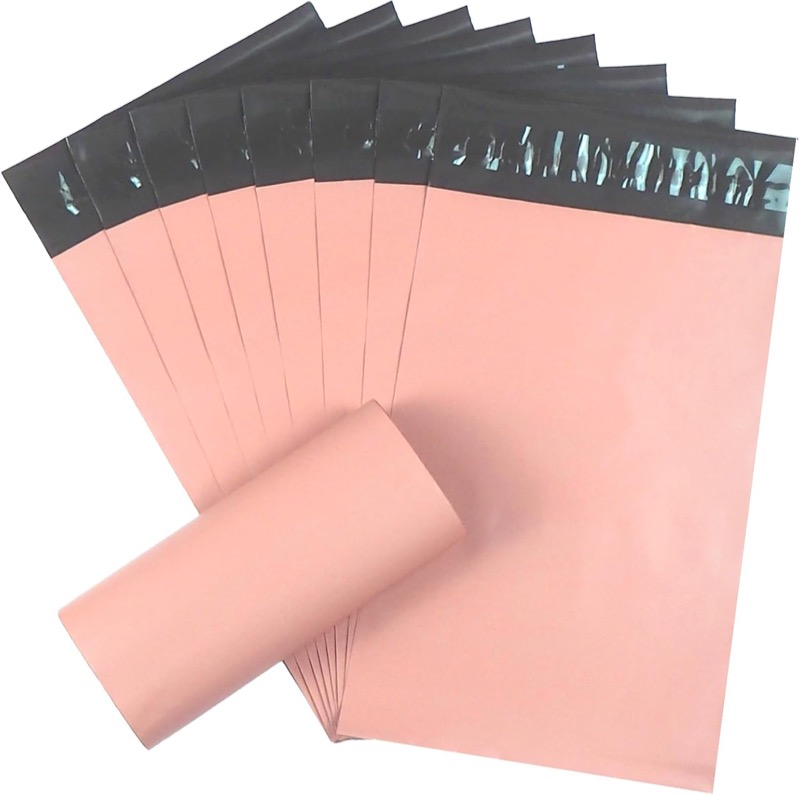
Self-sealing sanitary disposal bags, 100 pcs
Small opaque bags with a self-sealing closure, sold for pads and tampons. Compare the stated dimensions with one folded pad from your own routine before relying on the count.
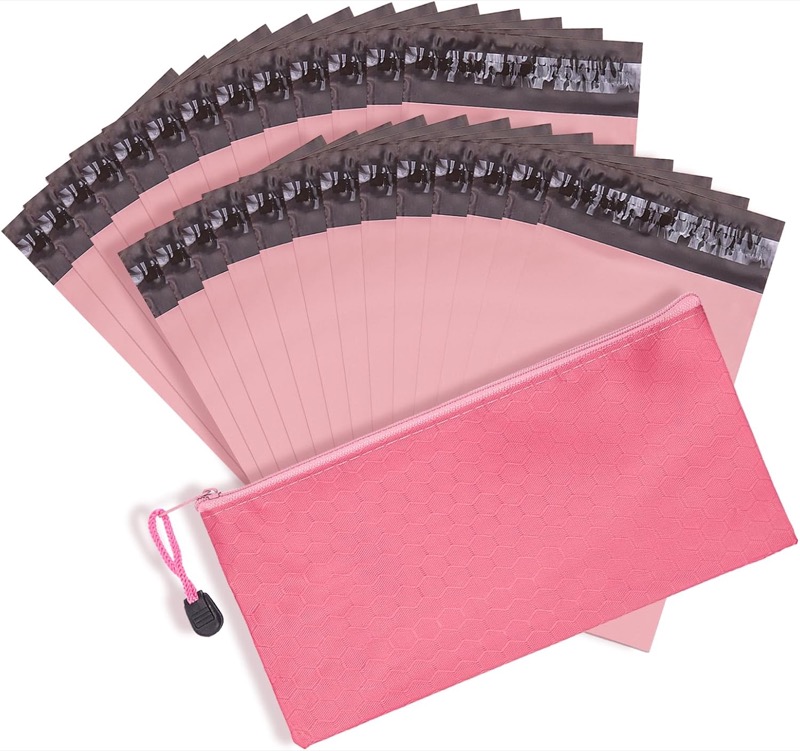
Sanitary napkin disposal bags, 101 pcs with pouch
A similar bag format sold with a small zippered pouch, which matters if you want the used bag separated from clean supplies in your handbag. Check whether the pouch is meant for carrying bags or for used ones.
Be cautious with "odor blocking", "leakproof", "biodegradable", "flushable" and "medical grade". Those phrases need specific proof, and the words on a listing do not tell you how the bag performed. A closed bag may contain the pad, but "odor-proof" is an absolute claim a photo cannot verify. "Biodegradable" also does not automatically mean the bag belongs in a home compost or recycling bin. And no disposal bag belongs in the toilet.
A quick buying checklist for personal-use bags
Before ordering, check these on the product page or package:
- Bag dimensions and count, so you can tell whether one folded pad fits.
- Closure type, and whether bags are individually sealed, on a roll, or folded flat.
- Material and opacity, based on the privacy and carrying preference you actually have.
- Single use or reuse, as the manufacturer specifies it.
- Carrying and disposal instructions, including any local waste limits.
- What "odor control" or "leak resistant" means, if the seller makes that claim.
A few practical details are easy to miss in a photo. If bags come on a roll, check whether they tear off cleanly at the perforation; if each is folded flat, see whether it opens without a struggle. Keep one or two where you can reach them before changing, rather than buried under the rest of your handbag. At home, store them beside clean pads so you remember them on days you expect to be away from a bin. Those small usability details matter more than premium-sounding material names when the bag is needed in a hurry.
For a first purchase, a small pack is enough to check whether the size, closure and feel work for your routine. Do not let a very large count or a low per-piece price distract from that basic fit test. A bag that is too small, awkward to open one-handed or difficult to seal will not help in a cramped restroom.
If you are choosing bags for a school, workplace, hotel or event venue, test a sample in the actual dispenser or restroom before ordering cartons. Confirm finished dimensions, count per pack, material, closure and disposal instructions; a sample with different film or a different closure is not a meaningful check of the version you intend to buy.
Questions people ask
The bathroom has a regular trash can. Can the pad go there?
Yes, unless the venue tells you to use a separate sanitary bin. You do not need a branded bag for that routine case; the wrapper or toilet paper does the job.
What if there is no bin at all?
Do not flush the pad as a workaround. Wrap it and take it to the next appropriate waste point. A personal bag helps during that short carry, but it is not meant to become a place where used pads are kept for the rest of the day.
Is a "flushable" wipe an exception?
No. Wipes, wrappers, applicators and bags are not designed to disperse like toilet paper, and plumbing guidance generally treats them as trash.
The practical choice
For most routine changes, the best disposal tool is the bin already in the room plus the pad's own wrapper or toilet paper. Carry a small pack of sealable personal disposal bags only if you regularly change somewhere without a bin, or need a closed carrier between the stall and a waste point.
The product solves one limited task: enclosing a used pad for the short trip to a rubbish bin. It should make that step easier without encouraging flushing, leaving waste behind, or keeping used products in a bag for long periods.