An alcohol pad is a small part of a press-on set until the customer opens it. She files and pushes back the cuticles, unwraps the pad, wipes several nails, then finds it has gone dry before she reaches the other hand. The next instruction says to apply the adhesive to clean, dry nails. Does she continue, find a substitute, or postpone the set?
One user described exactly that frustration: the included pad was insufficient for cleaning the nails and dealing with glue residue. It is one person's account, not a measured failure rate. Yet it identifies a useful design question for a brand: what job is the included wipe supposed to finish, under the instructions printed in this particular kit?
There is no industry-wide answer of "two." Retail press-on kits vary: some list one prep pad, one brand's application page lists two, and a prep-pad seller describes a much more generous one-per-fingernail practice. Those examples establish variation, not a standard. The right quantity depends on the pad, the application sequence, and whether the pack is meant for one manicure or later reapplications.
First define the job of the pad
A nail-prep pad is there to wipe the natural nail before the adhesive step in the kit's own directions. It does not replace washing hands, removing old polish, dealing with visible debris, or following the adhesive maker's instructions. A pad sold for removing polish may contain oils or conditioners; it should not be silently treated as a prep pad. A dry lint-free wipe has no cleaning liquid in it until the user supplies one. Nor does a pad's "sterile" or "antiseptic" label prove that it improves press-on wear.
Write the intended customer sequence before requesting samples. Is she applying all ten nails with adhesive tabs? Is glue supplied? Will she use the set again after removal? Is the pad meant to prepare natural nails only, or do your instructions also ask her to wipe something else? If the answer to the last question is yes, specify that second task separately. A pad that is adequate for ten quick nail-bed wipes may not remain wet after cleaning another surface.
Order matters. The customer should finish dust-producing filing before the final wipe, keep hands free of lotion, and allow the nail to dry in accordance with the product directions before applying an adhesive. Retail press-on tutorials, for example, explicitly instruct users to let the wiped nail dry. Do not turn that into a universal number of seconds: your adhesive and wipe suppliers may specify different sequences. Test and print one clear sequence that matches the actual components you sell.
Where "one pad" breaks down
Picture a customer using a folded, individually wrapped pad. On the first hand, a wet face of the pad is easy to find. By the second, she may be rubbing with a nearly dry or visibly dirty surface. Another customer has short nails and can work quickly; a third has a longer prep routine and pauses to check sizes between hands. Small pad area, low initial wetness, a thin substrate, a delayed application, or an imperfect pouch seal can all change the experience. These are hypotheses to check, not reasons to declare every one-pad kit defective.
The wording on the instruction card can create the shortage too. If a kit promises an additional application with the same pad, that promise is incompatible with an opened disposable sachet. If it tells a customer to clean natural nails, false nails, and excess glue with one square, the pack has been asked to do several jobs. Make the stated use match the test you perform. If a separate cleanup product is needed, do not hide that need in a footnote.
Social posts and short videos can reveal the precise moment people improvise: wiping both hands with a dry pad, reaching for a bottle at home, or omitting the step when travelling. Marketplace listings show that refill packs are marketed as a distinct product, but a seller listing is evidence of an offer, not proof of customer outcomes. Save the specific complaint, the kit format being discussed, and the date. Do not convert views, likes, or one comment into a prevalence claim.
Run a ten-nail use trial before choosing a count
Put the proposed pad inside the finished sample kit, with the final card and the actual adhesive. Recruit a small group of people who have not written the instructions. Ask each to prepare ten nails in her normal setting, without prompting her to use the pad "correctly." This is a usability check, not a clinical adhesion study. Give testers a replacement sachet if necessary; record the point at which they ask for it.
Use the same observation sheet for each candidate and sample lot:
- How many sealed pads were in the kit, and did each wrapper open cleanly?
- On which nail did the user first say the pad felt too dry, left fibres, or seemed dirty?
- Did the user complete the stated prep sequence, open a second pad, use another product, or skip a step?
- How long was the pad exposed before the final nail, and were there pauses to find sizes or read directions?
- Was there liquid leakage, a torn pouch, an unreadable label, or transfer onto the instruction card and adhesive pack?
Record the pad's dimensions, material, declared liquid formulation, pouch dimensions, and lot alongside the observation. Repeat the exercise with a second shipment or production lot before committing to a durable spec. If one pad reliably completes your intended one-manicure sequence, two may add cost and waste without improving the customer task. If testers need a fresh pad for the second hand, compare a two-pad pack with a larger, suitably sealed single pad. Do not decide on the count from a supplier photograph.
Adhesion complaints should be handled cautiously. A lifted press-on could involve fit, nail condition, moisture, adhesive, application pressure, wear conditions, or the wipe. A ten-nail trial can show whether the customer can complete the prep step. It cannot establish how many days a manicure will last. Keep usability observations separate from any wear test, and record the full kit configuration if you run the latter.
Turn the trial into a purchase specification
"Alcohol wipe, one piece" is not a sufficient purchase description. Ask the supplier for the unfolded pad dimensions and substrate, the declared formulation and concentration where applicable, the individual pouch construction, the unopened shelf-life basis, storage instructions, case count, lot identification, and current artwork. Get a sample from the exact offered stock or proposed production line. Do not accept a larger sample pad and a smaller production pad as equivalent.
For a consumer kit, inspect the sachet as a packaged component. The seal should remain intact during assembly and ordinary transit. The customer should be able to open it without scissors or spilling on the nails and card. Test a few packs from different positions in a shipping carton, then repeat after the assembled kit has been handled and shipped as it will be sold. A count of correctly packed pouches says little if some arrive dry.
If the supplier uses "sterile," "antiseptic," or medical-style claims, ask what exactly those claims cover and what documentation supports them. A cosmetic nail-prep instruction should not casually inherit a medical claim from a generic pad listing. Alcohol products also need appropriate handling, warnings, and transport review for the market and fulfilment route. Have the supplier provide the relevant safety and packaging information; do not assume every alcohol pad ships under the same rule everywhere.
There is a practical reason to keep the lot and supplier record. A US FDA recall notice covered specified lots of large alcohol prep pads because of potential microbial contamination. That notice does not implicate the products compared here. It shows why a brand should be able to identify which wipe lot went into which kit batch and contact affected customers if a component is recalled. Keep the incoming carton label or invoice, the production lot, the packout date, and the finished-kit lot together.
Retail and sourcing references
The two links below are benchmark formats, not approved components: one premoistened alcohol pad and one dry lint-free wipe. We may earn a commission from qualifying purchases through these links, and a retail pack is not a confirmed custom-packout or wholesale supply agreement.
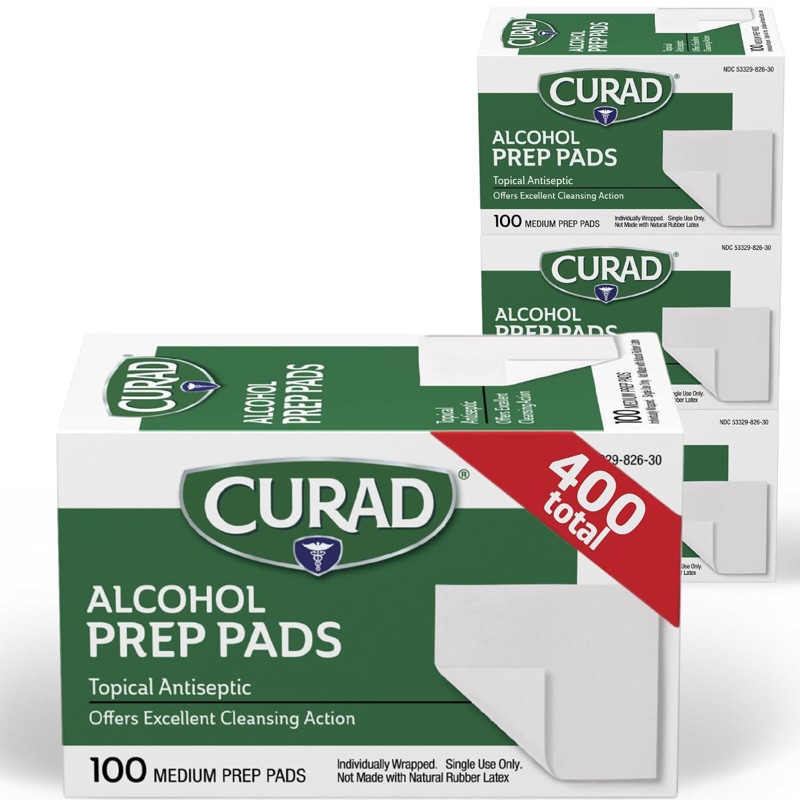
Alcohol prep pads, 400 count, 70% isopropyl
Individually wrapped 70% isopropyl pads, sold as four boxes of 100, which makes a readily identifiable reference for size and packet handling. Buy it to run the ten-nail trial — an Amazon retail pack is not a wholesale specification or a custom-packout offer.
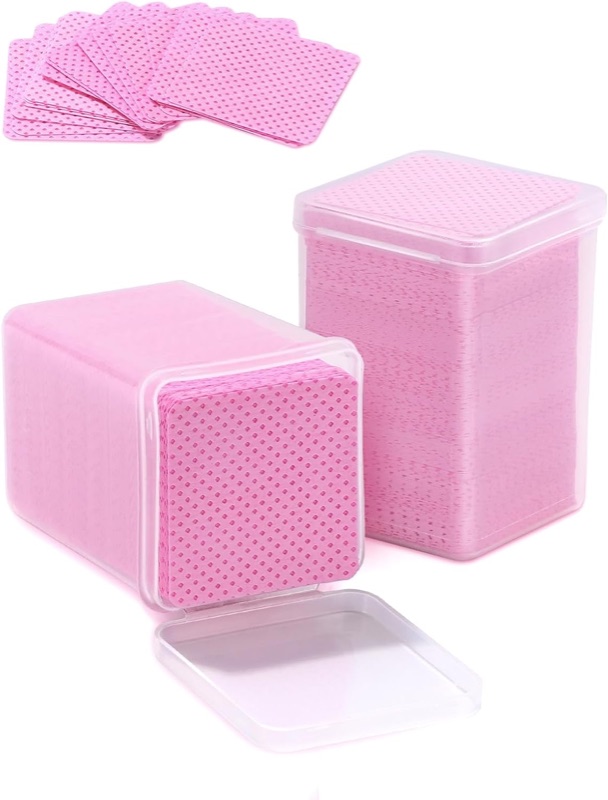
Lint-free nail wipes, 400 pcs
Dry nonwoven wipes, useful at a workbench where the operator controls the liquid and process, or as a comparison for lint left behind. They are not a sealed premoistened sachet — a dry-wipe-and-bottle format needs its own liquid, storage and instructions tested as a separate system.
Card photos are the current marketplace listing images and may differ from the delivered product; confirm details on the live listing.
Amazon's displayed review totals and commission categories can change; neither is a substitute for a pad-level trial and a written purchase specification.
Calculate the packout burden, then compare it with failures
Suppose a launch consists of 1,000 complete kits. One pad per kit requires 1,000 accepted sachets; two require 2,000. If the line has an observed 2% loss from damaged or rejected sachets, the theoretical input is the target divided by 0.98: approximately 1,021 or 2,041 respectively, rounded up. The 2% is an illustration, not an industry allowance. Use your own incoming and packout rejects, and account separately for sampling and retained units.
The extra unit cost is more than the sachet price. Include incoming freight, quality checks, pick-and-pack time, carton volume, disposal, and replacement stock. Then compare the incremental cost against the actual customer issue the second pad resolves. If 1,000 users never need a second pad, sending another 1,000 is poor design. If the one-pad format repeatedly leaves people unable to complete the instructions, the apparent saving is misleading. Do not invent a return-rate reduction before you have measured complaints by kit lot and wipe format.
For reapplications, separate the original kit's promise from the customer's future use. A customer who removes and reapplies reusable tips needs fresh prep supplies. A sealed 50- or 100-count refill may make sense for frequent users; a brand can also offer a smaller replenishment pack. Do not imply a used pad can be folded, stored, and reused. Forecast refills from actual repeat orders and stated use, rather than assuming every nail set produces the same refill demand.
Write the instruction card and assembly check together
The card needs to make the included quantity intelligible. If the kit contains two pads because your trial showed that customers benefit from one fresh pad per hand, say so: "After filing and removing dust, open one pad for each hand. Wipe natural nails and allow them to dry before applying the supplied adhesive." Adjust that language to the adhesive maker's directions and your validated sequence. If one larger pad is enough, do not print "one per hand" simply because another brand does.
Place sealed pads where they cannot be punctured by a nail tip or file edge, buried beneath an adhesive tab, or soaked by a leaking glue bottle. At the assembly bench, check the number of pouches, seal condition, lot code, instruction version, and correct adhesive. Keep a retained finished kit from each relevant run so a later complaint can be compared with the product the customer received. A pad count that is correct on a bill of materials can still be wrong in a particular box.
When a supplier changes the substrate, liquid source, pouch film, dimensions, or packer, request a change notice and re-run the use trial. Small material substitutions can alter how a pad feels and how long it remains useful after opening. State which changes require approval before shipment. A reorder should reference the accepted sample and revision of the specification, not just the supplier's catalogue title.
The buying decision is now narrow enough to answer. Decide whether your customer can finish the documented ten-nail preparation with one sealed pad; if not, find whether a larger pad or a second pouch solves the observed problem. Specify the winning pad and finished-kit placement, record the lots, and replenish against that exact specification. That is a better reason to buy two than the mere fact that two looks more generous in a product photo.