A press-on set can be called short and still feel too wide, too curved, or too long at the base. "Short" usually describes the visible free edge. "Petite" suggests a smaller fit, but has no universal measurement standard. A shopper may love a design and still reject it because the smallest nail is too large, while another may find it narrow enough but too long for a short nail bed.
For a brand developing a small-fit range, the practical question is not whether to print "petite" on a package. It is whether the product line has a repeatable fit definition, a useful design assortment, and a sample process that catches mismatches before a larger order. This article lays out a way to test that decision. It uses two retail products as examples of how the market labels categories, not as proof of any exact size difference: one is presented as a short square set, the other is identified as petite and squoval. Neither label alone provides the millimetre measurements a product developer needs.
What shoppers mean when they say petite
Consumer discussions show that "small nails" is not one complaint. Shoppers describe short press-ons that still look too long, narrow beds where the smallest pinky is too wide, and tips that feel too curved. Another says a petite line fits better but offers few designs beyond French styles and still misses her pinky. These are individual experiences, not representative research or specifications; they point to failure modes a brand can test.
The first is width: the press-on may cover too much sidewall or leave the natural nail exposed. The second is base length: the press-on can extend too far toward the free edge or crowd the cuticle area, even when its overall length is marketed as short. The third is transverse curvature: a tip with a tighter arch may press on the sides of a flatter nail, while a flatter tip may not sit securely on a more curved nail. Finally, the consumer may find a fit that works but no design in that fit category that matches her taste.
Those are separate product questions. Shortness is mostly a visual and wearability choice. Width and curvature relate to the fit of each nail. Base length and cuticle contour affect coverage and appearance. A petite collection may adjust some or all of them, but a word on a listing does not tell the shopper which dimensions changed. A brand should not assume that all petite customers have uniformly small hands, or that one petite SKU will fit all ten fingers on one person.
Why the distinction matters to a product line
A buyer who treats short and petite as synonyms may solve the wrong problem. If customers say the style is too long for typing, shorter shapes and lengths may help. If they say the pinky is too wide, reducing visible length will not fix the mismatch. If the tip presses at both sides, a width change alone may still leave a curvature problem. These differences affect what a company requests from a supplier, what it samples, how it organizes size options, and what it promises on the product page.
This is not an untouched topic. Supplier guides already publish small-bed guidance on sizing, sidewalls, curvature, and sampling; brands publish petite-fit advice, and beauty publishers have covered sizing problems. A generic "how to find petite press-ons" guide enters a crowded field. The stronger buyer angle is to connect complaints to a line-development decision: define fit and length separately, then test design choice in the fit that works.
One useful comparison is already visible in retail product naming. One set is described as short square; another is named as a petite squoval set. Those product pages make clear that retail assortments can distinguish style, length, and fit labels. They do not publish a full dimension map that allows a brand to compare the two nail molds position by position. For that reason, the products are examples of category language only. Do not infer their exact widths, curves, or base lengths from their names or photographs.
Build the specification around measurable features
Before requesting samples, define the product features you need. Ask for a dimension chart for every nail position, not just a size range or a thumbnail chart. It should state how each dimension is measured and use consistent units. At minimum, request maximum width across the nail, base length from the cuticle edge to the free edge, and total tip length. If curvature is a key concern, ask how the supplier records it and whether the sample can be evaluated against a defined reference or physical fit model. Do not assume that supplier size numbers mean the same thing across factories or product families.
Also specify the shape and the cuticle edge. A short square and a short squoval can have different sidewall geometry even when their nominal length is similar. The nail position matters too: the smallest pinky may be the only one that consistently fails for a segment, while the thumb may need a different width distribution. Ask whether a petite range uses a separate mold or a changed selection of existing sizes; the answer affects what can be compared across designs and how replenishment might work. Treat this as a question for the supplier, not an assumed capability.
A concise product brief can record: intended wearer group and use case; target shape and visible length; width and base-length measurements by position; curvature expectations; size distribution in each kit; finish and thickness; adhesive system; and the test method for sample approval. Keep consumer-facing language separate from internal specification. "Petite" may be a convenient category name, but the buying record should say exactly what the supplier must reproduce.
Test length and fit as separate variables
A useful sample test isolates the question. Compare a short style and a petite style in the same shape if possible. If not, record differences in shape, length, curve, material, finish, adhesive, and size assortment. Changing several variables at once makes the result hard to interpret.
Use a small panel of intended customers rather than relying on one founder's hands. For each participant, record which sample size fits each finger and whether the result feels too wide, too narrow, too curved, or too long at the base. Photograph the top and side of the fit under consistent conditions, with consent, and label images with the sample code and nail position. Ask participants to assess comfort before wear and to report lifting or pressure separately from style preference. A product can be visually flattering but uncomfortable, or comfortable but missing the design the wearer wants.
Do not treat one "fits me" vote as proof. Summarize results by finger and issue. If the smallest pinky repeatedly fails, consider a smaller pinky option, another assortment, or clearer size selection guidance. If a short style works in length but not width, shorter designs will not help. If petite fits but styling is limited, the opportunity may be assortment breadth, not a new mold. Decide these investments separately.
Retail references for the two label types
The two links below show how category language appears in practice: one set is sold as short square, the other as petite squoval. We may earn a commission from qualifying purchases through these links. They are included as retail examples for comparison, not endorsements, and neither listing is evidence that a set will fit every reader.
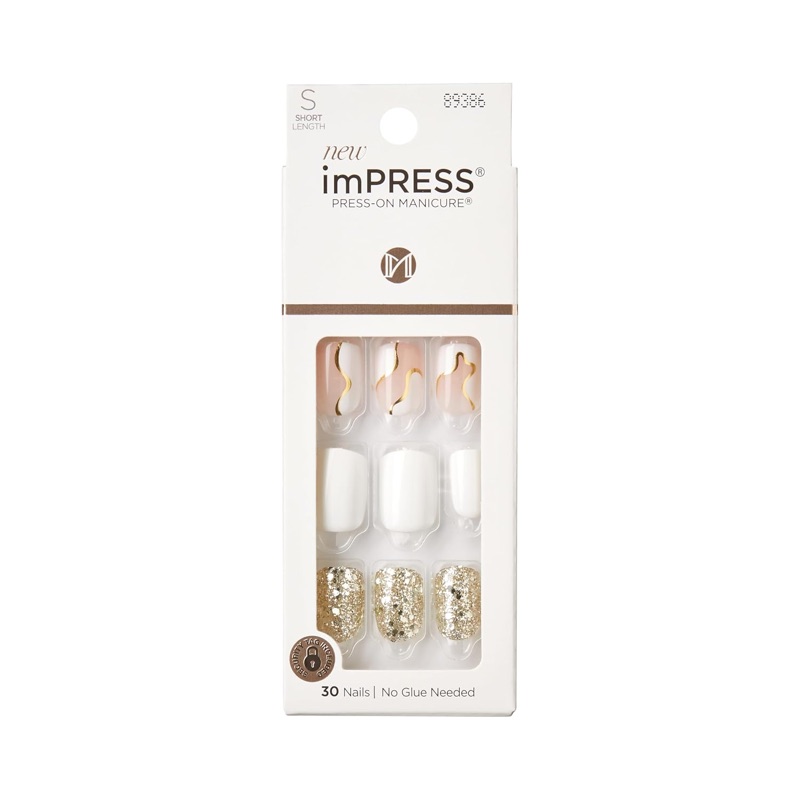
KISS imPRESS press-on manicure, short square
A short square set that shows how a length label works in retail: it describes the visible free edge, not the width or curvature of the nail bed. Read the listing for the included sizes and shapes, then compare the actual dimensions with your own fit record.
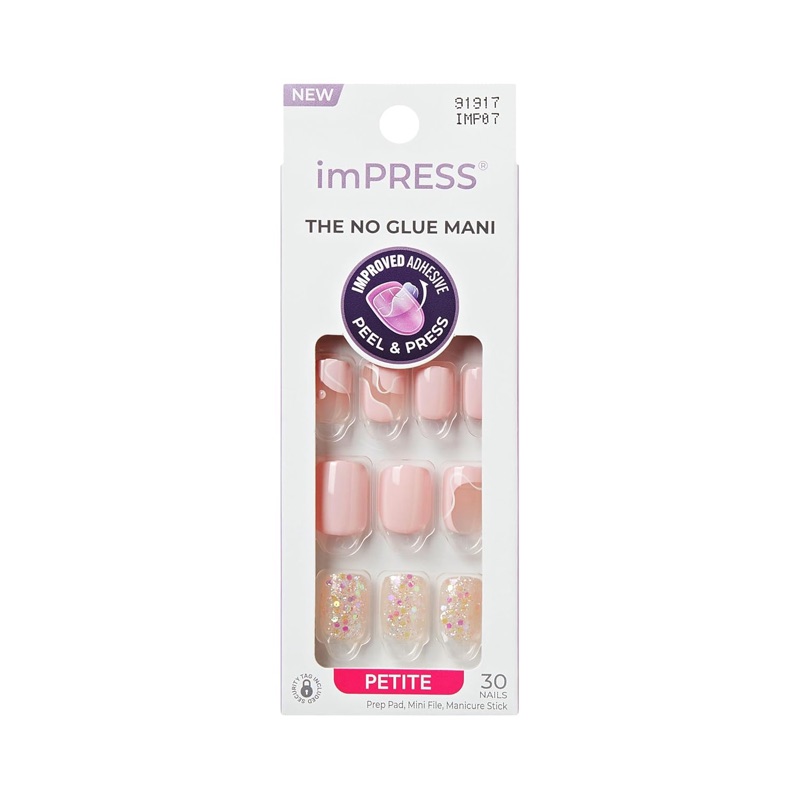
KISS imPRESS press-on manicure, petite squoval
The same brand's petite squoval option, positioned for smaller fingers and narrower nail beds. Useful for comparing how a fit label is presented — the page does not publish a dimension chart, so ask for measured widths and base lengths before treating petite as a specification.
Card photos are the current marketplace listing images and may differ from the delivered product; confirm details on the live listing.
Labels and photos help shoppers, but cannot replace a dimension chart, fit panel, or supplier specification. Availability, price, ratings, and options can change.
For a brand, the sampling question is: are we offering a shorter look, a narrower fit, or both? Record how each is achieved. If a supplier offers petite sizing, ask what changed from the standard mold or pack. If there is no technical chart, request sample tips by size and measure them consistently. A retail listing cannot establish manufacturing tolerances or replenishment terms.
Check whether the design range earns the fit label
Fit is only one part of the product. A customer who finds one petite set that works may still return to a standard range if petite collections offer only a narrow palette. This matters for brands because a separate mold or size assortment can add complexity. Before building a broad collection, test a focused group of designs in the fit that has evidence of demand: for example, one neutral, one French or minimal option, and one design with more colour or art. The exact mix should come from customer interviews and sales tests, not from a generic assumption about what petite buyers prefer.
Check how artwork behaves at the smallest sizes. A logo, line, charm, or gradient that looks balanced on a thumb can crowd a pinky or lose detail. Ask for images of the actual smallest size in each design, not only a hero photograph of the largest nail. For raised decorations, inspect whether the shape still sits comfortably and whether the package protects the surface. If a print is scaled proportionally, confirm that its key visual detail remains legible. A fit range that changes the size distribution may need design-specific artwork placement rather than a simple copy of the standard set.
This is also where buyer language can become more useful than a broad persona. Instead of "for small hands," describe the fit-tested attributes: which sizes are included, whether separate sizes can be selected, how the wearer identifies a match, and what limitations remain. Avoid claims such as "fits every petite nail" unless real testing supports them. If the set is designed for narrower beds but has a long extension, say so clearly. If some wearers still need to file an edge, explain whether filing affects the design or fit.
Put acceptance checks in the purchase record
Once a sample is selected, capture what "approved" means in writing. Keep a dated reference sample and the dimension chart version. Agree with the supplier which points will be measured, how measurements will be taken, what variation is acceptable, and how any out-of-range result will be handled. There is no single tolerance that should be copied into every press-on order; the appropriate limit depends on the product, material, tooling, and the buyer's own fit target. Ask the supplier to propose a feasible tolerance, then decide whether it is acceptable for the intended use.
For a pilot order, compare pieces across multiple packs and sizes, not only one nail from one box. Check width, base length, cuticle shape, finish, and visible artwork against the approved sample. Record batch identifiers and photograph any variation. If the package includes a sizing insert or application instructions, verify that those materials describe the exact set being sold. A mismatch between the chart and the actual nail pack can turn a sound product into a customer-service problem.
Before a reorder, confirm whether the mold, material, finish, size assortment, and artwork placement remain the same. If any of these changed, ask for a new sample or a documented comparison. A buyer should also confirm minimum order quantity, available designs, packaging options, sample timing, production lead time, and whether the supplier can replenish the same fit range. These are supplier-specific commercial terms; do not build a business plan around them until they are confirmed in writing.
A practical decision path for a first petite range
A small brand does not need to launch a full catalogue to learn whether this fit problem is worth solving. Begin with customer evidence: collect several distinct comments or interview responses that separate width, base length, curvature, and design availability. Then write a one-page brief and ask a short list of suppliers for dimensional information and a sample plan. Evaluate the responses on whether they answer the specification, not just on whether they promise "petite" sizing.
Next, compare a small number of samples using the same fit record. If the main issue is length, test short shapes first. If it is width or curve, test a genuinely different fit profile. If the existing petite fit works but design choice is thin, test new artwork on the proven fit before paying to develop a new size range. Pilot a small assortment only after the sample results support the chosen route. Make customer-facing instructions match the actual measurements and limits.
The point is not to create another label. It is to make the label mean something a shopper can verify and a supplier can reproduce. "Short" should describe the look or extension. "Petite" should be backed by a defined fit profile, a size pack that addresses the problem, and an assortment worth choosing. When those elements are tested separately, brands can spend on the change customers actually need — and avoid confusing a shorter nail with a better-fitting one.