A single missing or damaged press-on nail can make an otherwise good set unusable. For a customer, the task feels simple: “Can I replace this one piece?” For a small brand, the answer touches sizing records, inventory, time, hygiene, postage, customer expectations, and the difference between a production fault and normal wear.
A replacement policy is therefore not a generic refund paragraph. It is a small operating system for a product sold in matched sets of ten. A good policy tells customers what is covered, what information they need to provide, how a replacement will be matched, and when replacement is not the appropriate remedy. It also gives the brand data that can improve its size mix, packaging, and quality checks.
This guide is for press-on nail brands selling ready-size, custom-size, or made-to-order sets. It is not legal advice, and it cannot replace consumer-protection rules that apply in the market where you sell. Review the final terms for your own jurisdiction. The goal here is a clear customer experience and a replacement process you can actually fulfill.
Why “we will replace any nail” is not a workable promise
The phrase sounds generous, but it creates unanswered questions. Does it cover a nail missing from a sealed box? A chip discovered on delivery? A tip that broke after a week of wear? A size chosen by the customer that turns out not to fit? A lost nail? A design from three seasons ago? A made-to-order set whose original supplies are no longer available?
Those situations should not receive the same response. A verified packing or production error is different from an application outcome. A transit-damage report is different from a normal wear event. A customer whose size map was recorded incorrectly may need a different resolution from someone who wants a spare after losing a nail.
The policy should never make the customer feel blamed for asking. It should simply separate the cases so your team can respond consistently. That consistency protects the customer as well as the brand: it prevents arbitrary decisions in direct messages and shows that a small business has thought through its promise.
Part 1: Define the replacement categories before you publish
Begin with a short set of categories. Do not try to solve every imaginable issue in a single sentence.
Arrival or packing issue
This includes a missing tip, the wrong design or size map sent, a visibly damaged tip on arrival, or a component absent from the stated kit. Ask for the order number and a clear photo of the received set and packaging where appropriate. The goal is verification, not interrogation.
Verified production issue
This may include a repeated defect in the finish, an attachment that fails before the customer has used the set as intended, or a mismatch between the approved custom specification and the delivered product. Keep the definition factual. Do not call every complaint a defect before you have reviewed it.
Fit-resolution issue
Fit deserves its own category because it is neither a classic product defect nor a simple return. A customer may have measured incorrectly, selected a standard size that does not work, or received a tip that differs from the documented size map. Your policy should explain whether the brand offers a one-time fit adjustment, a paid replacement, a sizing kit credit, or another route.
Wear, loss, and post-use replacement
A customer may lose or break an individual nail after use, or may want a spare for an older set. This can be a paid service rather than a warranty. Say so in plain language. It is completely reasonable for a handmade brand to charge for a remade single nail, particularly when the design requires labor, custom mixing, charms, or a new production slot.
These categories give the customer an accurate next action and keep “replacement” from becoming a vague promise.
Part 2: Preserve the identity of every set
You cannot match a single replacement reliably if you cannot identify the original set. Every sellable configuration needs a simple record. It does not need expensive software at first; a spreadsheet or order system can work if the fields are consistent.
Record at least:
-
Order number and order date.
-
Design or SKU name.
-
Base tip family, shape, and length.
-
Size map for both hands or the standard-size set selected.
-
Color, finish, artwork, charm placement, and any custom option.
-
Original production or pack date.
-
Component version if the set included a particular adhesive or tool kit.
-
A photo of the approved set before dispatch when your process allows it.
The size map is the non-negotiable field. “Medium coffin” is not enough to remake a single nail. It does not tell you whether the customer used size 0 or 3 on a thumb, or whether left and right hands differed. Save the ten-position map in a consistent order, such as left thumb through left pinky, then right thumb through right pinky. Explain that order to customers on the sizing form.
Use the same identity on the customer-facing side. A small printed order code, a digital order summary, or a care card with the selected size sequence makes it easier for the customer to request the correct replacement later. It also discourages a common error: asking for “the index nail” without confirming which hand, design version, or nail size is needed.
Part 3: Ask for only the evidence that changes the decision
Replacement forms often fail in two opposite ways. They ask for almost no information, so the seller cannot verify the issue. Or they ask for so much evidence that a reasonable customer gives up.
Use a short, scenario-based form. For an arrival issue, request the order number, a photo of the full received set, and the affected tip. For fit, request the original size map, a dry-fit photo if the customer is comfortable sharing one, and the exact point of discomfort or mismatch. For a post-use paid replacement, request the design name, the lost or damaged finger position, and the original map.
Do not ask a customer to diagnose adhesive chemistry, product manufacturing, or a health issue. You need observable facts: when the issue appeared, which item was involved, what was included in the order, and which application route was chosen. If the customer reports pain, irritation, or a possible reaction, the replacement request should pause. Do not treat that report as an ordinary troubleshooting ticket.
A clear evidence standard also reduces false assumptions. A photo may show a missing charm or a split, but it cannot prove every cause. State that you review each request based on the information available, and use neutral words such as “assess” rather than promising an outcome before the review.
Part 4: Decide how a single nail will be remade
A single replacement is not always a miniature version of the original production run. Before accepting an order, check three things: can you reproduce the size, can you reproduce the visual design closely enough, and can you dispatch it in a way that protects it?
Size comes first. Confirm the replacement finger, left or right hand, and saved tip number. If the brand’s master chart has changed since the original order, use the chart and tip family recorded at the time of sale rather than assuming the current number is equivalent.
Next, check the visual elements. A hand-painted line, custom mix, chrome effect, foil placement, or charm layout may not reproduce identically. Do not promise a perfect match if that is unrealistic. State whether the replacement is made to match the original as closely as practical, and whether tiny handmade variation is part of the product.
Finally, check the dispatch format. A lone long or decorated tip can break in transit if it is dropped into a small envelope with no support. Package the replacement so it cannot bend, rub against hard components, or disappear inside a larger kit. This is a packaging and fulfillment question, not only a customer-service question.
Practical routes
These links are starting points for comparison. Confirm current product details, dimensions, material, pack configuration, pricing, and affiliate terms on the live destination before relying on them.
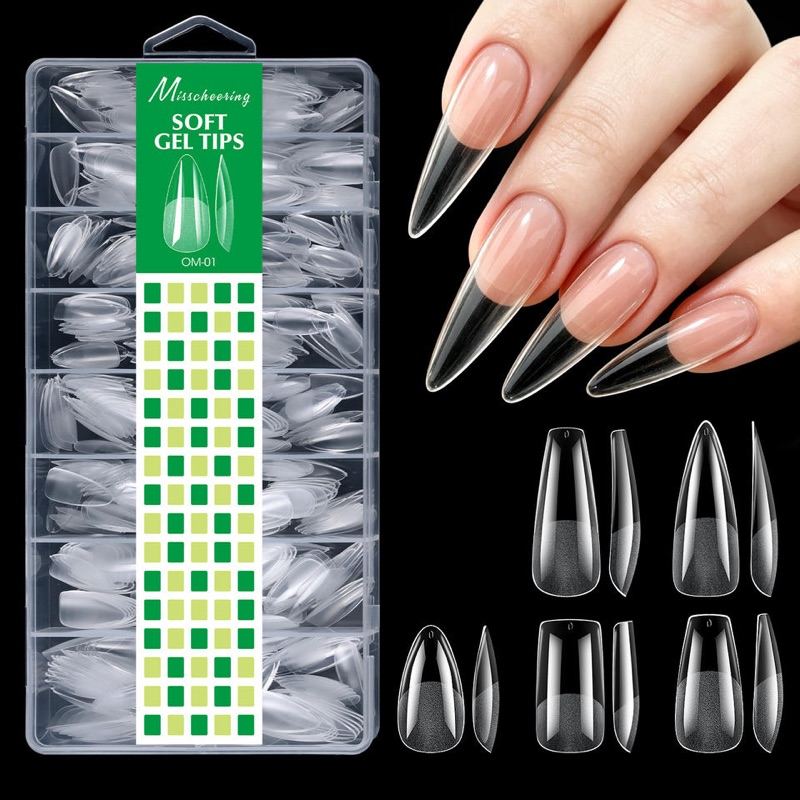
480-piece single-size nail tip refill pack — wholesale
A 480-piece single-size refill box, the format that makes per-size replacement possible. A sourcing route for checking single-tip availability, size identity, and replenishment details before offering replacements.
Card photos are the current marketplace listing images and may differ from the delivered product; confirm details on the live listing.
Part 5: Put a price and time boundary around paid replacements
Free replacement is appropriate in some verified arrival or production cases. It is not the only fair policy. A paid single-nail service can keep a handmade brand sustainable, provided the customer understands it before buying.
Set the policy components in advance:
| Policy field | Decision to define |
|---|---|
| Eligible designs | Current styles only, or selected archived styles |
| Size source | Saved original map, new sizing check, or both |
| Service price | Per tip, per hand, or a minimum replacement order |
| Dispatch charge | Included, flat-rate, or calculated by destination |
| Making window | A stated processing range, not an unverified promise |
| Match standard | Close handmade match or exact factory-printed component |
| Exclusions | Lost, worn, altered, discontinued, or unverified cases |
Do not publish a broad delivery promise that your supply chain cannot support. If a charm, base tip, or color is unavailable, offer the customer a defined alternative: wait for restock, choose a close substitute with approval, receive a store-credit route, or place a new set order. The right option depends on your brand and the original agreement.
For brands that need to replenish blank single sizes before offering a replacement service, start supplier conversations from this Alibaba CPS listing: check single-size nail-tip sourcing options. This is an affiliate link. Treat it as a sourcing entry point, not proof that every size, mold, material, MOQ, pack configuration, sample, or CPS condition is available. Confirm those details against the live listing and supplier communication before committing to a customer policy.
Part 6: Use replacement requests to improve the product
Replacement data becomes valuable when you record it by cause and configuration. Keep a lightweight log:
-
Replacement category.
-
Design/SKU and tip family.
-
Finger position and size number.
-
Left or right hand.
-
Reported issue and date.
-
Resolution offered.
-
Whether the issue repeated in another order.
-
Any supplier, packing, or instruction change made afterward.
Look for patterns rather than isolated stories. Many replacement requests for the same thumb size can indicate a weak size assortment. Repeated damage to a long decorated pinky may indicate that the packaging needs more internal support. Several customers asking for a “different” size could mean your sizing instructions do not explain curve, width, and dry fit clearly enough.
This is where replacement policy connects back to purchasing. A seller who never records the exact blank-tip family and size map cannot confidently buy a replacement stock. A seller who sees recurring needs can plan a small reserve of high-use sizes or ask suppliers specific questions during sampling. Do not assume that a factory will supply individual numbers or maintain the same mold forever; verify this before advertising a guaranteed single-nail service.
Make the policy visible before the problem happens
Do not hide the replacement policy at the bottom of a long refund page. Link it from the product page, the size guide, the order confirmation, and the care card. The customer does not need every operational detail before purchase, but she should know:
-
Whether custom and ready-size sets are treated differently.
-
Whether the brand offers replacement tips.
-
What kind of issues should be reported promptly.
-
What proof is normally requested.
-
Whether post-use or lost-tip replacements are paid.
-
How to find the original size map.
Use the same words everywhere. If your product page says “easy replacements” but your policy requires information that was never supplied at checkout, the customer experiences that as a broken promise. The solution is not to lower your standards after the fact. It is to design the order flow so the required information exists.
A concise policy line can be enough at checkout: “Need a replacement tip? We review arrival, fit, and single-nail requests using your saved size map and order details.” Link the full policy from there.
A replacement policy is a quality-control tool
The best outcome is not to replace more nails faster. It is to make each replacement decision clear, fair, and useful.
A small press-on brand earns trust when it can distinguish a packing error from normal wear, identify a customer’s exact tip, and explain the next step without promising what it cannot deliver. The same system supports better purchasing decisions: it reveals which sizes to keep in reserve, which shapes need stronger packaging, and which instructions create fewer avoidable tickets.
Build the six parts before your first difficult request: clear categories, set identity, useful evidence, a realistic remake process, defined price and timing rules, and a replacement log. Then a missing single nail becomes manageable—not because every request receives the same answer, but because every request receives an answer your brand can stand behind.
Affiliate disclosure: This guide may contain affiliate links. If you use one, HerBrandKit may earn a commission at no extra cost to you.