A few sizes can disappear while most of a nail-tip box remains untouched. For a small press-on brand, that creates a deceptively simple purchasing question: order only the sizes that ran out, or buy a complete box again? The refill can reduce dead stock, but it is useful only when the tips are genuinely compatible with the system already in your kits. A full box can cost more upfront and leave leftovers, yet it may be the safer choice when a mould, shape, or production version has changed.
There is no universal winner. The decision depends on fit continuity, repeat demand, minimum order quantities, shipping, usable inventory, and the cost of handling an inconsistent kit. Ask the following seven questions before placing a replenishment order. Treat supplier answers as evidence to check, not as proof by themselves.
1. What exact tip system are you replenishing?
Start with the tip you already sell, not a broad description such as "short almond." Record whether it is full-cover or half-cover, its shape and stated length, the product or mould code, the size range, material or finish if known, markings inside each tip, supplier, order date, and batch reference. Take clear front, side, and underside photos of representative sizes. Include a ruler or calliper reading and keep one physical sample as your control.
This matters because shape names and size labels are not universal specifications. A "size 5" from one line may not match a size 5 from another. Even within a brand, Natural and Sculpted profiles can differ in curve and apex. A supplier may also use a different size range, numbering convention, or mould after a product update.
Ask the original supplier whether the proposed refill comes from the same mould and product line as your existing box. Request the exact reference in writing. If the original mould cannot be traced, treat the new refill as a different product until a sample proves otherwise. Similar colour and silhouette in a listing photo are not enough to mix inventory.
2. Do the dimensions match where the nail actually contacts?
Ask for a measurement sheet that defines how each value was taken. At minimum, compare the internal width at the widest usable point and the tip's length. A more useful check compares width near the cuticle, at the widest point, and nearer the free edge. The measurement location matters: a supplier's outside width may not match the inside contact area that determines fit.
Measure your own control sample using the same method. Write down the units and tool used, and photograph the measurement. If the supplier cannot confirm the same measurement convention, do not treat a spreadsheet as proof of compatibility; request a sample.
Set an acceptable tolerance before the sample arrives. The appropriate limit depends on your fit system and the way you describe sizing to customers. The practical test is whether the difference would change which size you recommend or whether the sidewalls sit as intended. A number that matches while the actual contact width does not is not a pass.
Keep the data by product version. A sizing table should identify the shape, length, profile, supplier or mould reference, and date checked. That prevents a later reorder from being matched to an old chart merely because the printed size number looks familiar.
3. Does the refill preserve curve, sidewalls, thickness, and finish?
Width is only one part of fit. Curve, sidewall angle, apex placement, length, and thickness affect how a tip sits and how it looks after application. A refill with the same maximum width may still pinch at the sides, leave a gap, or sit higher through the centre.
Compare the original and refill samples side by side. View them from the front, side, and underside. Nest one over the other without forcing either piece. Note whether the sidewalls flare, whether the contact area ends at the same point, and whether the apex appears in a similar location. Repeat the comparison on a practice finger or nail stand. This is a product compatibility check, not a test of which design is better.
Check thickness and flexibility as well. A thicker tip may feel firmer during application; a thinner one may flex differently. Clear, tinted, and opaque tips can also make a finished set look inconsistent when mixed under sheer polish or transparent designs. Record visible differences rather than relying on "same quality" language.
Ask whether the refill and the original use the same material reference and mould. A written answer is useful for traceability, but the sample remains the physical check. If the product is an intentional change, give it a new internal version code and update the sizing guide instead of quietly mixing it into existing kits.
4. Is the size actually a repeat fast mover?
Before buying a refill, establish why that compartment is empty. Count tips used for customer orders over a defined period. Separate normal demand from samples, content shoots, staff practice, packing errors, damaged tips, and one-off custom orders. A size depleted repeatedly by shipped kits is a stronger replenishment signal than one consumed during product photography.
Track units by size and product version, not just total boxes sold. Review at least two replenishment cycles if possible. One promotion or unusually large order can distort a short window. Note campaigns, bundles, or fit-guide changes that may have altered the size mix.
A simple reorder point can prevent a stockout: average monthly use of a size multiplied by supplier lead time in months, plus a buffer you choose for uncertainty. For example, if a brand uses 40 pieces of one size each month, the confirmed lead time is two months, and the team keeps a 25-piece buffer, the reorder trigger would be 105 pieces. Those figures are an illustration, not a market benchmark. Replace them with your own usage and lead-time records.
This count may also reveal that the original assortment does not match your customer base. If the same sizes repeatedly run out while other compartments remain nearly full, ask whether your next assortment, sizing instructions, or product bundle should change. A refill is one answer; changing the underlying pack mix may be better.
5. What is the real cost per usable tip?
A low unit price does not automatically make a refill economical. Ask for the minimum quantity per size, pieces per bag or box, pricing at realistic quantities, sample charge, production time, shipping options, and whether different sizes can be combined to meet the minimum. Confirm whether counts include spares and how the pieces are protected in transit.
Compare landed cost, not just the listed price. Include product cost, freight, taxes or duties where applicable, payment fees, expected damage or rejects, and staff time to count, sort, label, and store the shipment. Divide the total by the number of tips you expect to use — not simply the number delivered. A full box may have a lower nominal price per piece but a higher cost per usable tip if several sizes remain unused. A refill bag may avoid leftovers but become expensive when minimums or freight are high.
Use a small worksheet with two scenarios. In the refill column, enter the quantity you can realistically consume before the material or design changes. In the full-box column, estimate how many pieces from each size will be used before the next reset. Do not count theoretical future demand as usable inventory unless it is supported by order history.
Keep assumptions visible. If a supplier gives a price that excludes shipping, label the calculation as incomplete. If a quote is valid for a specific quantity or date, record that. This makes the comparison reusable without turning an old quote into a promise about current costs.
Sampling and replenishment should be quoted separately. A sample order answers whether the tip is compatible; a production quote answers what it costs to replenish at a realistic volume. Ask whether sample fees are credited against a later order, but do not assume they will be. If freight is shared across several sizes, model the shipment you would actually place instead of assigning the full freight charge to one bag or spreading it across sizes you will not buy. For a brand ordering internationally, confirm who handles import charges and what delivery term the quote assumes. If the supplier will not state those details, mark the landed-cost comparison provisional. These checks keep a convenient refill from looking cheaper only because costs were left out of the calculation.
Retail reference for the full-box format
The link below is a consumer-side full-box reference, useful for seeing how one system presents a 500-piece box across 11 sizes. We may earn a commission from qualifying purchases through it. It is not a bulk sourcing quote, and the reader's price is not increased by the affiliate relationship.
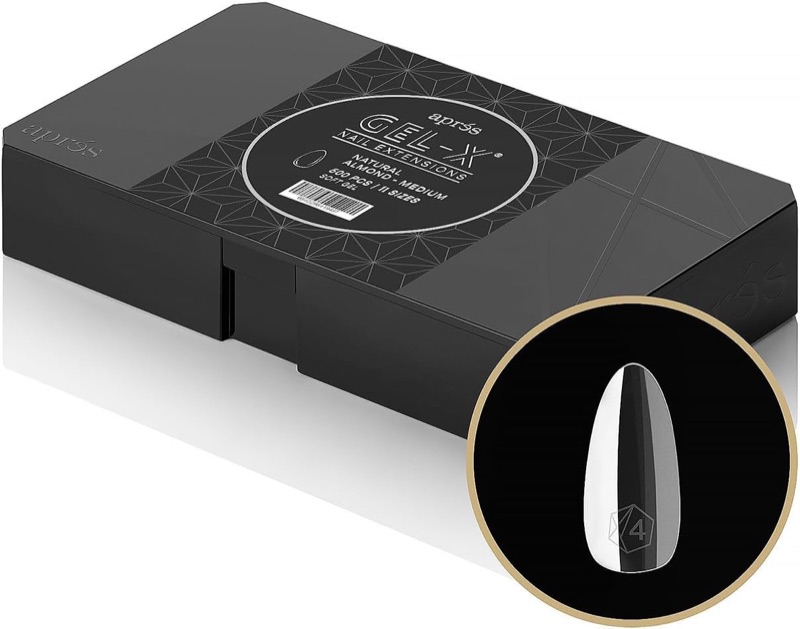
Soft gel tip box, natural almond, 500 pcs, 11 sizes
A 500-piece box across 11 sizes in one shape and length, which is the format this article compares against single-size refills. Useful for seeing how a full-box assortment is presented — read the listing for the size distribution before assuming it matches the mix your own kits use.
Card photos are the current marketplace listing images and may differ from the delivered product; confirm details on the live listing.
6. Can a sample pass a repeatable acceptance check?
Do not move directly from a supplier's message to a production refill when compatibility matters. Request the actual size and profile you expect to reorder. Use your original tip as the control and check internal size marking, measurement, length, contact area, curve, sidewall profile, thickness, transparency or colour, surface finish, and visible defects.
Write pass/fail criteria before evaluating the sample. For example: the refill matches the agreed internal width within your chosen tolerance; the curve sits consistently when compared with the control; there are no burrs or warping that affect use; and the finish does not create a visible mismatch in the finished set. "Looks fine" is hard to repeat across staff or reorder cycles.
Then test the tip in the actual workflow. Can staff identify, count, label, and place it in the right compartment without confusion? Does it remain protected in your packaging? Does it require different filing or application instructions? Product compatibility includes the fulfilment process and the customer-facing fit guidance, not only whether the tip can be applied once.
Keep one approved sample and its record together. Include date, supplier, product code, batch or mould reference, measurements, photos, and the person who approved it. When the production refill arrives, compare it with that saved sample before blending it into active stock. This is a practical quality-control routine for your own product; it is not a substitute for any applicable regulatory or safety review.
7. Would a full box be a better system reset?
A full box is often the more sensible choice when you cannot identify the original mould, when several sizes are low, when the shape or length is changing, or when a supplier has replaced a product line. It can also make sense when a new supplier's sample is a deliberate improvement and you are ready to update the size chart, sample kit, photography, and internal references together.
Treat the change as a new version. Assign a product code, retain one control set, and separate old and new stock during fulfilment. If both versions remain available, make the differences clear wherever customers choose their sizes. A complete set gives you a consistent baseline for the new version; it does not automatically guarantee every size will fit every customer.
For a stable product, a hybrid policy is often practical: keep an approved full set as the reference assortment and replenish only the sizes with repeatable demand, provided those refills are confirmed to match the same system. This avoids rebuying slow-moving sizes while keeping compatibility anchored to a physical control. It works only if the supplier supports the specific pack and the landed-cost math makes sense.
A decision rule you can reuse
Choose a single-size refill when the size is a proven repeat fast mover, the supplier can identify the same tip system, a sample passes your written comparison, and the minimum quantity and landed cost fit your sales cycle. Choose a full box or a fresh sample set when compatibility is unknown, several sizes are depleted, you are changing shape or supplier, or you need a new baseline for the product.
Before approving a purchase order, keep four records together: a photo and measurement of the original tip, the supplier's product or mould reference, the refill sample check, and the usage-based cost comparison. Add the date and quantity used to calculate the reorder point. If any of those records is missing, pause long enough to request it.
The online discussion around refills reflects both sides of the decision. Some users say buying only the sizes they use reduces leftovers; others point out that a complete box can have a lower cost per piece if most sizes are used. These are individual experiences, not a universal price comparison. Supplier guides and retail listings show that single-size packs exist, often in fixed counts, but availability depends on the exact system and seller. The buyer's job is to confirm that a refill fits the product already being sold.
A size running out is useful information, not a purchase instruction. Check whether the shortage is recurring, whether the proposed tip is physically compatible, and what it costs to receive and use. Then choose the option that keeps your kits consistent and your inventory tied to evidence rather than a familiar number on a bag.