A sleep bonnet can keep a hairstyle contained and still make its wearer stop using it. The complaint is usually not abstract: the head feels hot, the neck is sweaty, the cap feels unbearable in warm weather, or the wearer removes it part-way through the night. That is a product-use failure even when the bonnet looks polished, stays on, and is described as "breathable."
The useful response is not to promise a cooling result from a fabric name. A bonnet changes the small environment around the head and hair. Perceived heat can be affected by room conditions, the person's sleep temperature, hair volume, whether hair is fully dry, the bonnet's layers and fit, and how much fabric gathers around the neck. A product listing cannot diagnose why somebody sleeps hot. It can, however, give a buyer enough construction information to choose sensibly and give a brand a clear testing plan.
This guide separates the consumer decision from the development task. For shoppers, the aim is to identify when a bonnet is likely to be a poor match and what can actually be checked before purchase. For a small brand, the aim is to turn "too hot" into sample variables rather than a vague marketing claim.
Start by defining the heat complaint
Not every complaint describes the same failure. A cap that feels warm at the crown may have a different cause from one that traps hair and fabric at the nape. A user who is generally warm at night may not get a useful answer from changing one accessory. A person who finds the bonnet comfortable while sitting up but intolerable when lying down may be reacting to volume, pressure, or a bulky closure rather than the face fabric alone.
Before buying another cap, write down the actual pattern for two or three nights:
- Is the discomfort at the crown, hairline, ears, nape, or across the whole head?
- Does it begin immediately or after the hair has been inside the bonnet for some time?
- Is the hair loose, braided, wrapped, clipped, or piled high?
- Is the bonnet single-layer, lined, reversible, or built with another outer fabric?
- Does the same problem happen with a scarf or a satin pillowcase?
This record will not give a medical conclusion, but it makes comparison more precise. It also prevents replacing a bonnet with another one that has the same layer count, similar capacity, and high-gathered fit.
If night sweating is new, severe, or occurs without the bonnet, treat it as a health question rather than a shopping question. A product guide should not attribute persistent sweating, scalp symptoms, or sleep disruption to a bonnet without appropriate medical advice.
Separate "satin" from a temperature promise
Satin is a weave or surface description, not a complete thermal specification and not a single fibre. A listing that says satin may still leave the fibre content, lining construction, and fabric weight unclear. "Silk-like," "butter satin," and "breathable" are also not standardized measures of overnight comfort.
That does not mean a shopper needs textile-lab data to buy a bonnet. It means the minimum useful listing should say what the cap is made from, whether it has one or more fabric layers, and where the adjustable or elastic parts sit. If those fields are absent, the buyer cannot make a reasoned comparison between a light single shell and a reversible, double-sided cap that holds more fabric around the head.
Do not infer that one fibre will feel cool for every wearer, or that a double-layer bonnet is automatically unsuitable. Layer count may matter to perceived warmth, but construction, room temperature, hair density, and personal comfort matter too. Treat retailer claims about cooling or breathability as claims to inspect, not as verified performance data.
For a brand, avoid "cooling," "sweat-free," or similar absolute copy unless you have evidence that supports the exact claim and product. A safer, more useful product description states observable construction: "single-layer satin shell," "unlined interior," "adjustable rear tie," or "double-sided design." The customer can then decide whether that structure suits their sleep routine.
Look at layer count and enclosed hair volume together
Layer count alone is not a purchase answer. A single-layer bonnet can still gather a great deal of fabric around a large hairstyle. A double-layer bonnet can feel acceptable to one wearer and too warm to another. What matters is the whole enclosure: fabric layers, the amount of hair inside, and the amount of extra material compressed around the head and neck.
Use capacity as a fit variable, not a "bigger is always better" feature. A bonnet designed for long braids may provide needed room for one hairstyle but leave a large amount of loose material around a short style. Conversely, forcing dense hair into a small cap may make the volume sit high at the crown and create a hot, compressed feeling. Product images should show the intended hair configuration, not only a flattened cap on a mannequin.
When comparing two versions, ask:
- Is the product clearly described as single-layer, lined, or reversible?
- Does the image show a shallow cap, a large gathered chamber, or a long pouch for braids?
- Is the listed use case close to your actual hair volume and length?
- Where does surplus material land when the cap is worn?
- Is there a size chart, head-circumference guidance, or at least a clear return policy?
The last question matters because a bonnet can look small in a product photo and still have a very roomy chamber. Good photographs show the cap worn from the side and back, plus the closure location. They do not need to promise a perfect fit to help a shopper assess where fabric will gather.
Check the closure before blaming the shell fabric
An elastic edge, a drawstring, a tie band, and a covered elastic band create different pressure and fabric-distribution patterns. The closure can be the part the wearer experiences as "hot," especially if it sits low around the nape, doubles a band of fabric across the forehead, or makes the user tighten the whole cap to prevent slipping.
This does not make one closure universally better. A fixed elastic may be simple but provides limited adjustment. A drawstring gives the user more control but introduces cord, channel, and lock placement. A tie band can distribute adjustment over a longer path but may create a knot or extra fabric at the forehead or neck. The relevant question is whether the closure allows secure placement without excessive tension or bulk in the wearer's sleep position.
For a purchase, inspect photos of the inside edge and closure before you choose a cap. Look for a clear view of the band rather than only the front of the bonnet. If the listing does not show that area, read the return terms before treating it as a low-risk trial. If your current bonnet only stays on when it is drawn very tight, moving to a similarly shaped cap with a different print is unlikely to solve the underlying fit issue.
For a brand sample, test the closure with hair inside the cap. Measuring a relaxed band on a table is not enough. Ask testers to note where they adjust it, whether they retighten it overnight, and whether the adjustment changes after lying down. Record position and comfort separately; a cap can remain on while still failing the comfort test.
Watch the nape, neck, and ear zones
People usually describe an overall hot head, but the nape is often where excess fabric, a long pouch, a tied band, and hair length meet. That makes it an important inspection point. A bonnet that accommodates long hair may naturally have more material in the rear; that is not a defect. It becomes a design issue when the material folds into a thick pad beneath the head or neck during normal sleep.
The ear zone deserves a separate check. A wide band can feel secure yet cover or press around the ears. A small cap may pull upward as the hair shifts, moving the edge into an uncomfortable position. A product description should not promise that a band "never causes pressure," but it can show its width, placement, and adjustment method.
Try on any new bonnet with the hairstyle you sleep in and lie down for several minutes before removing tags or committing to a bulk order. For brands, include side sleepers and back sleepers in sample feedback. The goal is not to claim universal comfort. It is to identify predictable pressure locations and write clear use guidance.
Retail options
Use these Amazon links to compare retail bonnets. Confirm the declared fibre content, layer construction, closure position, and care instructions on the live listing before purchase because listings and variants can change.
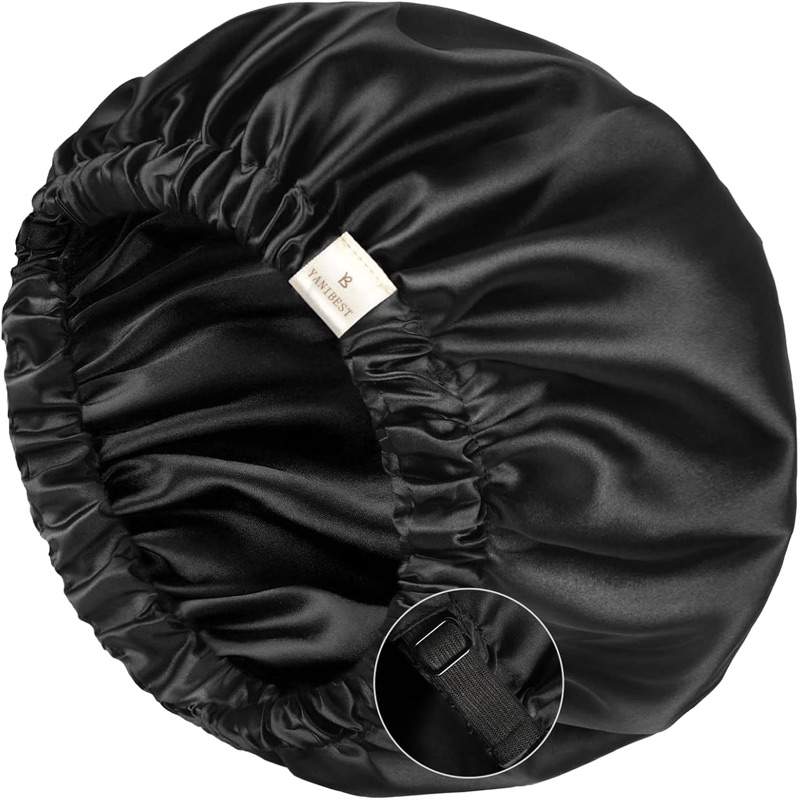
Adjustable satin sleep bonnet, double layer
An adjustable double-layer satin bonnet. Use it to check layer count, closure position, and where surplus fabric gathers — the variables that decide whether a cap feels hot rather than the fabric name alone.
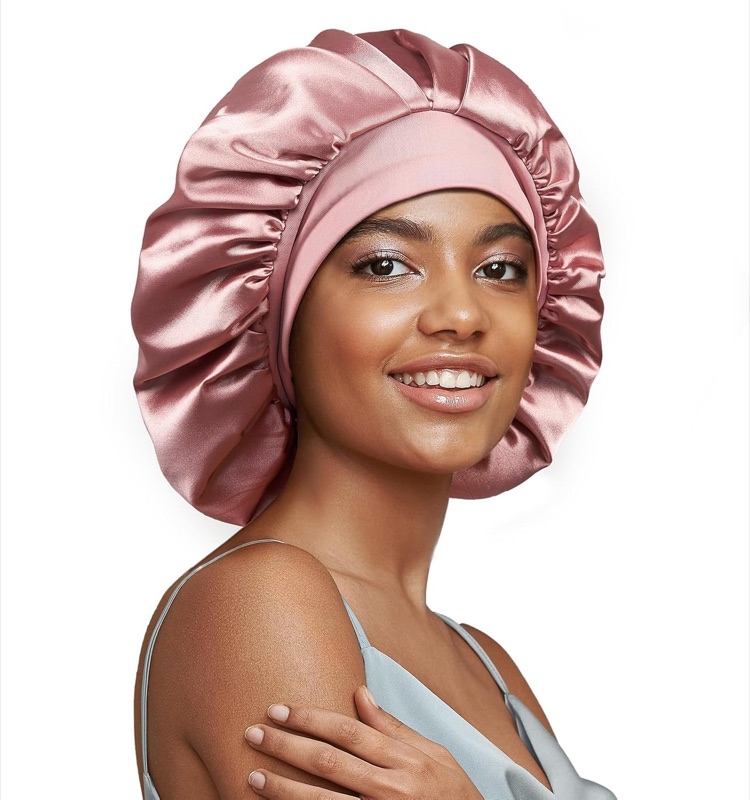
Silk-lined sleep bonnet, 22 momme, double layer
A double-layer bonnet with a 22-momme silk lining. Useful as the second construction comparison when you test whether a lined, higher-fabric cap reads warmer than a single-layer shell.
Read marketing language as a question list
"Lightweight," "cool," and "breathable" can be useful discovery words, but they are not enough to compare products. Turn each claim into a question:
| Listing phrase | Better question |
|---|---|
| Lightweight | What layers, finished dimensions, and gathered sections create the worn shape? |
| Breathable | What fibre content and construction are actually stated? |
| Extra-large | What hairstyle is the chamber intended to hold, and where does spare fabric sit? |
| Non-slip | Does the closure remain comfortable when adjusted for movement? |
| Reversible | Does the second layer change the bulk, seams, or use case? |
This approach protects a buyer from treating an adjective as a specification. It also gives a brand a stronger brief. If a product is called "lightweight," the internal specification should define the fabric and construction being supplied, not leave the factory to choose a substitute that looks similar in a product photo.
Build a sample test around real sleep conditions
Do not test a "cooler" bonnet by having one person wear it briefly in a room that happens to be comfortable. You cannot use that method to prove a broad temperature claim. You can use it to compare two sample constructions under routine conditions and learn which design creates complaints.
Keep the test simple. Give each tester the same short form and ask them to use their normal bedtime hairstyle. Record:
| Field | What to capture |
|---|---|
| Sample version | Fabric, layer count, chamber shape, and closure version |
| Hair setup | Loose, braid, wrap, twists, pineapple, or another routine |
| Room context | General warm, neutral, or cool impression; no false precision required |
| Wear result | Stayed on, loosened, shifted, or removed overnight |
| Comfort location | Crown, nape, ear, forehead, or whole-head warmth |
| Bulk observation | Where fabric or hair accumulated while lying down |
| Next change | A single proposed construction or instruction change |
Use the data to compare like with like. If one tester uses a short wrapped style and another uses waist-length braids, do not combine their comments into one "temperature score." Instead, identify which configuration each sample supports. Keep ordinary comfort feedback separate from any report of a skin reaction or health symptom; the latter should not be converted into a marketing claim.
For each revision, change as few variables as possible. If the next sample changes the fabric, layer count, pouch size, and closure simultaneously, you will not know which change addressed the complaint. A small brand benefits more from two clearly documented prototypes than from five decorative variations with no usable test record.
Put useful specifications on the product page
The product page should help a buyer self-select. At minimum, show the cap from front, side, interior edge, and rear closure views. State the declared fibre content, whether the construction is single-layer or double-layer, the intended hair-volume category, and how the cap is adjusted. If the product has a long pouch or a roomy chamber, show where that material sits when worn.
Add concise guidance for hot sleepers without overpromising. For example: "If you prefer minimal fabric around the crown, compare the single-layer version" is a construction-based suggestion. "Keeps every hot sleeper cool all night" is a performance guarantee that a small brand should not make without strong support.
The same clarity improves wholesale discussions. Include finished dimensions, construction, seam and label placement, closure parts, packaging fold, and sample approval criteria in the tech pack. A wholesale listing that offers custom fabrics or sizes is only an entry point. Confirm those options, the material supplied, quantity requirements, packaging, lead time, and inspection process directly with the supplier before a production order.
The practical decision
If a bonnet feels hot, begin with the use pattern: hairstyle volume, layer count, closure position, and where the material gathers when you lie down. Do not assume that "satin" or "silk" determines comfort by itself. Compare products that disclose construction clearly, try the cap in your normal sleeping position, and use a return option when fit information is limited.
For brands, the winning development question is not "Which fabric is coolest?" It is "Which construction can we describe honestly, test under normal use, and match to a defined hairstyle?" That produces a more useful product page, a more disciplined sample cycle, and fewer customers forced to choose between hair containment and sleep comfort.