The first shortage in a press-on nail business is usually one size in one tip family. A maker has plenty of the set left, except for the thumb size that completes several orders, or two middle sizes that customers choose most often. Buying another mixed box feels wasteful. Ordering a bag marked with a single number sounds like the obvious fix. It is not always safe.
The useful question is not "Can I buy number 5 by itself?" It is: can I buy the exact tip that number 5 represented in the set I approved, in a quantity that makes sense for the way I sell? Numbering is an internal label, not a universal measurement standard. A #5 in a different mould, length, curve, material, or production run can fit and look different.
This guide is for a seller who assembles press-on sets or keeps loose tips in inventory. It explains when an individual-size refill is sensible, when a full mixed box is safer, and what to settle with a supplier before the next best-selling size disappears.
Why this is a real customer problem and a real stock problem
Consumers do notice the waste built into a mixed tip box. In one community question, a user described owning boxes of tips while using only a small share of the sizes and asked where specific sizes could be bought. In another, users pointed to individual refill bags after repeatedly exhausting one size. This does not prove every customer wants a refill service. It does show the language people use when the standard assortment does not match their hands or repeat use.
Marketplace listings commonly sell ready-to-wear sets as 10-piece items, while broad retail assortments contain more tips to cover uncertain fit. Those are different models: a 10-piece custom-size order creates little redundancy for the wearer, while a mixed retail pack creates uneven consumption for the seller.
Replacement-nail listings confirm the service is possible for some makers, not that it is automatically profitable or repeatable for every design. The operational fact is that a replacement has to match the original item, not merely resemble it.
For a brand, the shortage begins when the inventory record says only "almond tips" or "size 5." That is too loose to purchase against. It cannot tell you whether the missing tip was short almond, medium almond, flat or sculpted, clear or pre-coloured, a particular mould revision, or a certain finish.
Separate three different refill decisions
The phrase "single-size refill" hides three separate jobs. Keeping them separate prevents a supplier conversation from turning into a mistaken order.
Production refill means loose blank tips used to create new sets. The primary risk is mismatch: a tip looks close, but its sidewall, apex, curve, or cuticle edge does not match approved stock.
Customer spare means including one or more unpainted or finished extras in a shipped set. It may reduce support requests, but adds material, labor, and pack-out checks.
Replacement service means making and shipping a finished nail after a customer loses or damages one. It requires the original design, size map, shape, length, decoration placement, and finish. A brand can offer production refills without customer replacements, and vice versa.
Decide which job you are solving before comparing unit prices. The same bag of 50 tips can be ideal for production and useless for a customer replacement program if the artwork cannot be reproduced consistently.
Do not reorder a number before you identify the tip
Give every approved tip family a stable code:
ALM-MED-SCULPT-CLEAR-V3
It identifies shape, nominal length, curve profile, colour state, and approved version. Add the supplier's item or mould reference when available. Then record the individual number as a child of that family: ALM-MED-SCULPT-CLEAR-V3 / #5.
Before ordering a refill, verify five physical points against the retained approval sample:
- Width at the widest usable contact area. Measure consistently. A number label does not replace a measurement.
- Curve and sidewall profile. A tip can have a similar width yet sit differently on a flatter or more curved nail bed.
- Length from cuticle edge to free edge. If a refill is longer or shorter before shaping, artwork and packaging allowances may change.
- Cuticle edge and centre line. A slightly different cuticle outline is noticeable on a finished press-on, especially with French tips or negative-space art.
- Material and surface condition. Clear plastic, soft-gel, matte interiors, and pre-etched surfaces are not interchangeable just because the outline matches.
Keep one physically marked reference tip for every size you intend to replenish. A labelled sample card is far more useful than a photo alone. Photos help, but perspective hides curve and thickness. If you use a sizing kit, record the kit version with the tip family; a customer's "thumb is 0" is only meaningful inside that exact system.
The Press-On Nail Size System Builder can help document your own measurements and version labels. It does not make different manufacturers' numbers equivalent, so use it as a recordkeeping tool rather than a universal conversion chart.
When an individual-size refill earns its place
Individual refills are attractive because they reduce unused stock. They are not automatically cheaper after shipping, handling, and the chance of a mismatch. Use the following signals together rather than following a single rule.
| Stock signal | What it usually means | Practical response |
|---|---|---|
| One size is repeatedly the first to run low in the same verified tip family | Demand is uneven within your assortment | Price an individual-size refill and retain a matched approval sample |
| Several adjacent sizes are moving at similar speed | The assortment is broadly depleted | A mixed box may restore flexibility faster |
| You are still changing shape, length, or curve | Your size history is not stable yet | Buy mixed stock or a small test quantity before committing to refills |
| The supplier cannot tie the refill to the approved mould or version | Match risk is unknown | Do not promise continuity; request a sample or use the existing stock |
| A design contains time-consuming art or 3D elements | A replacement is a labour decision as well as a tip decision | Set a separate replacement policy and production time |
The decision becomes clearer when you look at usage by finished set, not by box. Count how many of each number you used in the last 20 or 30 fulfilled orders for one tip family. Include the full size sequence, not just the size label selected at checkout. A "medium" customer group can still consume very different individual numbers.
Then look for a repeated gap. If #5 is consumed twice as quickly as neighboring numbers across several batches, a refill may reduce repeated emergency purchases. If the pattern comes from only three custom orders or an experimental shape, it is probably too early to build a refill lane around it.
There is no universal reorder point. Set an internal minimum that covers the number of near-term sets you are willing to accept before the next delivery could reasonably arrive, then review it after each purchase.
When a full box is the better buy
A full mixed box is often the conservative choice, and there is nothing unsophisticated about that. It buys flexibility. Choose it when you have not validated your size distribution, when new orders arrive with custom size sequences, or when you are launching a new shape and cannot assume that the old demand pattern carries over.
It can also be the lower-risk choice if you have lost certainty about the original mould. A refill bag from an unfamiliar listing may appear economical, but a full box from the approved source can better protect fit and consistency. Include unusable tips and remade sets, not only the listed bag price.
Nail-tip manufacturers and sellers use their own numbering systems. Even established refill programs restrict refills to named shape, length, and line combinations. Some well-known brands, for example, sell refill bags for a selected size within a specific gel-tip shape and length only.
For a full-box test, the cards below cover both directions: a mixed extra-short almond assortment of 504 tips across 15 sizes, and a 4/5/6 mixed refill bag for the case where those three numbers run low together in a long stiletto system. Neither product proves that another shape or mould will match your stock.
Retail and sourcing references
The following links are retail and sourcing references for comparing refill and mixed-box options. We may earn a commission from qualifying purchases through these links. The linked products do not prove that a listed refill will match your approved tip family, shape, length, curve or finish. Recheck current product details, size availability, minimum order requirements, and CPS eligibility before ordering.
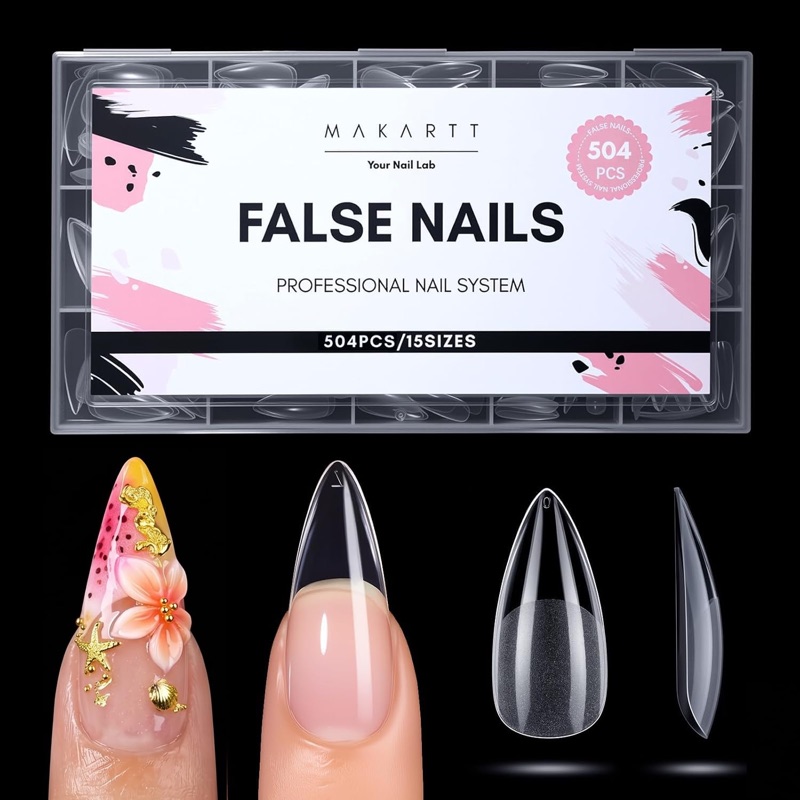
Medium sharp almond nail tips, 15 sizes, 504 pc
A 504-piece extra-short almond assortment across 15 sizes — mixed stock rather than a single-size refill. Useful when several adjacent sizes are running low together and your size history is not yet stable enough to justify a dedicated refill lane.
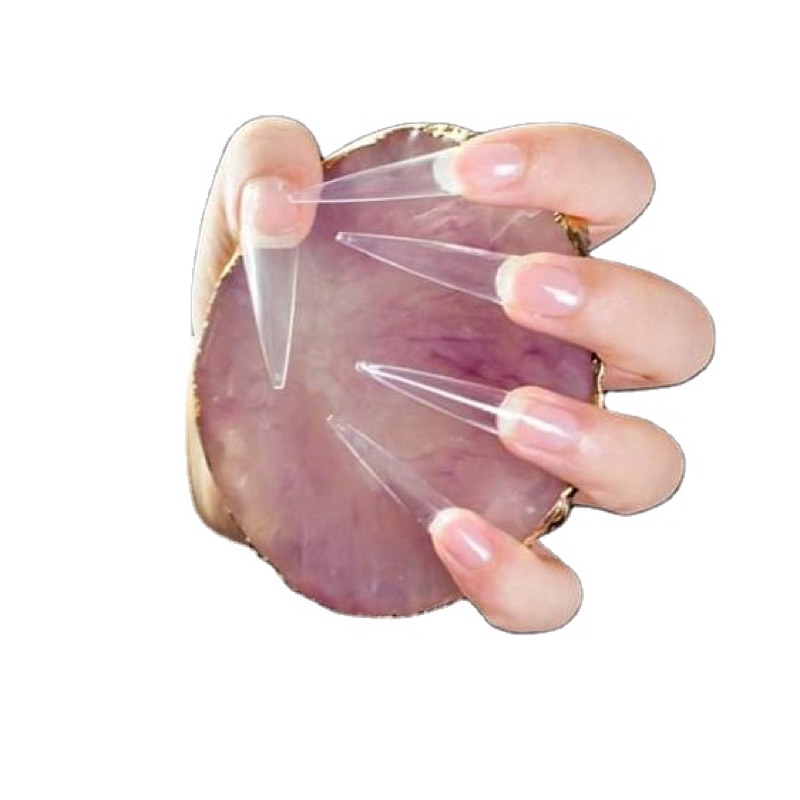
Refill nail tips, sizes 4/5/6 mixed, 600 pcs per bag
A 600-tip bag mixing refill sizes 4, 5 and 6 in a clear long stiletto profile. A sourcing route for the specific case where those numbers run low together — confirm the mould, material and surface treatment against your retained sample before it enters sellable stock.
Card photos are the current marketplace listing images and may differ from the delivered product; confirm details on the live listing.
The supplier questions that protect a refill order
Send a concise, evidence-based request. Do not ask a supplier merely whether they "have #5." Attach photos of the retained sample beside a ruler, its family code, and any supplier item reference from the original order. Then ask:
- Can you supply this exact shape, length, curve profile, material, and surface treatment as an individual number?
- What product, mould, or internal version reference identifies the original and the proposed refill?
- Is the refill from the same current specification as the sample attached? If not, what changed?
- What is the quantity per individual size, and can sizes be mixed in one order?
- Can you send a small physical sample before a larger refill order?
- How are sizes labelled in the bag, and can the outside label include the family code or supplier reference?
- If a change is made to the mould, material, or size sequence, how will it be communicated?
Those questions do not guarantee that a supplier can support individual sizes. They establish the evidence needed to decide whether it can. If the reply is general, ask for a labelled sample rather than filling in the missing detail yourself.
Alibaba can be a channel for this conversation, but individual-size availability and commission eligibility must be confirmed on the exact listing at the time of purchase. Do not build a customer promise around a search result, a supplier chat, or a product photograph that is not tied to an approved sample.
Test the refill before it enters sellable stock
Treat the first refill from any new batch or changed source as a mini approval. Compare a small random selection with the retained original tip. Check width, curve, cuticle edge, length, thickness feel, and whether the surface accepts your preparation and finish in the same way.
Make one finished comparison nail where the design is unforgiving: a French line, a side accent, chrome, or a raised decoration near the cuticle. These details expose a shifted centre line or changed edge faster than a solid colour does. Place the original and refill side by side under normal working light. If you would hesitate to mix them within one customer set, keep the refill separate until the source is resolved.
Record the result with the purchase order: date received, supplier listing or invoice reference, family code, individual number, comparison outcome, and visible deviation. It lets you answer a future replacement request without relying on memory.
Build a replacement policy you can actually fulfil
Customers need a clear answer before they buy. A practical policy can say that replacements are considered for current designs, subject to the original size and available materials, and that the customer should provide an order number plus a clear photo. Do not promise an exact match forever if you cannot maintain archived tips, colours, and charms.
For some collections, an extra finished nail or a small repair kit is the better customer experience. For limited designs with hand-painted work, paid replacement may be the more honest route. For low-cost, ready-to-wear sets, the simplest answer may be a replacement discount rather than reconstruction of one nail. Choose the policy that matches your production model, then cost it before publishing it.
The key is consistency between what you sell and what you can replenish. If a 10-piece custom set is marketed as reusable, buyers may reasonably ask what happens after one piece is lost. That does not obligate every small brand to stock every individual tip indefinitely. It does obligate the brand to avoid implying a service it has not designed.
A calmer way to buy the next refill
When one number runs low, pause the emergency order. First identify the exact tip family and version. Check whether the shortage repeats in fulfilled orders. Compare the flexibility of a mixed box with the match risk and true landed cost of an individual refill. Ask the supplier for the specification, not only the number. Finally, sample against retained stock before the new tips join active inventory.
That sequence turns a small shortage into useful demand data. Over time, it can tell you which shapes deserve dedicated refill lanes, which designs should include a spare, and which customer promises are sustainable. The goal is not to eliminate every unused nail tip. It is to keep the tips that reach a customer's hands consistent with the set they chose.