A mixed-size box is the sensible first purchase for a new tip line. It gives you several widths to test and shows which numbers customers actually use. Once a brand has repeat buyers or a standing service menu, the same box becomes lopsided: one or two sizes disappear while the rest of the assortment sits in a drawer.
A single-size refill is meant to fix exactly that. It also introduces a new risk. The refill is only interchangeable with what you already sell if it is the same tip: same model, shape, length, curve, material, surface and size number. A supplier can ship something that looks right in a listing photo and fits differently on a hand.
This guide covers the reorder decision for large sizes in particular, because the widest numbers are usually the ones a brand runs out of first and the ones where a small mould change shows up most. If you are still deciding whether refills make sense at all, start with when a single-size refill makes sense; if you have not written your supplier questions yet, the refill or full box checklist covers that conversation.
Why a refill bag solves one problem and creates another
Refills move the decision from "which assortment" to "which exact variant". That is a narrower question, but not a simpler one. The buying record becomes the product: item code, shape name, length, curve profile, size number, measurement method and the date you approved it.
Two failure modes are common. The first is a label change — the supplier keeps the listing title but substitutes a mould, a material or a pack count. The second is a numbering change — the same number now measures a different width because the shape family moved from one mould to another. Neither shows up in a photograph.
The higher the size number, the more visible both become. A large tip has more contact area with the nail plate, more sidewall to sit against skin, and more leverage if the curve is wrong. If your best-selling large size shifts by a millimetre of width or a degree of curve, repeat customers notice before you do.
What "3XL" does and does not tell you
Size words in nail supply listings are marketing and search terms, not a standard. "3XL" may describe extra length, a family of moulds, or one seller's naming habit. "Single size" may mean one number per bag, or a bag that mixes a few neighbouring numbers. Both readings appear in live listings.
Treat the listing title as a list of candidate attributes to confirm, not as a specification. A title containing "3XL", "single size", "4, 5, 6, 7", "ABS" and "no C curve" is telling you what the seller wants to be found for. Ask which of those words apply to the variant you would actually order.
"No C curve" deserves a sample, not a yes or no. It describes a flatter crosswise profile than a pronounced C-curve tip. Whether that suits your line depends on the nail beds you serve and on what your current assortment already is. A refill with a similar width and a different curve is a different product for fit purposes.
Build the reference record from the tip you already sell
Before you ask for a quote, document the tip the refill is supposed to replace. Without a reference, you cannot tell a match from a near miss.
Record for the approved product:
- supplier and, if one exists, a model or item code;
- shape and length as you describe them to customers;
- material as stated by the supplier;
- curve profile and finish;
- size number, plus the width you measured at the widest point;
- the date you approved it and the order it came from.
If the supplier has no usable code, create your own — for example clear-square-3xl-size-5-v1. That code is your tracking aid, not a supplier certification, and it should appear on the purchase order and on the bag label you keep.
Then capture fit evidence. Photograph the label and a representative tip beside a ruler. Note how the tip sits on the nail beds you actually serve: does it cover the plate without pressing into skin, does it rock, is there exposed sidewall. Keep one approved tip in a labelled envelope as the physical reference for the next delivery.
Measure the incoming bag, not just the listing
When a refill arrives, the first check is identity, not appearance. Compare the bag label with the purchase order: item code, shape, size number, pack count, lot or order reference. A bag that cannot be told apart from a neighbouring size on the shelf will eventually be mixed up.
Then measure. Use the same method every time: tip flat, not stretched, widest point marked, outside width in millimetres, plus overall length. Record a range from several pieces rather than trusting one, because within-bag variation is exactly what a single measurement hides.
A caliper helps only if the procedure is consistent. A reading does not test fit. Curve, sidewall shape and contact still need a dry comparison against the reference tip, on a real nail or a sizing form.
Photograph the new tip next to the old one with both labels visible. That single image answers most of the questions a future you will ask.
Write the reorder request so the variant is unambiguous
A short written request prevents most substitutions. Name the approved tip, the exact refill variant, and the checks you will run on arrival.
For example:
We are reordering the clear square 3XL tip from our approved reference, size 5, approved in July. Please confirm: item code and variant; material; shape, length and curve profile; outside width at the widest point and the measurement method; pieces per bag; how each bag is labelled; sample cost; MOQ per size; production lead time; and whether the production batch will be built to the same mould as the sample. Please send a dimensioned photo and one sample from the exact variant before we place the order.
Ask whether the item is stock, modified, or a custom mould, because the MOQ usually differs. Also ask how the factory identifies each number during packing, and whether the outer bag states the number, shape and version. That is what makes receiving possible without opening every bag.
A pre-order scorecard
Use the same five checks every time, so a colleague can place or receive the next order without re-deriving the decision.
| Check | What to record | Hold the order if… |
|---|---|---|
| Identity | Supplier, item code, shape, length, size number, approved date | The number or style is unclear |
| Fit | Width, curve profile, cuticle line, dry-fit notes | It rocks, pinches, or exposes sidewall |
| Bag consistency | Pieces checked, width range, visible defects | Pieces differ from the reference |
| Packing | Size label, bag count, lot or order reference | The label cannot separate variants |
| Repeatability | Sample kept, written confirmation saved | The supplier changed the version without approval |
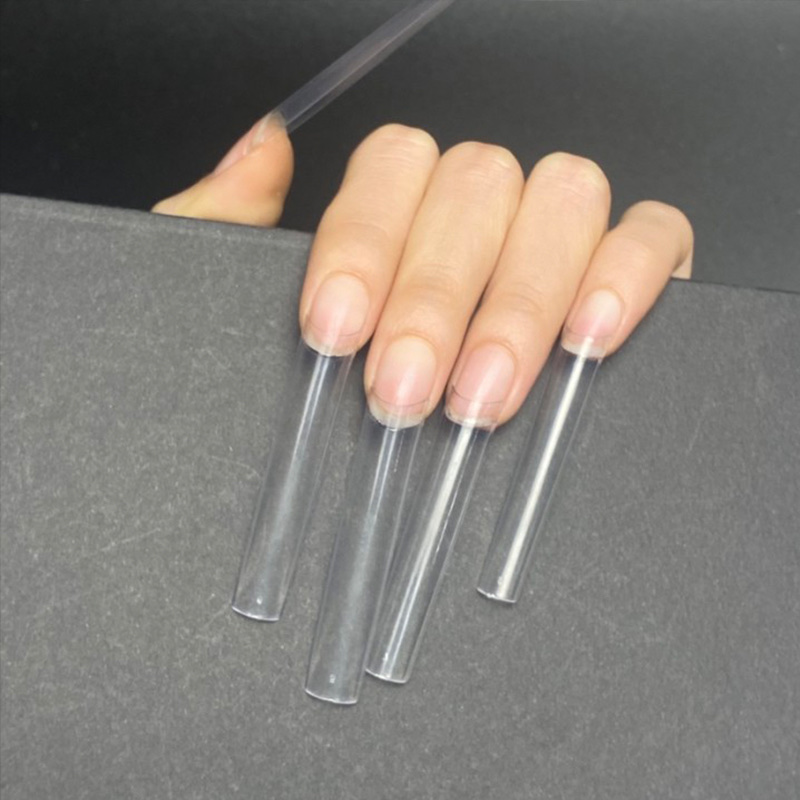
3XL refill bag, single size, clear square tips
A wholesale refill format sold by size rather than as a mixed box, which is the purchase this guide is about. The listing mixes style and search words in its title, so confirm which attributes belong to the selected variant.
Card photo is the current listing image and may not show the exact variant or pack count; confirm details on the live listing.
Set an acceptance check and a hold list
A refill programme only works if anyone receiving a bag knows what to inspect. Write the check down once and reuse it.
Check on arrival:
- Bag label and size number against the purchase order.
- Item code and version against the approved reference.
- Width range and length from several pieces in the bag.
- Shape, cuticle outline and curve against the reference tip.
- Visible defects: flash, warp, cracked tips, rough edges, colour drift.
Hold the delivery and contact the supplier before it enters saleable stock if any of these appear:
- the label cannot distinguish this size from a neighbour;
- the cuticle line or curve differs from the approved tip;
- the tip rocks or pinches on the fitting form;
- measured width falls outside the range you accepted;
- pieces vary noticeably within the bag;
- the packed count does not match the order.
Photograph the problem beside the reference and ask what changed: a substitute mould, a new production revision, or a packing error. Do not blend a questionable bag into older stock, because the mismatch will be impossible to trace later.
Decide whether the refill is worth the handling cost
Compare landed cost per usable tip, not per piece. Include the item price at the quantity you can actually order, shipping, duties where they apply, payment fees, and the labour to check and relabel the bags.
The refill usually wins when one size has steady consumption, the style is stable, and the supplier can reproduce the same mould. It loses when sales are irregular, the shape is being redesigned, or your order records are too thin to separate a real high-use size from one busy month. Two adjacent decisions belong with this one: whether a single packed size is enough for the sets you sell, covered in 24 nails is not a fit strategy, and how a replacement lot gets cleared, in releasing a new nail tip batch.
Set a reorder trigger per size: average units used during your normal replenishment lead time, plus a buffer you choose deliberately. Review it after a few cycles. The size that blocks fulfilment is the one to track, not the total piece count in the drawer.
Approve the version, not the number
A size number alone is not a specification. "3XL", "size 5" and "no C curve" each describe part of a product, and none of them promises compatibility with the tips you already sell.
The workable loop is short: keep a reference tip, measure a bag against it, dry-fit the sample on the shapes you actually serve, and put the confirmed variant in writing. Then compare the next delivery with the version you accepted, not with the listing you remember.
That routine does more than prevent one bad order. It gives repeat customers a stable fit, makes kit assembly predictable, and turns your reorder decision into something a new team member can follow.