For most people shaving legs, a cartridge razor with several closely set blades and a pivoting head, used on wet skin with a lubricant and replaced before it drags, is the practical default. If your skin reacts easily, a single-blade safety razor or an electric shaver is the sensible alternative, trading some closeness for less irritation. What matters more than the type you pick is the condition of the blade and how you use it, because dermatologists quoted across the sources blame dull blades and dry skin for most razor burn.
The sources do not fully agree on blade count or shaving direction, and this guide shows where they split. It covers how the types differ, how to tell when a blade is finished, the bikini line and underarms, and when a bump is more than razor burn. It is general information, not medical advice.
If you also shave your face, the checks differ: see facial razors and at-home dermaplaning.
Which type of razor suits which skin?
Four options, and what the sources actually say about each.
Cartridge razors. Consumer health guides say cartridges usually give the closest shave, and suggest three to six blades set close together for fewer nicks, plus a pivoting head so the razor follows curves. A manufacturer executive quoted in a testing publication argues that more blades mean less skin bulge between them and therefore less irritation — that is the industry's case, not an independent result.
Single-blade safety razors. Fans argue one blade grazes the skin once instead of several times. A buying guide makes that point, and a lab-testing site says that if your skin overreacts to shaving, a safety razor or another high-quality single- or double-blade design is often the best bet. Consumer health guides take a more cautious line, noting these take practice and are not typical for legs. Expect a learning curve and a slower shave.
Electric shavers. Faster and less likely to cut, but they never get as close as a manual razor. In one test of 18 razors that included an electric model, it scored well for nicks and razor burn and poorly for maneuverability — one tester, one product, not a verdict on the category.
Disposables. Fewer blades and less effective, best kept for emergencies. That does not mean every cheap razor is poor, but a single-blade plastic disposable is not the same tool as a safety razor, and the sources praising "single blade" mean the latter.
So who should choose what? If you rarely get bumps and want a closer shave on legs, a cartridge is fine. If you get razor burn or ingrown hairs often, try a safety razor or an electric shaver before concluding you must give up shaving. A dermatologist quoted in consumer health coverage advises people who get irritation to shave with the grain.
Is "more blades" really better?
Not necessarily, and the evidence is thin on both sides.
Industry-adjacent sources favour more blades: the executive argument above, a retail guide recommending at least three and preferably five, and a dermatologist feature calling single-blade disposables a mistake and four or five blades the route to smoother legs.
On the other side, several editorial and brand sources claim multiple blades cause irritation because they pass over the skin more than once — one of those pieces comes from a single-blade razor brand, so weigh it accordingly.
The honest summary: no source we found offers a controlled trial of blade count and razor burn. Choose by experience. Start with the type that suits your hair, give it several shaves with a fresh blade, and change one variable at a time, or you will not know whether the razor or your technique made the difference.
How do you know when a blade is finished?
Feel, not a calendar. Manufacturer guidance for one women's line says the best sign is dullness: the razor pulls at hair, feels rough, or you notice more irritation than usual. A medically reviewed pharmacy guide lists the same signs and adds needing more pressure for a close shave, plus visible rust.
For a rule of thumb, that guide suggests replacing blades every five to seven shaves — closer to five if your hair is coarse or thick, or your skin is uneven or scarred. A shaving brand offers a schedule by frequency: daily shavers every one to two weeks, every other day every two to three weeks, twice a week every four to five weeks. Another dermatologist advises tossing disposables after a few uses, and the same article cites a manufacturer study finding the average woman changes her blade less than once a month. These guides disagree with each other, which is exactly why the drag test beats the calendar.
Why it matters: an old blade can contribute to razor burn and ingrown hairs, and the extra cutting risk of a dull, uneven blade raises the chance of infection.
How to make a blade last, per the pharmacy guide: rinse it after strokes and after use, no harsh cleaners needed, do not tap it on the sink, store it dry with a cover. A dermatologist quoted in health coverage recommends storing the razor somewhere dry rather than in the shower. Dry shaving, the same guide adds, dulls blades faster.
What about the bikini line and underarms?
Both areas are harder. A dermatologist quoted by a beauty site says the skin is thinnest and the hair coarsest in the underarm and bikini area, so dull blades can catch fragile skin and cause tears and irritation. Consumer health guidance suggests a post-shave serum or oil to reduce redness and bumps, and advises trimming long hair with an electric trimmer before using a cartridge razor.
Another dermatologist links a dull blade to ingrown hairs, razor burn and infection, which is why some people keep a fresh blade for sensitive areas. We did not find a study showing a separate razor reduces infection, so treat that as a precaution rather than a rule.
Razor burn, ingrown hair or infection: how to tell?
Damaged follicles from a dull razor can become infected — folliculitis — which can look like an acne breakout, whereas an ingrown hair can look inflamed without being infected.
A dermatologist describes skin infections as red, scaly, crusty or oozing a pinkish-yellow fluid, and advises cleaning the area with gentle soap and water, then calling a doctor who can take a culture and prescribe an antibiotic if needed. Another lists redness, swelling, pain or pus as the common signs of a bacterial skin infection.
Mild redness that settles soon after shaving is most likely irritation; we found no clinical source setting an exact number of days. Bumps that spread, hurt, ooze or crust, or come with fever, are a reason to see a clinician and stop shaving the area meanwhile.

Double-edge safety razor, long handle
The option the sources suggest when skin reacts: one blade, one pass, and a knurled long handle for wet grip. It ships with ten blades, which is the other half of the argument — a blade costs a fraction of a cartridge, so replacing it the moment it drags stops being a budget decision.
What does skin prep and technique do?
This is where most irritation is won or lost.
- Wet the skin first. Moisten before shaving, ideally in the shower or bath. A dry blade on dry skin makes razor burn and ingrown hairs more likely, and dermatology guidance cited by beauty publications says never dry shave.
- Use a lubricant. Shaving cream helps cartridges glide; a dermatologist quoted in a magazine recommends massaging it into damp skin for about 20 seconds before you start.
- Exfoliate first. A cloth or scrub removes dead skin that can clog the razor.
- Shave with the grain. A dermatologist at Weill Cornell says shaving in the direction of growth minimises razor burn and bumps. Consumer health guides note that against the grain gives a closer shave but often causes irritation, and suggest going with the grain first, then optionally against it. That is a genuine split; the cautious reading is start with the grain and add a second pass only if your skin copes.
- Skip early mornings. Overnight fluid retention can pull hairs back into their follicles — one writer's explanation, so a practical tip rather than a physiological fact.
- Rinse, pat, moisturise. Cool water to finish, pat dry rather than rubbing, then a soothing lotion.
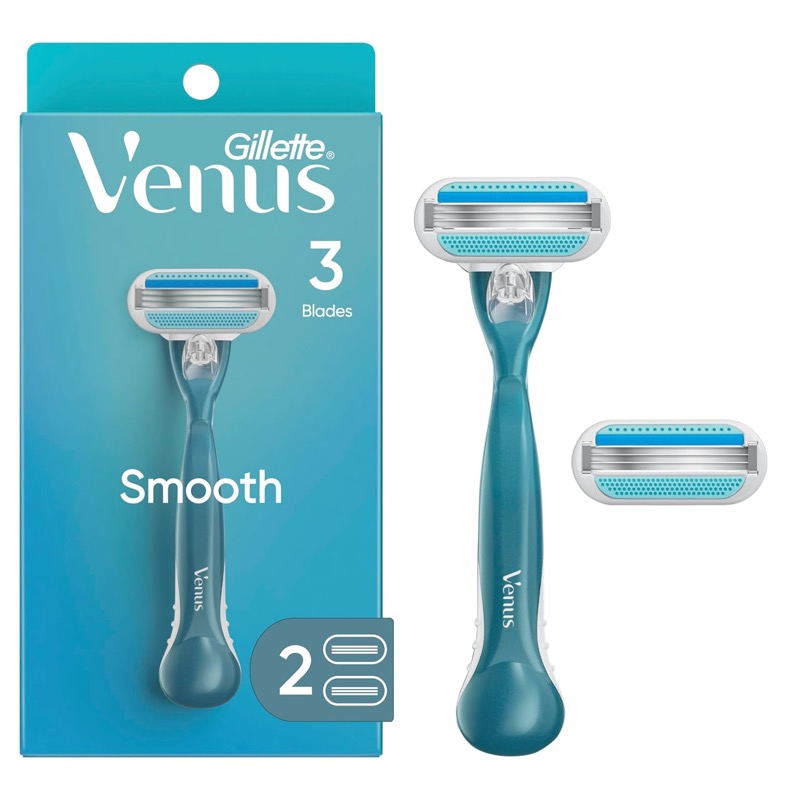
Cartridge razor, 3 blades, pivoting head
The practical default, and a useful counterweight to the blade-count arms race: three blades set close, a compact pivoting head and a lubrication strip. The handle takes any refill in the same family, which is the detail that decides your cost per year.
What if your skin never settles?
Some skin simply reacts more. A dermatologist quoted in a consumer piece says certain people are more prone to shaving problems and may find other hair-removal methods easier or more convenient. If you have tried several razors and keep getting bumps, that is the point to stop swapping products and ask a dermatologist, because a face-to-face look beats guessing from reviews.
Before you give up, work through the cheap fixes in order: a fresh blade, wet skin and lubricant, shaving with the grain, then a different razor type. If bumps persist after all four, the razor is probably not the whole story.
What should you check before you buy?
- Your main use. Legs, underarms, bikini area or all three — a razor that suits legs may be awkward elsewhere.
- Skin history. If you often get bumps, a safety razor or electric shaver deserves a trial.
- Blade count and spacing. For cartridges, look for closely set blades and a pivoting head.
- Refill cost and availability. Check price per cartridge, not price per razor — the handle is the cheap part.
- Blade cover or storage. A cover keeps blades dry.
- Handle grip when wet. A slippery handle is an easy way to nick yourself.
- Lubricant strip claims. A moisture strip is no substitute for shaving cream on dry-prone skin.
- Return policy, because a razor is as personal as a bra.
What a listing should say
Print if true: number of blades and the spacing or head type; whether the head pivots; handle material and grip; the refill family the handle accepts; price per cartridge where it can be calculated; and care instructions (rinse, dry, store covered).
Avoid: "no irritation guaranteed", "dermatologist approved" without naming the test, "closest shave possible" as a fact rather than a claim, "prevents ingrown hairs", and gendered pricing dressed up as a feature. No razor guarantees an irritation-free shave; the sources agree irritation depends on blade condition and technique.
Frequently asked questions
Are women's razors just men's razors in pink? Price is the clearest documented difference: a city report cited by a buying guide found women paid about 13 per cent more on average for equivalent personal-care products. We found no independent test showing the blades themselves differ, so compare head shape, handle grip and refill price rather than the label.
Can I shave dry in a hurry? The dermatology-linked sources say no. Shave wet skin, with a lubricant.
How often should I shave my legs? There is no clinical rule. Beauty guidance suggests giving legs a break from the razor rather than shaving daily; shave as often as your skin tolerates.
Is it better to shave in the shower? Several sources recommend wet, softened skin, often in the shower or bath — with a lubricant, not instead of one.
Do safety razors cut more? They can, which is why the sources describe a learning curve. Start with the head flat against the skin and no pressure, and expect the first few shaves to be slower than a cartridge.
When should I see a doctor? If bumps spread, hurt, ooze or crust, if you have a fever, or if bumps keep returning despite changing your routine.