A facial razor is a small single blade on a handle, sold for removing fine facial hair and the dull surface layer of skin. It is one of the cheapest things in a beauty routine and one of the few that involves holding a sharp edge against your own face. That combination is why the listing matters more than the price. Packs promise "painless", "safe for sensitive skin", "dermatologist recommended", "salon results at home" and "surgical-grade steel", and almost none of those phrases comes with anything you can check.
This guide sets out what the tool is, what dermatology sources actually say about using one at home, where brands contradict each other on how long a blade lasts, and what to look at when the parcel arrives while you can still send it back. It does not recommend a brand and it is not medical advice. Where a statement comes from a brand, we say so. Where a check is our own suggestion, we say that too. If you have a skin condition, or you are unsure whether this is for you, ask a dermatologist before you buy.
For other small tools in the same kit, see eyebrow tweezers, nail clippers, silicone facial cleansing brushes and lighted makeup mirrors.
The short version
- A facial razor removes fine hair and some surface skin. A Cleveland Clinic dermatologist describes the at-home version as a small single-blade razor on a plastic handle that you glide lightly over the skin.
- The same source names the main risks: temporary irritation, nicks that can become infected, and worse breakouts if you use it over active acne.
- Shaving does not make hair grow back thicker or darker. Mayo Clinic says so plainly.
- The feature most worth paying attention to is a guard on the blade, plus a cap for storage.
- Brands disagree widely on blade life, from a single use to two or three months. Treat every figure as a brand's own guidance.
- Check the tool when it arrives. A bent guard, a loose head or a missing cap is a reason to return it.
What a facial razor is, and the four types you will see
Shops use "facial razor", "dermaplaning tool", "eyebrow razor" and "face shaver" almost interchangeably. One retailer's guide defines a dermaplaning razor simply as a single-blade razor used for facial hair removal and exfoliation. The products themselves fall into four groups.
1. Disposable guarded razors. A thin plastic handle with a fixed blade, usually sold in packs. Many have small ridges along the edge. One product summary describes fine micro-guards intended to protect skin from nicks, with a plastic cover that hides most of the blade for eyebrow work. Another brand sells twelve and calls them single-use.
2. Refillable handles with replaceable heads. A heavier handle, often metal, with blades that pull out. One well-known tweezer brand sells a handle with replacement blades included and tells buyers to replace blades every two to three months or as needed.
3. Handles that take a standard single-edge blade. One brand's system uses an ordinary single-edge safety razor blade held inside a scalloped guard, with both parts replaced together. The brand says its design is not suitable for shaving a full beard.
4. Powered devices. Battery handles that vibrate a small blade. A different product with its own charging, cleaning and replacement-head costs; we do not cover them beyond noting that heads are the ongoing cost.
Professional dermaplaning is a separate thing again. The Cleveland Clinic describes it as carried out by trained specialists using a small scalpel. A home tool is designed to be gentler, and it should be.
What the medical sources say
We relied mainly on two Cleveland Clinic pages and a Mayo Clinic page, because they are written by clinicians for the public.
What it does. The Cleveland Clinic's at-home article, quoting dermatologist Melissa Piliang, says the tool removes dead skin cells and fine hair, which can make dull skin look brighter, leave it feeling smoother and help products and makeup go on more evenly. Those are modest, cosmetic effects. No source we read supports claims about wrinkles, scars or pores disappearing.
The risks. The same article lists temporary irritation, because the process disturbs the skin barrier and skin may feel sensitive for about a day; nicks or cuts, which can lead to infection; and making acne worse. The Clinic's separate treatment page calls dermaplaning generally safe and lists infection and scarring, including raised scars, as risks. That page covers the clinical procedure, so we would not assume every line applies to a guarded home razor — but the direction is the same: this is a blade, and the risks are those of a blade.
Who should not do it at home. The at-home article says to skip it during a breakout, an eczema flare or another active skin condition, and to see a dermatologist instead. Lifestyle and brand sources add to that list with less authority: a skincare brand's blog, citing consumer health sites, lists severe sunburn, active breakouts, sensitive skin and recent use of isotretinoin or tretinoin; a magazine article says people with eczema or psoriasis should avoid it; one razor brand tells its own customers not to use the tool on sunburnt skin. If any of these describes you, the cautious reading is to ask a professional first.
How often. Dr Piliang advises against daily or every-other-day use and suggests no more than once a week so skin can recover.
Aftercare. Moisturise well and wear sunscreen.
Some professionals say do not do it at home at all. An esthetician quoted on a skincare brand's blog says dermaplaning should always be done by a certified technician. A sunscreen brand's blog says it is best reserved for professionals and lists cold sores and pigment changes among the risks of doing it yourself. Both come from businesses with their own interests, but the view exists and you should know it before buying.
Does hair grow back thicker?
No. This is the question that stops most people buying, and it has the clearest answer in the guide. Mayo Clinic states that shaving does not change the thickness, colour or rate of hair growth. The Cleveland Clinic dermatologist says the same: cutting hair at the surface has no effect on how it grows, and regrowth can feel coarser at first only because the cut tip is blunt.
So a listing promising hair "grows back finer" is making a claim the medical sources do not support either. Shaving changes how the tip feels for a while. It does not change the hair.
How long does a blade last? The sources do not agree
This matters twice over: a dull blade is the one most likely to drag, and blade life decides what the tool really costs. A dermatologist quoted in a shopping article about razors in general says a dull blade can lead to ingrown hairs, razor burn and bacterial infection. A beauty site says a dull facial razor raises the risk of nicks.
| Source (type) | What it says about blade life |
|---|---|
| A tweezer brand's facial razor, via a retailer page (brand) | Replace blades every two to three months or as needed |
| A skincare brand's refillable tool (brand) | Each blade lasts three to four uses |
| A safety-blade system, getting-started page (brand) | Use each blade and guard up to three times |
| The same brand, product page (brand) | Replace the blade and guard once a month |
| A disposable pack (brand, via a shopping article) | Single-use razors |
| A review site's note on one disposable model (affiliate) | Expect four to five full-face sessions |
| A dermatologist on ordinary disposable razors (shopping article) | Replace weekly, sooner with frequent use or coarse hair |
The range runs from once to roughly a dozen uses, and one brand gives two different answers on two of its own pages. Nobody has published a test showing how long these blades stay sharp, and the answer depends on your hair, how often you use the tool and how you store it.
What you can do with that:
- Work out the cost per use yourself. Take the price of a refill pack, divide by the number of blades, then divide by the number of uses the brand states. Simple arithmetic on the seller's own figures, and it often reverses which product looks cheaper.
- Replace on feel, not on the calendar. If the blade tugs, skips or leaves skin redder than usual, it is finished, whatever the packet says.
- Check refills exist before buying a handle. A refillable handle is only good value while you can still buy the blades.
How often to use it: another range
| Source (type) | Suggested frequency |
|---|---|
| Cleveland Clinic dermatologist (medical) | No more than once a week |
| A disposable-razor brand (brand, via a shopping article) | Every three to four weeks |
| A health-information site, on the professional treatment | At least 21 days between sessions |
The medical source sets a ceiling and the others suggest going less often. Nothing we read supports using one every day.
Terms the listing uses loosely
| Listing phrase | What it usually means | What to look for instead |
|---|---|---|
| "Dermaplaning tool" | A facial razor | Whether the blade has a guard |
| "Painless" or "nick-free" | A guarded edge | A photo of the edge; nothing can promise no nicks |
| "Safe for sensitive skin" | Marketing | Medical sources advise caution with sensitive or flaring skin |
| "Dermatologist recommended" | Rarely explained | The named dermatologist and what they said |
| "Surgical" or "medical-grade" steel | Stainless steel of unstated grade | The material stated in writing |
| "Professional results" | Marketing | Professional treatment uses a scalpel and training |
| "Hair grows back finer" | Not supported | Mayo Clinic: shaving does not change hair |
| "Reusable" | The handle, the blade, or both | How many uses the brand states per blade |
| "Rust-proof" | Stainless | Dry storage and a cap; stainless can still spot |
| "Includes refills" | At least one | How many, and whether more can be bought |
| "Eco-friendly" | Less plastic, or recyclable blades | What is actually recyclable where you live |
| "Sterile" | Sealed at the factory, perhaps | Individual sealed wrapping; no way to verify at home |
One further brand claim deserves a note. A skincare brand says ordinary eyebrow razors only remove hair and cannot exfoliate the way its own tool does. That is a company describing a competitor's product. We found no independent comparison, and both are single blades drawn across skin.
What to look for before you buy
A guard. A commercial skincare site argues a guard is the single most important feature because it limits how far the edge can bite, and that guarded multipack eyebrow razors are often safer at home than a bare blade. We cannot vouch for that site, but the reasoning is sound and matches how brands describe their own guards. For a first tool, choose one with a visible guard.
A cap or cover. The blade should be covered when not in use. A brand's care instructions say to dry the tool, replace the cap and store it. A razor loose in a makeup bag is how fingers get cut.
A stated blade material. "Stainless steel" is the common description. If the listing says nothing, that tells you something about the seller.
A handle you can hold steadily. One reviewer of a metal-handled razor notes it is fairly heavy and says to keep hands dry so it does not slip. Light plastic handles are easier to control for some people and feel flimsy to others. Neither is better; a secure grip is what matters.
Refills, and their price. Check before you commit to a handle.
Clear instructions. A seller that explains angle, pressure, cleaning and when to stop has thought about safety. One consumer-testing site describes holding the tool at about 45 degrees and working in downward strokes. A listing with no instructions at all is a warning sign.
Sealed packaging. Each blade should arrive covered and unused.
What a higher price should buy
We do not publish prices we have not verified. In general terms, paying more in this category tends to buy the handle, not the edge: metal construction, weight, a stand, a better cap and a refill system. Whether it buys a better blade is not something any source we read has demonstrated.
Paying more makes sense if you will use it regularly and want less disposable plastic; if refills are easy to get and reasonably priced per use; and if the handle gives you better control. Paying less makes sense if you are trying it for the first time and may not continue; if you prefer a fresh blade often; and if you want a guarded edge, which the cheapest multipacks frequently have.
Checks to run when it arrives
These are our own suggested checks, not a standard and not a safety test. They catch an obviously faulty item while you can still return it. Do them in good light, with dry hands, before the blade touches your face. Never test sharpness on skin or a fingertip.
Packaging. Is the box sealed, and is each blade capped or wrapped? An opened or re-taped pack goes back.
Count. Do the number of razors and refills match the listing?
The cap. Does it fit firmly and come off without your fingers passing the edge?
The guard. Look along the edge under a bright light. The ridges should be even, with no bent, flattened or missing sections.
The edge. Without touching it, look for visible chips, rust spots or residue.
The head. On a refillable tool, hold the handle and gently press the back of the head. It should not wobble. On a folding design, the hinge should hold its position.
The handle. No cracks, sharp moulding seams or flaking plating where your fingers go.
Blade change. If it is refillable, read the instructions and check that a blade can be removed and fitted as described, holding only the blunt side. One brand's instructions say to grip the rounded plastic edge of the blade unit to pull it out. If you cannot do it safely, the design is wrong for you.
Instructions. Are there any, and do they say when to replace the blade?
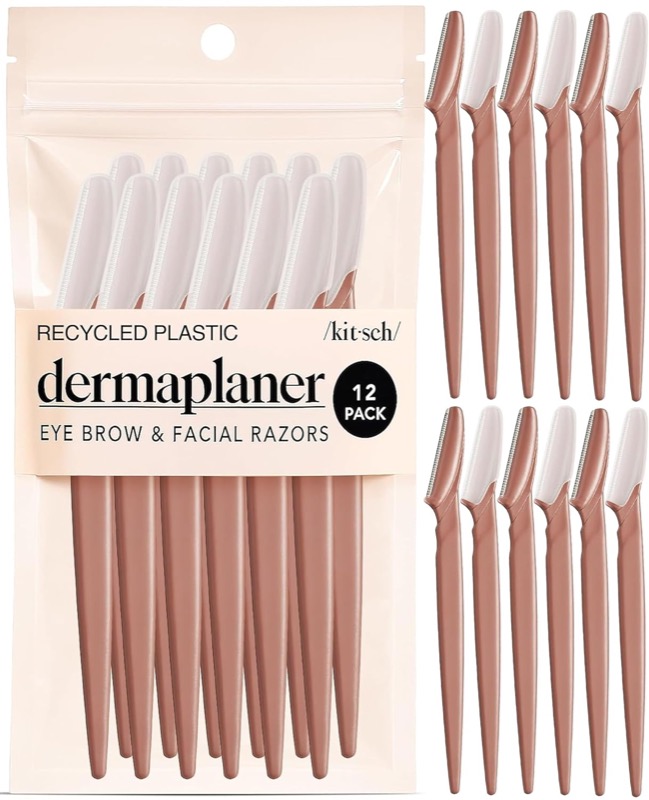
Dermaplane razor, 12-pack, guarded
A retractable-guard disposable multipack — the format the cheapest and safest home option usually takes. Twelve in a pack also makes the cost-per-use arithmetic worth doing before you commit.
Keep it or send it back
| Check | Keep | Query the seller | Return |
|---|---|---|---|
| Packaging | Sealed, blades covered | Outer box dented | Opened or blades uncovered |
| Count | As listed | One refill short | Wrong item |
| Cap | Firm, easy to remove | Slightly loose | Missing or does not stay on |
| Guard | Even along the edge | Minor cosmetic mark | Bent, flattened or missing ridges |
| Edge | Clean | — | Chips, rust or residue |
| Head | Solid | Slight play | Wobbles or will not lock |
| Handle | Smooth and intact | Cosmetic scratch | Cracked or sharp |
| Blade change | Works as described | Stiff but safe | Cannot be done safely |
| Instructions | Clear, with replacement advice | Minimal | None |
Using and looking after it
This summarises what the sources say. It is not a substitute for the instructions that come with your tool or for a professional's advice.
- Start with clean skin and a clean blade. The Cleveland Clinic article says to clean the razor before and after each use, and that reusable blades can be disinfected with rubbing alcohol and warm water.
- Go slowly and lightly. The same article stresses care to avoid nicks. The esthetician quoted earlier describes the right touch as slow, careful and very light.
- Do not go over broken or inflamed skin.
- Do not over-treat afterwards. A lifestyle article advises avoiding other exfoliating treatments straight afterwards; a skincare company's blog suggests asking your provider how long to pause retinoids.
- Moisturise and use sunscreen. Per the Cleveland Clinic, and a health-information site notes dermatologists recommend at least SPF 30 generally.
- Clean, dry and cap it. A brand's instructions say to rinse with warm water or wipe with alcohol, let it dry, then replace the cap.
- Do not share it. No source we read addressed sharing facial razors specifically, but the infection risk from nicks makes this an easy rule.
- Dispose of blades carefully. Cap or wrap a used blade before it goes in the bin. If the brand offers a blade-return tin or recycling scheme, use it.
- Travelling. Rules for blades in hand luggage differ by country and blade type. Check with your airline or airport security; we have not verified any rule for this guide.
- If you nick yourself, treat it as you would any small cut, and see a health professional if it looks infected or does not heal.
Mistakes the sources warn about
Reading across the medical and brand pages, the same few errors come up again and again. None is about the product you chose; all are about how it is used.
- Using it too often. The dermatologist's ceiling is once a week. More gives skin no time to recover.
- Keeping a blade past its best. Dull blades are linked to razor burn, ingrown hairs and nicks.
- Going over a breakout. The medical advice is to wait.
- Pressing. Every source that describes technique says light and slow.
- Putting it away wet or uncapped.
- Layering strong products straight afterwards. Give freshly treated skin a rest.
When to skip the razor
A home razor is not the right answer if:
- you have active acne, eczema, psoriasis, rosacea or a cold sore in the area;
- your skin is sunburnt or already irritated;
- you are using prescription retinoids or have recently taken isotretinoin, unless your prescriber says it is fine;
- you scar easily or tend to develop dark marks after minor injuries — one commercial site lists darker patches after inflammation as a risk for deeper skin tones, and we could not confirm its source, so ask a dermatologist;
- the hair you want to remove is coarse or has appeared suddenly, which is a question for a doctor, not a razor.
Alternatives exist, including professional treatment, threading and chemical exfoliants for the brightening effect alone. Each has its own trade-offs, and comparing them is outside this guide.
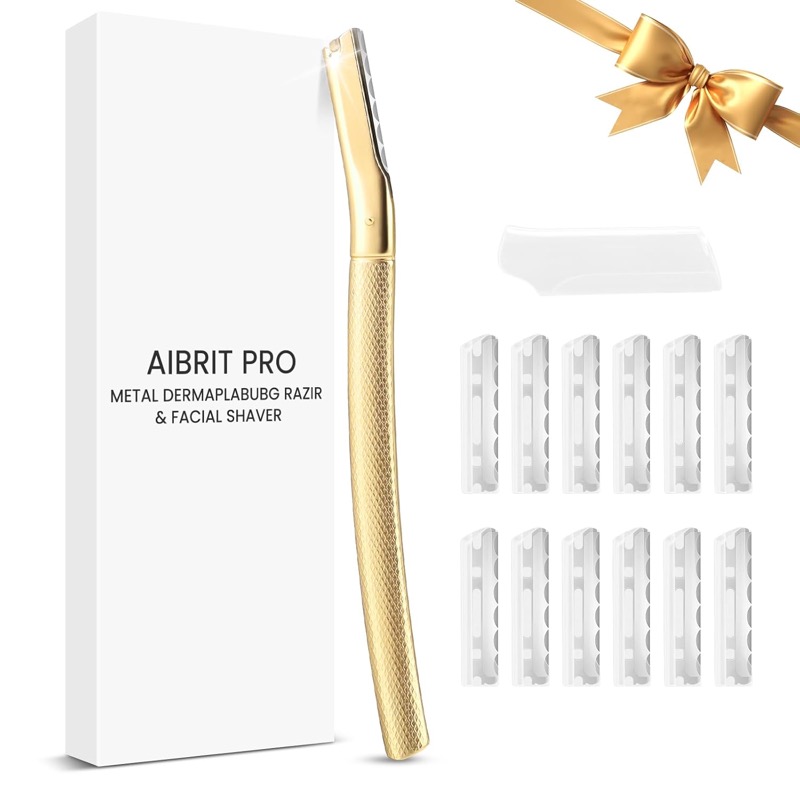
Metal-handle dermaplaning tool, 12 blades
The refillable format, where the cost question moves from the pack to the blades. Twelve replaceable blades is also the version where the brand's stated uses-per-blade figure actually decides the cost.
What your listing can say
If you sell these tools, write only what you tested or can show.
Safe to print, if true:
- "Single-blade facial razor with a guard and a protective cap" (describe the guard, not the outcome).
- "N blades per pack, individually capped" (counted).
- "Blade material: stainless steel" (from the supplier).
- "Replace when the blade tugs or skips" — a use-based rule that no calendar can contradict.
- "Clean before and after use; do not share."
- "Not for use on active breakouts, irritated or sunburnt skin" — consistent with the clinical advice above.
Avoid unless you hold evidence for each: "painless", "nick-free", "safe for all skin types", "dermatologist recommended" without a named dermatologist and statement, "surgical" or "medical-grade" steel without a grade, "professional results", "hair grows back finer", "sterile", and any specific blade-life figure presented as fact rather than as your own guidance.
We are not lawyers, and this is not legal advice. Your market's advertising rules may be stricter.
Frequently asked questions
Is at-home dermaplaning safe? The Cleveland Clinic calls dermaplaning generally safe and names irritation, nicks, infection and worsened acne as the risks to respect. Some professionals say it should be left to trained technicians.
Will my hair grow back thicker or darker? No. Mayo Clinic says shaving does not change hair thickness, colour or growth rate.
How often can I do it? A Cleveland Clinic dermatologist says no more than once a week. Some brands suggest every three to four weeks.
How many times can I use one blade? Brands say anything from once to two or three months. Replace it when it tugs or skips.
Is a more expensive razor sharper? We found no evidence either way. Higher prices mostly buy a better handle and a refill system.
Is an eyebrow razor the same as a dermaplaning tool? One brand says they differ. We found no independent comparison. Both are single blades, and guarded eyebrow razors are widely sold for the same purpose.
Can I use it if I have acne? Not during a breakout, per the Cleveland Clinic.
Dry skin or with oil? Brands differ and the medical sources do not settle it. Follow the instructions for your tool.
Can I disinfect a blade and keep using it? The Cleveland Clinic says reusable blades can be disinfected with rubbing alcohol and warm water. Disinfecting does not sharpen a dull edge.
What does "dermatologist recommended" mean on a pack? Nothing specific unless the pack names the dermatologist and the recommendation.