A bra extender is a small accessory with an unusually strict interface. The hooks on the bra have to engage the eyes on the extender, and the extender's own hooks have to fit the bra's eye panel. Count the hooks and you have only started.
Hook spacing, panel height, usable extension and the way the panel behaves under tension all decide whether the closure lies flat or has to be forced. For a small lingerie label, that turns a low-cost item into a specification problem: a supplier can advertise "two hook" or "three hook" and still deliver a layout that does not match the bras you sell.
This guide is written for the buyer approving that accessory. It covers measuring the closure you actually produce, writing the numbers into a supplier brief, and testing a sample against a named bra before committing to a run. For the shopper's side of the same problem — measuring one bra's closure and rejecting a poor fit at home — see how to choose a bra extender that fits.
Decide what the extender is actually for
Start with the job, not the listing. An extender might add a little band length to one house style, offer a temporary fit option across a capsule collection, or ship as a multipack accessory sold on its own.
Those are different products. A single-style accessory can be approved against one closure sample. A multi-style pack needs a compatibility range and variant labels that tell the customer which hook pattern they are buying.
Keep the function honest. An extender lengthens the back closure; it does not change cup depth, wire width, strap placement or the bra's construction. If the cup or wire fit is wrong, no extender fixes it. Say so in the product copy, because customers arrive with that expectation.
For the band-side fit problem the extender is meant to solve, see why bra straps keep slipping; an extender addresses band length only.
Avoid "universal" unless you have defined the universe. A defensible claim names the tested bra families, the hook pattern and the measurements. Bra size alone is not enough: two 34C bras can have different closure geometry.
Count the hooks, then measure the geometry
Catalogue language is inconsistent — "rows", "columns", "2×3" and "three hook" get used for different things. Count the metal hooks stacked vertically on the closure, and count the adjustment positions along the band separately. Then measure.
- Hook centre spacing: distance from the centreline of one hook to the centreline of the next, taken between every adjacent pair. On a multi-hook closure the gaps are not always identical.
- Panel height: full height of the hook panel from top edge to bottom edge.
- Edge allowance: usable fabric width around the hardware, and the horizontal position of each hook relative to the panel edge if the layout is not symmetrical.
- Extender width: finished width from the hook side to the eye side, measured with the fabric relaxed.
- Effective added length: the change in band circumference at each eye position — not the panel's total length.
That last distinction causes real returns. "Adds one inch" is ambiguous until the supplier states what is being measured. Ask, and write the answer into the spec.
Measure from a consistent centre reference on both parts. Do not measure over rounded hook tips or from outside edges when comparing two products; if a hook sits irregularly, use the centre of the attachment point where the two parts meet.
Record the closure on a finished bra
Use a production bra, not a photograph or a line drawing. Identify style, size, closure version and production revision. Lay the back closure flat without pulling the band taut, photograph both sides square-on with a ruler in frame, and record the numbers in the units your supplier uses.
Keep the bra, or a cut closure swatch, in the approval file. A measurement is only reusable if someone can go back and recheck what it described.
Choose stretch, length and colour after the geometry
Once the hook pattern matches, compare behaviour under tension. Elastic panels and firmer woven panels are different products: stretch changes how a nominal length feels when worn, while a firm panel holds the closure steadier and yields less.
Do not infer stretch from "soft" or "comfortable". Ask for composition, stretch direction, relaxed dimensions and the supplier's test method, then compare samples in the same setup.
More extension is not automatically better. Too much can loosen the band or drag the closure out of alignment. If the extender has several eye positions, verify each one against the target bra and record which setting the pack is sold for.
Treat colour as a matching requirement rather than a shade name. "Nude" varies between sellers and markets, so compare a physical sample beside the bra fabric in neutral light and decide whether you need a small standard palette or per-style colours. If hardware is coated or dyed, ask what the finish is and what care guidance applies to it.
Approve a sample in a fixed sequence
Use the exact bra model or swatch the extender is meant to fit.
- Align the hook and eye panels without pulling the fabric sideways.
- Fasten each hook with ordinary hand pressure. Nothing should need bending or forcing.
- Check that panel edges clear seams, binding and adjacent fabric.
- Look at the closure from behind and from the side: no diagonal pull, twisting, bunching or hardware pressing into the wearer.
- Work through every adjustment position. A sample that closes on one row is not approved for the advertised range.
Then test function, not just appearance. Wear the combination for a short, ordinary interval and note whether the band stays level and whether the connection migrates during movement. This is an in-house fit check, not a clinical assessment or a standardised safety test.
Inspect construction before and after: loose or skipped stitches, fraying, sharp points, uneven hook alignment, finish damage, a panel that rolls or curls. Open and close the connection a set number of times chosen in your plan, and record the count so the check is repeatable. Do not describe a bench run as certified durability.
Write the specification the supplier must meet
One line per supported closure, not one line per size label. A working record carries the bra style and revision, hook count, adjustment positions, hook centre spacing, panel height, edge allowance, extender width, effective extension at each position, fabric composition as stated, stretch direction, colour, hardware finish and care instruction.
Mark each field as measured from your reference, required from the supplier, or still unconfirmed. That third state matters: it stops an unanswered question from being read as an agreed value.
Attach a dimensioned photo and ask the supplier to return the same view with their own measurements — both the hook side and the eye side, not just overall width. For a custom version, request the sample made to that drawing and identify the material and hardware used. A sample in a different fabric or plating is not approval of the production item.
Agree tolerances before ordering. There is no universal tolerance for a textile panel and closure, so define allowed variation for spacing, panel height, extension, colour and stitching against how the part has to engage and how you inspect incoming goods. If a dimension decides whether the hooks close, label it a release requirement rather than a preference.
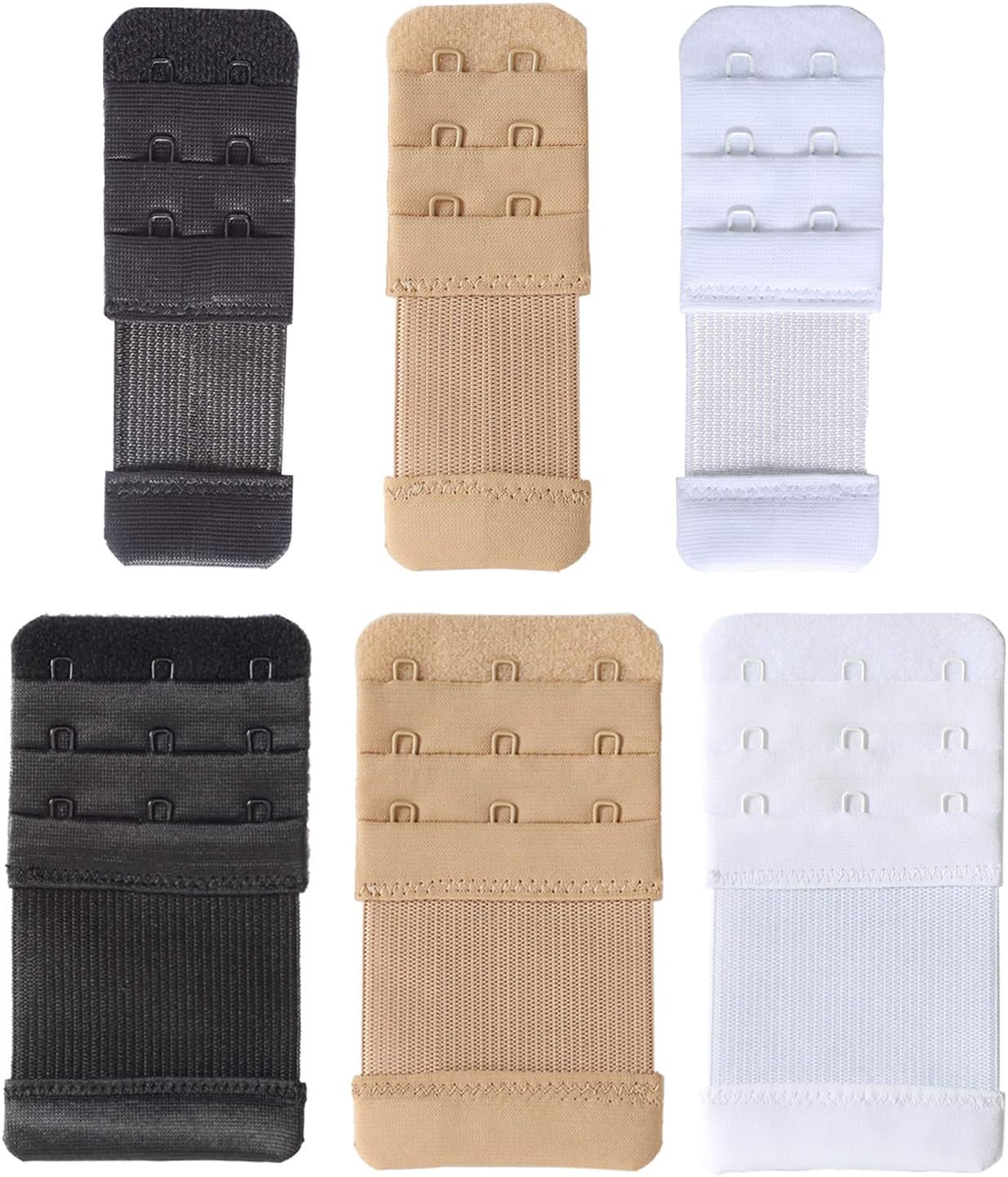
SAMGU bra extenders, 2- to 6-hook stretchy extension packs
A retail example of the format: several hook counts in one pack, which makes it a useful comparison set for hook spacing and panel height. Check the individual variant rather than the pack photo.
Pack photos often show several variants; the delivered hooks and spacing depend on the size you select.
Test the care instruction you intend to print
If the extender is sold as washable, use the stated method and inspect afterwards. Do not assume hand-wash or machine-wash behaviour from a similar listing, or that metal hardware tolerates the same cycle as the fabric.
Check whether the panel shrinks, twists, curls at the edge, changes colour, or whether the fastener finish marks the bra. Then either write the instruction the sample actually survived or change the material. Keep the washed sample beside the approved one.
When an extender keeps failing
Diagnose before changing the part. If the hooks will not connect cleanly, the pattern is wrong: recount the hooks, compare centre spacing and recheck panel height. Catalogue names use "rows", "hooks" and "eyes" loosely, so a dimensioned drawing beats any size label.
If it connects but the bra still feels tight, confirm the pressure is really at the band. Cup overflow, underwire pressure or a lifted centre panel need a fit check, not more length.
If the band rides up or the straps start slipping after extension, the added length has changed how the bra sits — try a shorter eye position before selling the extender as the answer.
A customer who needs the extender on every wear is telling you something too: the bra may sit between sizes or the cut may not suit her shape. An extender is a small adjustment, not a repair for a garment that does not fit.
Set a release rule for reorders
Before a bulk order, sign off one sample against a named bra style, the measurement sheet, a colour reference and a version date. Photograph the fastened extender from both sides and keep one physical approved unit.
The purchase order should repeat the critical dimensions, material description, colour code, packing and acceptable variation. A listing title does not control a reorder, and a supplier who swaps hardware between runs will not volunteer the change.
At receiving, compare a planned sample of the shipment against the reference: hook count and spacing, panel height, effective extension, colour, stitching, edge finish and packing. Choose the sample size and acceptance threshold from your own product risk — not a borrowed AQL number — and hold the lot if a dimension no longer matches the closure it is meant to fit.
One caveat worth writing into the brief: wholesale listings are a lead, not a drawing. A listing reviewed while preparing this guide advertised elastic two- and three-hook versions with colour options and a 50-piece minimum, but the page did not state hook spacing or panel measurements. Store ratings on the supplier profile say nothing about that specific part, so treat such a listing as an inquiry until a dimensioned sample arrives.
The output of this process is not an extender that attaches once. It is a documented relationship between a named bra closure, a measured extender and an approved sample — the thing that makes a cheap accessory a controlled product rather than a guess.