Facial cleansing brushes have changed shape. The first generation was a small motor and a round head of nylon bristles. The current generation is often a palm-sized silicone pad with soft nubs, a vibration motor, a USB-C port and a long list of claims: "Antibacterial silicone." "Up to 35% more hygienic than bristles." "Removes 99.5% of dirt and oil." "Sonic pulsations." "Waterproof." "Gentle on sensitive skin." "Medical-grade silicone." A manual version — a flat silicone scrubber pad with no motor — is sold on the same marketplaces under the same adjectives.
These claims fall into three groups. Some describe construction and can be checked on a bench: the material, the nubs, the seams, the motor, the charging port. Some describe cleaning performance, which depends on skin, product and technique. Some touch skin health, which is where dermatologists urge caution and where a small seller can get into difficulty. A buyer reads all of them as one promise: this will make my skin cleaner without hurting it.
This guide sets out what dermatology sources say about how often these tools should be used and when they should be avoided, what hygiene claims do and do not establish, what "food-grade" and "medical-grade" mean for silicone, and a screening test. It recommends no product and makes no claim about anyone's skin. Where our other guides cover the ground, we link instead of repeating: for silicone hardness see the scalp massager guide; for rechargeable-battery paperwork see the lighted mirror guide.
What dermatology sources say
Dermatologists quoted in consumer media tend to say the same few things, and a listing should not run ahead of them.
A brush is optional. A cosmetic dermatologist writing on her own site says a facial cleansing brush is not essential, can be useful when used thoughtfully, and that most problems come from how it is used: too often, or with too much pressure. Another dermatologist, quoted by Elle India, says that on sensitive skin the mechanical action can compromise the skin barrier, and suggests starting a silicone brush once a week and moving to once or twice a week only if there is no irritation.
Some people should avoid them. A board-certified dermatologist quoted by Who What Wear says people with oily or acne-prone skin may benefit from the exfoliation if they keep the brush clean and replace heads as recommended, but that those with rosacea or very sensitive skin may wish to steer clear, and that people with active facial infections — including inflamed acne lesions — and people with eczema should avoid them, because the mechanical action can irritate and, in the case of infection, spread bacteria.
Cleanliness matters. The same experts say brushes should be cleaned after every use. A dermatologist quoted by Yahoo says that regardless of type, both should be properly cleaned after each use, and that silicone is less likely to harbour bacteria than bristles. Bristle heads are said by several to need replacement about every two to three months, and one dermatologist in a Bustle roundup advises every one to two months to avoid frayed bristles becoming abrasive.
Silicone is easier to clean. The reason given, repeatedly, is that silicone is non-porous. An NBC Select article quotes a dermatologist saying silicone bristles are non-porous and easy to get squeaky clean compared with nylon. A Glam article says silicone cannot harbour bacterial buildup because it is non-porous. These are reasonable statements about a material property, not test results for any particular product.
What this means for a seller: the safe and honest claims are that the surface is non-porous, that it is easy to rinse, and that instructions say how often to clean and when to stop. Claims about how often to use the tool should defer to dermatologists, and the packaging should say that people with sensitive skin, rosacea, eczema or active infection should check with a professional first.
The numbers on the listing: where they come from
Two figures recur in this category, and both should make a careful seller pause.
"Up to 35% more hygienic." It appears in a Glam article quoting a dermatologist in a HuffPost piece, and in an affiliate review that says a particular brand's medical-grade silicone is "35 times more hygienic" than nylon — a different figure from the same source family. We could not find a method, a sample size or an independent publication behind either number. Treat them as brand marketing, repeated by media, until you see the study. A seller who prints a percentage needs a report measuring the same thing the same way on the same product.
"Removes 99.5% of dirt, grime and oil." This comes from a leading brand's own site. It is a brand claim for a specific device. It is not a property of silicone, of sonic motion or of the category, and it is not something another seller can borrow.
Two related cautions.
"Antibacterial" and "antimicrobial" nubs. Dermatologists in consumer articles call silicone nubs non-abrasive, antimicrobial and antibacterial; an affiliate review describes bristles "treated with patented antimicrobial protection that inhibits stain- and odor-causing bacteria"; another says the antimicrobial silicone body means no need to replace heads every three months. These are statements by individuals and affiliate writers about specific brands. Silicone is non-porous, but that is not the same as killing bacteria, and an additive that inhibits growth on the product is not a claim about the user's skin. If you want to say antibacterial, you need a test report with a named method, organisms and result, and you need to check how your market treats such wording. We would leave it out.
"Deep cleansing" and "penetrates pores". One dermatologist quoted by Yahoo says a tool can cleanse at a much deeper level than hands alone; another says bristle brushes give a deeper cleanse than silicone ones. The advice conflicts, and none of it is a measurement. We would not use "deep" on a listing.
Silicone: what "food-grade" and "medical-grade" do and do not mean
Most listings say "food-grade silicone", some say "medical-grade", some say "platinum-cured". Silicone suppliers explain the vocabulary, and their explanations agree.
Food-grade usually refers to the US regulation 21 CFR 177.2600, which governs rubber articles intended for repeated food contact and sets limits on extractables, or to the German LFGB standard. Suppliers stress it is a food-contact rule, that food-grade is not automatically medical-grade, and that the US agency does not "approve" silicone as it does a drug; it sets criteria.
Medical-grade is described by one supplier as platinum-cured silicone that has passed at least one recognised biocompatibility standard, such as USP Class VI or ISO 10993. Another supplier says the 177.2600 rule does not cover biocompatibility for medical use.
Platinum-cured is a curing method. Suppliers say it avoids the by-products and odour associated with peroxide curing. One adds that platinum curing alone does not make a silicone food-grade.
All those sources are silicone manufacturers or distributors — commercial, with an interest in the distinctions. They do agree on what a careful seller should take from them: a grade word is not a certificate. If you write "food-grade" or "medical-grade", hold a material declaration and a test report for your batch and say what standard it meets. None of these rules is a cosmetic-tool standard, and we did not research which requirements apply to a device that touches the face in your market. Ask a compliance adviser, and do not use "hypoallergenic" without a report.
Sonic and motor claims
Many silicone brushes have a vibration motor. Listings give figures such as thousands of "micro-movements" per minute, speed levels and pulse counts. An affiliate review quotes a brand's 18,000 figure. We have no independent source for what these numbers mean for cleaning, and the units are not standard: frequency, amplitude and the way the pad moves under load all change the result.
What can be checked is simpler. Does the motor run at each setting? Does it run quietly and evenly? Does it slow under pressure? Does it get hot? Does speed vary between units of the same model? Record those. If you want a figure on the listing, measure it with an accelerometer or laser vibrometer and state the method, or use the supplier's data and say so.
Water, charging and electronics
A powered face brush is a wet-use electronic product. The failure modes are familiar: water past the seam into the body; a charging port that corrodes or loosens; a button that stops responding; a battery that swells.
Waterproof claims. A listing that says "waterproof" or "IPX7" is making a claim that needs a test report for the finished product, with the test conditions. A leak at a seam may not appear for weeks. We screen it below, but a screen does not replace a lab test.
Charging. Magnetic or contact charging, USB-C ports and cables each have their own failures. Check the port for corrosion after wet use.
Batteries. Rechargeable lithium cells need transport paperwork: a UN38.3 test summary and a safety data sheet for the exact cell. Do not ship without them.
Electrical safety. A device used on the face with water needs safety testing appropriate to your market. We did not research the specific standards, so ask a compliance adviser which apply.
Terms the listing uses loosely
- Hygienic. Non-porous is a material property; hygiene depends on cleaning. Describe the surface, then give the cleaning instruction.
- Antibacterial / antimicrobial. Leave out without a report.
- Gentle / sensitive-skin friendly. A feel claim, and a risky one given what dermatologists say about sensitive skin. Replace with a usage instruction and a stop rule.
- Deep cleansing / unclog pores. No measurement behind it. Avoid.
- Sonic. A marketing term for vibration. State the motor type and measured speeds if you have them.
- Waterproof. Needs a rating and a report. Otherwise say "rinse the silicone head under running water; do not submerge" if that is what you tested.
- Medical-grade / food-grade / hypoallergenic. Need documents.
- Anti-ageing / firming / lifts. Some brands mention massage or smoothing; one site says flipping the device to its smooth side can relax muscles and reduce the appearance of fine lines. We found no independent evidence, and we would not repeat it.
- Heated. Some pads have a heating element. That adds a temperature to measure, a burn risk and a safety standard to check. Treat heated models as a separate project.
What goes wrong with these products
- Odour. A rubbery or chemical smell from the silicone that persists.
- Tacky or oily surface. Surface bloom or residue.
- Torn or sharp nubs. Flash, tears or hard edges on the touchpoints.
- Dirt trapped in joins. Product and skin oil collecting where silicone meets the hard body.
- Water ingress. Moisture in the body, a fogged window, a motor that stops.
- Weak motor or inconsistent speeds. Units that differ from each other or fade.
- Charging faults. Loose ports, corroded contacts, short battery life.
- Button problems. A switch that sticks, ghost-triggers or fails when wet.
- Heat. A body that gets uncomfortable after a few minutes.
- Discolouration. Staining from makeup, sunscreen or cleanser, or yellowing over time.
Reading the results: pass, revise or fail
| Result | Pass | Revise | Fail |
|---|---|---|---|
| Contents and labels | Matches the listing | Wording mismatch; fix the listing | Missing parts or false ratings |
| Silicone | Type, hardness and documents match | Documents missing; drop the grade wording | Material differs from the listing |
| Touchpoints | Smooth, intact, no sharp edges | Minor flash; request trimming | Tears, sharp edges or shedding |
| Seams | Nothing collects; rinses clean | Some residue; redesign or instruct | Deep gaps that trap product |
| Water ingress | No moisture after the screen | Condensation only; investigate | Moisture at the motor or board |
| Motor | Even across units; modest heat | Wide spread; set a tolerance | Weak, noisy or overheating |
| Charging and button | Runtime near spec; button reliable | Runtime short; correct the listing | Port faults or documents missing |
| Cleaning | No staining or film after 20 washes | Slight staining; add a care note | Persistent film or odour |
| Volunteers | Comfortable, no irritation | Complaints fixed by instructions | Repeated irritation |
Treat water ingress, overheating, missing battery documents and any irritation as a stop. They are safety issues, not cosmetic ones.
The sample test: nine steps in an afternoon
These are our own screening procedures, not a standard. They compare samples with each other and with what you plan to claim. Use at least three units per model from different cartons, plus a few you can open or damage. A loupe, a scale, a phone camera, a thermometer, a coloured food dye and a stopwatch are enough for most steps. Material identification, ingress protection, safety and antimicrobial claims need a laboratory.
1. Contents, dimensions and labelling. Check pieces against the listing: device, cable, pouch, spare head, manual. Measure size, pad diameter, nub height and weight. Read the nameplate, manual and packaging; note power input, battery capacity and any ratings. A claim on the listing that appears nowhere on the product or in the manual is a flag.
2. Silicone identification and feel. Ask the supplier in writing for the silicone type, curing method, hardness (Shore A) and compliance documents, with a report for your batch. Measure hardness with a durometer if you have one. Smell each unit when new, after 24 hours in a sealed bag, and after the first wash. Wipe the surface with a white tissue and note any oily or tacky residue.
3. Touchpoint inspection. Under a loupe, look at every nub on the pad. Record flash, tears, pinholes, bubbles and sharp edges. Draw the pad lightly across the back of a hand and across a cotton pad and note any catching. Press and flex the pad and nubs 200 times and re-inspect. Photograph defects against a ruler.
4. Seams and joins. Look at the join between silicone and body. Check for gaps, steps and recesses where product could collect. Load the pad with a coloured cream cleanser or tinted moisturiser, rub it in, rinse for 30 seconds as a customer would, and see where colour remains. Photograph. Repeat after 20 loads.
5. Water ingress screen. On a sacrificial unit, run it in a basin of water at room temperature for the time your instructions allow, then dry the outside and open the body if it can be opened. Look for moisture or staining around the motor, board and port. Add a drop of food dye to the water for a clearer sign of a leak path. Repeat on a second unit after 20 wet cycles. Do not use this to claim a rating — it catches obvious leaks only.
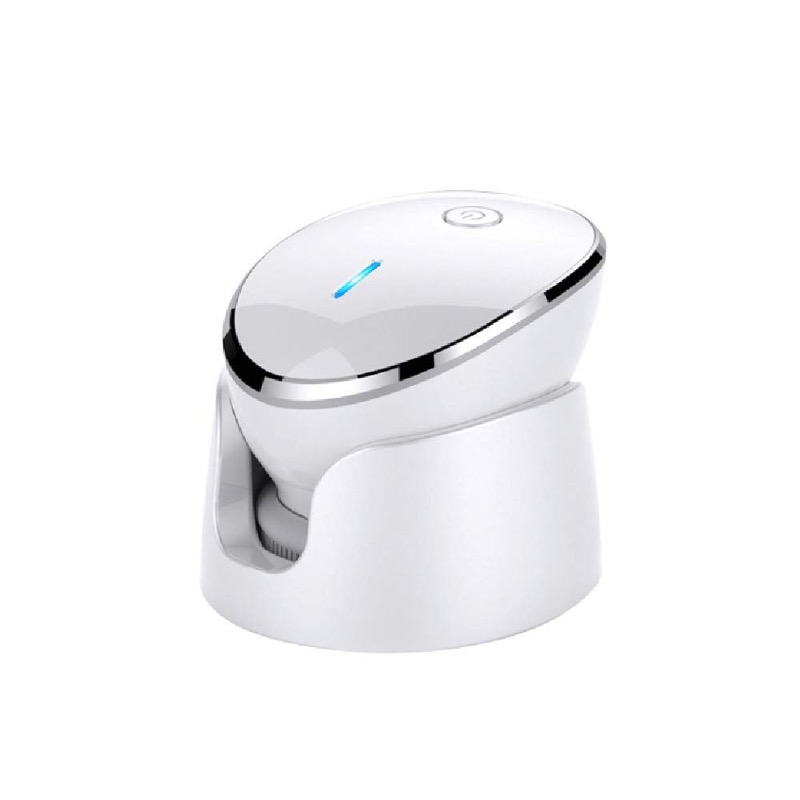
Silicone sonic facial cleansing brush, five modes
A retail example with the claim stack this guide examines: sonic, 8,000 ppm, removes 99.8% of dirt and oil, IPX7. Two of those are testable on a bench and none of them is a skin claim.
6. Motor and speed. At each setting, run 60 seconds on a table and compare noise and feel between units. Film the pad in slow motion against a reference grid to compare how far it moves. Press the pad against a firm surface and note whether the motor slows. Run 10 minutes and record body temperature. Compare units. If you need numbers, send a unit for vibration measurement.
7. Charging, runtime and button. Charge fully and time it. Run at the highest setting until it stops, then at a mid setting, and record both. Check the port and contacts for looseness. Press the button 2,000 times, including with wet fingers, and record misses and sticking. Check any auto-off timer. Request the battery documents and match model and capacity to the unit.
8. Cleaning and staining. Wash the pad as your instructions say: warm water, mild cleanser, rinse. Do it 20 times. Between washes, load the pad with foundation, sunscreen and a coloured cleanser. Look for staining, a film that does not rinse off, dulling and odour. Dry the device and check that water does not stay trapped in the joins. Record drying time.
9. Volunteer panel. Give units to at least eight adult volunteers with different skin types and no active facial skin conditions, with a protocol that follows the dermatology advice above: start once a week, light pressure, short sessions, clean after each use, and stop at any redness, stinging or discomfort. Ask about comfort, noise, feel in the hand, ease of cleaning and any irritation. Tell them to avoid inflamed or infected skin and see a professional if irritation persists. A usability check, not a skin study.
Manual pads and travel versions
Many sellers start with the manual product: a flat silicone pad or a hand-held scrubber with no motor, no battery and no port. That removes the electronics, the water-ingress risk and the transport paperwork, and concentrates the risk in three places.
Material and odour. With no motor to talk about, the material is the product. Run the silicone identification, odour and tackiness checks on every batch, and keep the supplier's declaration with the batch record.
Nub geometry. A manual pad moves only as hard as the user presses, so nub shape and hardness decide the feel. Compare units for nub height, spacing and hardness, and record the spread. Two units of the same model should feel the same in the hand; if they do not, the mould or material has drifted.
Drying and storage. A pad with a suction cup, loop or stand needs somewhere to dry. Check that water does not stay trapped under the pad or in the loop, and say so in the care note. Dermatologists stress cleaning after every use, so a pad that stays wet is working against that advice.
Travel versions add a case. Check that it closes without crushing the nubs, that it has vents so a damp pad is not sealed in, and that the pad does not stain the case. A sealed case with a damp pad is an obvious place for odour — put one in a closed case overnight after a normal wash and smell it in the morning.
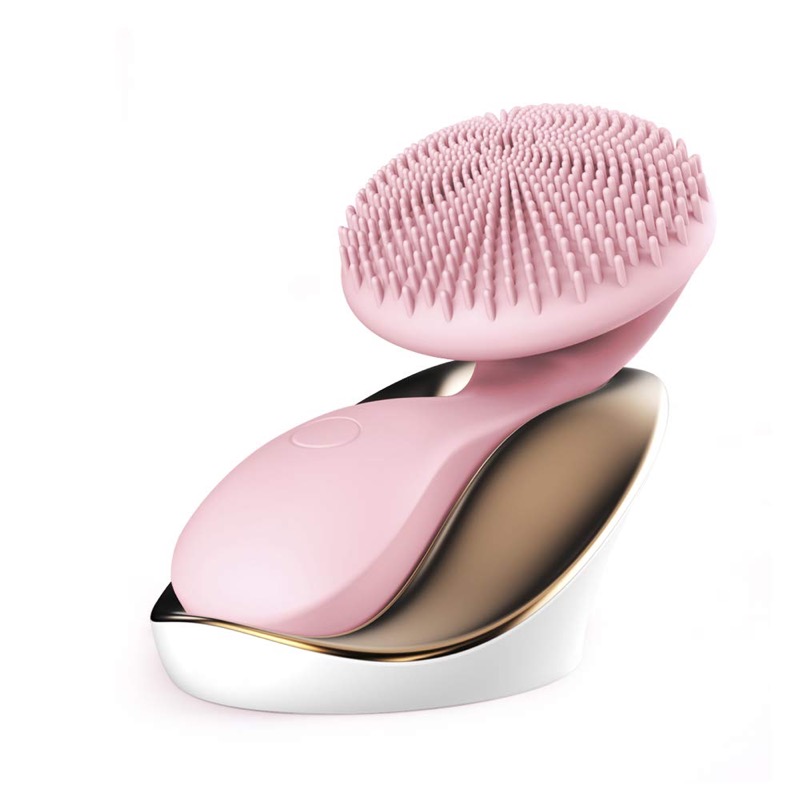
Compact silicone facial cleansing brush, four modes
A second build worth comparing: fewer modes, a smaller body and a rechargeable base. Fewer features means fewer things to fail, but the seam and port still need the water test.
Handling returns and complaints
Skin-contact devices attract complaints other accessories do not, and a short plan helps.
- Ask for the batch and the routine. Record the batch, frequency of use, cleanser and whether the customer has a skin condition. Do not diagnose anything.
- Tell customers to stop and seek advice. For irritation: stop using the product, and see a professional if it persists.
- Check your instructions first. Many complaints come from using the tool too often or too hard. If the complaint matches a pattern, change the instruction on the listing and the card.
- Keep a log by batch. A cluster of reports about odour, tackiness or a failing port from one batch is a signal to retest that batch.
- Write down what you will not say. Decide in advance that you will not tell a customer the product could not have caused a problem, and will not suggest a medical cause. Pass concerns to the customer's own clinician.
The supplier brief
- The silicone type, curing method and hardness, with a compliance declaration and a test report for your batch, naming the standards.
- The colourants and any additive, including anything described as antimicrobial, with the test report and method for any such claim.
- The body material and how silicone and body are joined, with a seam drawing.
- The motor type, speeds and measured data, and the vibration test method.
- The ingress protection rating, if any, with test report and conditions.
- The battery cell model, capacity, protection circuit, UN38.3 summary and safety data sheet.
- The charging method and any electrical safety testing for your market.
- Cleaning and care instructions they have tested.
- The packing method, carton drop test and expected failure rate.
- Minimum order quantity, lead time, sample policy and replacement terms, on the quotation and not in chat.
What your listing can say
- Material: "Silicone, Shore A (your measured value)". Use "food-grade" or "medical-grade" only with a document, and name the standard.
- Cleaning: "The silicone surface is non-porous and easy to rinse. Wash after every use." That follows what the dermatologists say about silicone.
- Use: "Start with once a week, use light pressure, and stop if skin becomes red or irritated. Do not use on inflamed or infected skin." Add a line that people with rosacea or eczema should ask a dermatologist first.
- Motor: the speeds you measured, if any.
- Water: "Rinse the head under running water" or a rating with a report. Not "waterproof" by itself.
- Battery: capacity, measured runtime, charge time.
Avoid "antibacterial", "35% more hygienic", "99.5%", "deep cleansing", "unclogs pores", "hypoallergenic" and "anti-ageing" without evidence for each.
Frequently asked questions
Is silicone better than nylon bristles for a face brush? Dermatologists in consumer articles say silicone is easier to clean and less likely to harbour bacteria because it is non-porous. That is a material property, and it does not make any one product safe for every skin.
How often should someone use a facial cleansing brush? Advice ranges from once a week for sensitive skin to two or three times a week for others. Defer to a dermatologist and state a gentle starting point.
Who should not use one? Dermatologists quoted above advise people with rosacea, eczema or active facial infection, including inflamed acne, to avoid or check first.
Is "medical-grade silicone" a real certification? It is a trade term. Suppliers link it to biocompatibility standards such as USP Class VI or ISO 10993. Ask for the document.
Does food-grade silicone mean it is safe for the face? Food-grade refers to food-contact rules. Suppliers say it is not automatically medical-grade. We did not research cosmetic-device rules.
Can I call it antibacterial? Not without a test report. The claims we found were from brands and affiliate sites.
Is a sonic brush better than a manual silicone pad? Reviews and brands say so, and dermatologists quoted say sonic silicone is gentler than rotating bristles. We found no independent comparison, so describe the construction.
What if a customer reports irritation? Ask them to stop using it and see a professional if it persists. Record the batch and the cleanser, and review your instructions.