Hard skin on the heels is one of the most common reasons people buy a foot-care tool, and the choice looks simple until you open a shopping page. Grey volcanic stones for a few coins, glass files promising "nano" technology, metal rasps that look like kitchen graters, battery rollers, and blade tools that shave skin off in strips. The listings share a vocabulary: "painless", "professional", "salon results", "safe for all skin", "hypoallergenic", "lasts for years", "podiatrist recommended".
The tools are not equally gentle, and the people who should not use them at all are rarely mentioned on the front of the pack. This guide sets out what dermatology and podiatry sources say about removing hard skin at home, how the tool types differ, where sources disagree about cleaning and replacement, and what to check when your order arrives. It does not recommend a brand and it is not medical advice.
One thing first, because it matters more than anything else here: if you have diabetes, poor circulation or reduced feeling in your feet, the sources below agree that you should not treat hard skin yourself. See a podiatrist or doctor.
For other small grooming tools, see nail clippers and mini nail file kits.
The short version
- The American Academy of Dermatology's home advice is modest: soak, file gently with a pumice stone, and do not take off too much skin.
- Hard skin forms to protect the skin underneath. If the pressure or friction that caused it continues, it comes back.
- Pumice is generally described as the gentlest option. Metal rasps remove more, faster, and are easier to overdo.
- Blade-type callus shavers are the tool professionals most often warn against for home use.
- People with diabetes, circulation problems or nerve damage in the feet should leave this to a professional. Some product labels say so too.
- Cleaning advice is consistent — wash and dry after every use. Replacement advice is not.
What hard skin is, and what the dermatology advice says
The American Academy of Dermatology (AAD) describes corns and calluses as hard, thickened areas that form because of friction or pressure, and says they develop naturally to protect the skin underneath. That single sentence explains most of what follows. A callus is the skin's response to a cause, usually footwear or the way weight falls on the foot. Filing removes the result. It does not remove the cause.
The AAD's home-care steps are short:
- Soak the area in warm water for about five to ten minutes, or until the skin softens.
- Dip a pumice stone in warm water and file gently, using circular or sideways motions.
- Do not take off too much skin, because that could cause bleeding and infection.
Reports of the same AAD release add: apply a moisturising lotion daily, looking for one containing salicylic acid, ammonium lactate or urea; use padding such as moleskin to protect the area; and wear shoes that fit. The dermatologist quoted, Nada Elbuluk, says most corns and calluses gradually go away when the friction or pressure causing them stops.
Two things stand out for a shopper. The only tool the AAD names is a pumice stone. And the advice is about gentleness and patience, the opposite of what a "removes years of hard skin in minutes" listing sells.
A New Zealand public health site gives similar advice with one difference: it suggests soaking for 20 minutes, and names a pumice stone or an emery board for hard skin that is only mildly uncomfortable and not red, swollen or painful. It also says trimming or paring a corn or callus must be done by a trained person such as a podiatrist. That is a clear line between abrading at home and cutting, which belongs to a professional.
Who should not do this at home
This is the part listings leave out.
Diabetes. The AAD's dermatologist says people with diabetes should see a dermatologist, podiatrist or orthopaedist about corns and calluses. The New Zealand health site says to get expert advice if you have diabetes or circulation problems. A US podiatry clinic goes further: people with diabetes should not use pumice stones, files, shavers or any abrasive device without a podiatrist's approval, because reduced sensation means you may not feel that you have gone too far and small abrasions can become serious infections.
Circulation or nerve problems. One retailer's listing for a glass foot file carries a warning not to use it if you have diabetes, neuropathy or any circulation disorder. A product warning that matches the medical advice is a good sign about the seller.
Pain, or anything that might not be a callus. The AAD says to see a doctor if the hard skin is very painful, if you are not sure what is causing it, or if you think it may be a wart. The dermatologist notes plantar warts can look similar but contain tiny black dots.
Broken or inflamed skin. A shopping guide advises against using a foot file on open wounds, cuts or scabs, or if you have psoriasis, eczema or an infection such as athlete's foot. An editorial source, but consistent with everything else here.
If any of these applies, the right purchase is an appointment.
The tool types, from gentlest to most aggressive
No standard ranks these tools. The order reflects how the podiatry and brand sources describe them.
Pumice stone. A light, porous volcanic stone. A podiatry clinic describes it as abrading gently and giving tactile feedback, and calls it the safest home option. It wears down as you use it.
Pumice-style or emery files. A handle with an abrasive pad or paper surface, closer to a large nail file. The New Zealand advice mentions emery boards alongside pumice. A shopping guide notes pumice-type files should be used wet, on wet skin, and are not recommended for dry use.
Glass or "nano glass" files. A flat piece of etched or textured glass, often on a handle. One brand claims its glass file removes rough skin without the harshness of metal graters or pumice and is more effective than traditional methods; those are the brand's words and we found no independent test behind them. A retailer's listing for another glass file says it works wet or dry and is easy to clean. One podiatry clinic places glass between pumice and electric tools for intensity.
Metal rasps. A perforated or etched metal surface, sometimes double-sided with coarse and fine faces. The podiatry clinic says metal files remove skin faster but offer less control, are more aggressive, are more likely to cause cuts and make it easier to remove too much. It suggests them only for an initial reduction of very thick hard skin, followed by a switch to pumice.
Electric rollers. A battery handle spinning an abrasive roller. The clinic's table calls these useful for convenience and larger areas but easy to overuse; another page from the same clinic tells readers to skip them entirely, saying they cause too many emergency visits. We note the inconsistency; either way the message is caution. Replacement rollers are the ongoing cost.
Blade shavers. A handle holding a razor blade that pares skin away. The clinic says these are not recommended for home use because of the risk of serious cuts. The New Zealand health site says paring must be done by a trained professional. A salon-supply company's blog says razor-style callus shavers are not allowed in a reputable salon unless single-use. This is the one category where every type of source points the same way. Leave it on the shelf.
Can filing make it worse?
One podiatry clinic says yes: over-aggressive use causes small injuries, and the body responds by building thicker hard skin. It recommends gentle weekly use, not hard daily grinding. That is stated by a clinic and echoed in a magazine-style article, not demonstrated in a study we could read, so treat it as a clinician's view. It fits the AAD's basic point that a callus is protective. If you file until the skin is pink and tender, you have removed protection the foot was building.
The practical conclusion is the same whichever tool you buy: a little, not often, and stop early.
Cleaning and replacing: where sources agree and disagree
Cleaning. Here the advice is consistent. A health magazine quotes a clinician saying the biggest concern with a pumice stone is that it collects bacteria, and that it should be cleaned after every use with a scrub brush. A foot clinic suggests boiling a frequently used stone every two weeks and adding bleach to the cleaning if it gets particularly dirty. A podiatry clinic suggests soaking in 70 per cent rubbing alcohol for five minutes between uses. A retailer's instructions for a glass file say to wash with soap under running water and keep it dry. A cleaning blog adds that a stone used on skin with athlete's foot or a fungal nail infection should be replaced straight away — a blog's suggestion, but an inexpensive precaution.
Replacing. Here it is not consistent.
| Source (type) | Pumice stone replacement |
|---|---|
| A US podiatry clinic (clinic blog; also earns affiliate commission) | Every 30 days |
| A question-and-answer site (unattributed) | Every three to four weeks |
| The same site, another page (unattributed) | Every two to three months |
| A foot clinic (clinic blog) | When it becomes smooth or worn |
The spread runs from three weeks to "when it stops working", and nobody explains how their figure was reached. The clinic's reasoning for monthly replacement is that pumice is porous and traps bacteria and fungi. Plausible, and a stone is cheap, so replacing often costs little. Just know the number is a rule of thumb.
For glass and metal files, an affiliate review site says they last for years. We found nothing to confirm or contradict that, and "lasts for years" on a listing has no test behind it. What can be said is that a non-porous surface is easier to wash clean than a porous stone — the argument for glass and metal on hygiene grounds — and the argument against them is how much skin they can remove.
Sharing. No source recommends sharing a foot tool. Given what they say about bacteria and fungal infections, keep one per person.
Terms the listing uses loosely
| Listing phrase | What it usually means | What to look for instead |
|---|---|---|
| "Painless" | Abrasive, not a blade | Any tool can hurt if overused |
| "Professional" or "salon grade" | Marketing | Professionals use sterile instruments and training |
| "Podiatrist recommended" | Rarely explained | The named podiatrist and what they said |
| "Nano glass" | Etched or textured glass | A clear photo of the surface; the brand's own care instructions |
| "Hypoallergenic" | No defined meaning here | The material stated in writing |
| "Stainless steel" | Possibly plated steel | Material stated; rust complaints in reviews |
| "Safe for all skin types" | Marketing | Medical sources exclude several groups |
| "Removes calluses instantly" | A coarse surface | Coarse means easier to overdo |
| "Wet and dry use" | The maker's claim | Whether instructions explain each |
| "Lasts for years" | Not tested | Whether the surface can be cleaned and whether refills exist |
| "Natural pumice" | Volcanic stone, or a moulded synthetic block | Stated material; both are porous |
| "Antibacterial" | Marketing | Wash and dry it yourself after every use |
One example shows why the material line matters. A review page lists a metal foot file as "premium nickel" and "hypoallergenic" in the same breath. Nickel is a well-known cause of skin allergy, and jewellery-type items sold in the EU and UK are subject to nickel-release limits for that reason, as we explain in the bobby pin guide. We have not tested that product and cannot say how much nickel it releases. But a listing pairing those two words has not thought hard about either. If you react to nickel, look for a material statement you can rely on, or choose glass or stone.
What to look for before you buy
Start with the gentlest tool that could work. For ordinary dry heels, that is pumice or a fine file. The AAD names pumice and nothing else.
A surface you can see. A good listing shows the abrasive surface close up. For metal rasps, look at the size of the holes or teeth. Bigger and sharper means faster and riskier.
Two grades, if it is a file. Double-sided tools with a coarse and a fine face let you finish gently. A coarse-only rasp does not.
A handle that will not slip. Feet are filed wet, soapy and at arm's length. A textured, non-slip handle matters more than its colour. A stone should be large enough to hold securely.
A stated material. Stone, glass, stainless steel, or abrasive paper on plastic. If the listing does not say, assume the seller does not know.
Honest warnings. A product page that tells people with diabetes or circulation problems not to use it is behaving responsibly.
Cleaning instructions. Every source says to clean after each use. A listing that says nothing about cleaning has skipped the most agreed-upon point here.
Replacement parts for electric tools. Check that rollers are sold separately and what they cost before buying the handle.
A hanging loop or stand. Tools that dry in the open are easier to keep clean than ones left on the shower floor.
Checks to run when it arrives
Our own suggested checks, not a standard and not a safety test. They catch an obviously faulty item while you can still return it. Do not test any tool on broken skin.
Packaging. Is it sealed, and is the item new? A foot tool that looks used goes straight back.
Material. Does the item match the listing: stone, glass or metal as described?
Surface. In good light, a stone should be evenly porous with no cracks. Glass should have no chips, especially at the edges. Metal should have no rust, loose flakes or bent teeth.
Edges. Run a cotton pad around the rim of a glass or metal file. It should not snag. A sharp rim can cut hand or foot.
Handle. Is it firmly attached? Twist it gently. Wet it and check your grip.
Coarseness. Draw the tool lightly across the back of a fingernail or a piece of card. You are checking that it abrades evenly, not that it is aggressive.
Smell and residue. A strong chemical smell or oily residue should wash off with soap. If it does not, return it.
Instructions and warnings. Do they mention cleaning, and who should not use it?
For electric tools. Does it charge, do the rollers lock firmly, and does it stop when pressed hard? Many are designed to stall under pressure; if yours does not, be more careful.
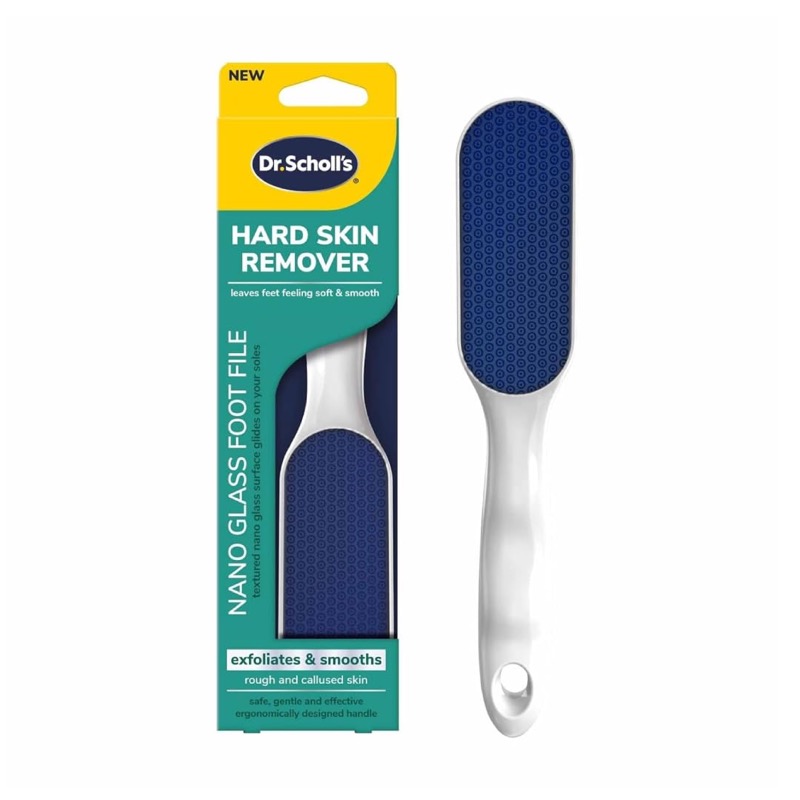
Nano glass foot file with handle
A retail example of the glass tier, which sits between pumice and electric tools for aggressiveness. The claims to test here are simple — does it rinse clean, does the surface wear, and does the handle grip when wet.
What a higher price should buy
We do not publish prices we have not verified. In this category the gentlest tool is also the cheapest, and paying more buys convenience, durability or a nicer handle, not safety.
Paying more can make sense for a glass or good metal file if you want something washable you will keep, or for an electric roller if reaching your feet is difficult. It does not make sense to pay for words — "nano", "professional", "podiatrist grade". And a higher price on a blade tool buys a sharper way to hurt yourself.
A simple comparison: divide the price by the number of months the maker says the tool lasts. A stone replaced monthly and a file kept for years can end up costing much the same. That is arithmetic on the sellers' own claims, not a tested lifespan.
Keep it or send it back
| Check | Keep | Query the seller | Return |
|---|---|---|---|
| Packaging | Sealed and new | Outer box damaged | Looks used or unsealed |
| Material | As listed | Unclear labelling | Different from listing |
| Surface | Even and intact | Minor cosmetic mark | Cracks, chips, rust or loose flakes |
| Edges | Smooth | — | Snags or sharp rim |
| Handle | Firm, grippy when wet | Slightly loose | Detaches or slips |
| Coarseness | Even | Coarser than expected | Tears card or scratches deeply |
| Smell and residue | None after washing | Faint | Persistent |
| Instructions | Cleaning and warnings included | Minimal | None |
| Electric function | Charges, rollers lock | Short battery life | Roller loose or will not lock |
Using and looking after it
A summary of what the sources say, not a substitute for the instructions with your tool or for professional advice.
- Soften first. The AAD says five to ten minutes in warm water; the New Zealand site says twenty. Either way, soft skin files more easily. Some glass and metal tools are sold for dry use; follow their instructions and be more careful, because dry skin gives less warning.
- Wet the stone. The AAD says to dip the pumice in warm water first.
- File gently. Circular or sideways motions, per the AAD. Stop well before the skin is pink or sore.
- Do not chase a result in one session. A podiatry clinic recommends gentle weekly use.
- Moisturise. A daily cream, ideally with salicylic acid, ammonium lactate or urea. Check with a pharmacist if you are unsure which suits you.
- Clean the tool every time. Scrub, rinse and let it dry in the open.
- Replace it when worn, or sooner if you prefer the cautious monthly rule for pumice, or straight away after a fungal infection.
- Deal with the cause. The AAD says to wear shoes that fit, and suggests shopping for them at the end of the day when feet may be slightly swollen.
- If you break the skin, treat it as a wound, keep it clean, and see a health professional if it does not heal or shows signs of infection.
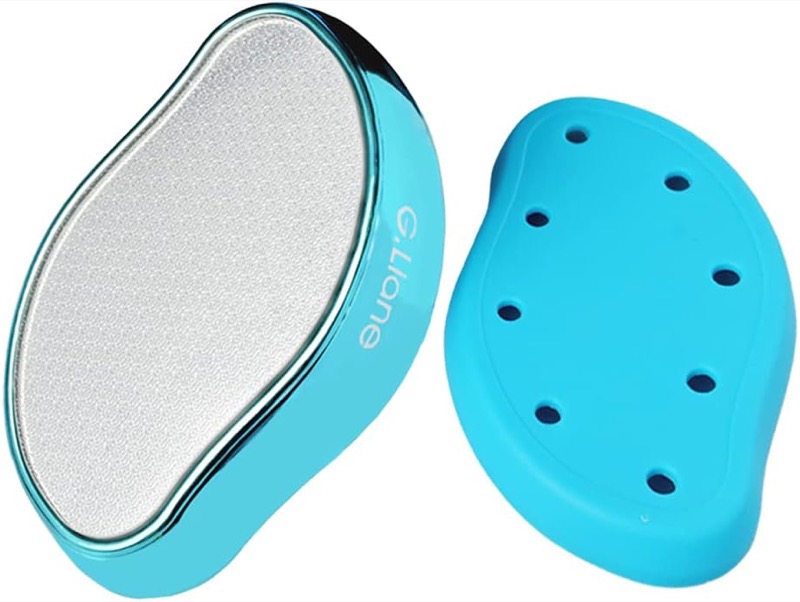
Crystal glass foot file, wet and dry
A second glass build, sold for wet or dry use. If you sell one, the dry-use claim is the one to be careful with: dry skin gives less warning, and the label should say so.
When to see a professional instead
- You have diabetes, poor circulation or reduced sensation in your feet.
- The hard skin is very painful, or you are not sure what it is.
- You see tiny black dots, bleeding or a dark spot in the middle.
- A corn with a hard centre does not improve after weeks of gentle care; a podiatry clinic says that is the point to book an appointment.
- The hard skin returns quickly in the same place. That suggests pressure from footwear or foot shape, which a podiatrist can assess.
What your listing can say
If you sell these tools, write only what you tested or can show.
Safe to print, if true:
- "Abrasive surface: stone / etched glass / stainless steel" (from the supplier, not inferred).
- "Use wet, on softened skin" — the AAD method.
- "File gently and stop before the skin is pink" — the advice every source gives.
- "Do not use if you have diabetes, poor circulation or reduced sensation in your feet" — the warning that matters most, and one that good listings already carry.
- "Rinse and dry after every use. Replace when the surface is worn."
- "Not for use on broken, inflamed or infected skin."
Avoid unless you hold evidence for each: "painless", "safe for all skin types", "podiatrist recommended" without a named podiatrist and statement, "hypoallergenic" (especially on a nickel-plated metal file), "antibacterial", "removes calluses instantly", "salon grade", and "lasts for years". We would also not use "professional results": professional treatment means sterilised instruments and training, not a coarser surface.
We are not lawyers, and this is not legal advice. Your market's rules may be stricter.
Frequently asked questions
Is a pumice stone or a foot file better? The AAD names pumice. A podiatry clinic calls pumice the safest home option and suggests metal files only for an initial reduction of very thick skin.
Are glass foot files gentler than metal? Brands say so, and one clinic ranks glass as moderate. We found no independent test.
Are electric callus removers safe? One clinic calls them useful but easy to overuse, and on another page advises skipping them. Use a light touch if you buy one, and not at all if you fall into the groups above.
Should I buy a callus shaver with a blade? The sources we read say no for home use. Paring is a job for a trained professional.
How often should I file? A podiatry clinic suggests gently, about weekly. No source supports daily grinding.
How often should I replace a pumice stone? Sources range from every three weeks to whenever it wears smooth. Clean it after each use whichever rule you follow.
Can I use a foot file if I have diabetes? The dermatology and podiatry sources say to see a professional instead.
Wet or dry? The AAD method is wet. Some glass and metal files are sold for either. Follow the maker's instructions.
Why does my hard skin keep coming back? The AAD says calluses form in response to friction or pressure and usually go when that stops. If the cause remains, so will the callus.
What does "podiatrist recommended" mean on a pack? Nothing specific unless a named podiatrist and their statement are given.