Buy a small amount of both before committing to either. Disposable pads absorb more and are easier to carry, which makes them the safer choice for the first heavy-leaking weeks, nights and outings. Reusable pads are softer and cheaper over time, which makes them the better fit for days at home once leaking settles. What matters more than the type is how often you change them — a damp pad held against sore skin is the part most likely to cause trouble.
That is a less exciting answer than a "best nursing pads" ranking, but it matches what the testers and the clinical sources say. Below: how the two types actually differ, what health sources say about moisture and irritation, how many to buy, and a checklist for reading a product page. It is general information, not medical advice.
For the last purchase before the baby arrives, see choosing a pregnancy pillow; for washing anything soft and small, the bra wash bag test.
Do you need nursing pads at all?
Not necessarily. Pads are for leaking, and leaking varies enormously. Guidance for new parents says leaking is usually heaviest in the first weeks while supply adjusts and often eases once feeding settles into a routine. For some people it stops after roughly three months; others leak for as long as they nurse. So the sensible start is not a 100-pack — it is a few pads and a few days of watching what your body does.
If you leak only a little, a folded cloth or a pad cut from a clean burp cloth can do the job, which is what parents on community forums describe doing. Treat that as a budget idea rather than a tested recommendation, and only if the cloth is clean, soft and changed as often as any other pad.
How do disposable and reusable pads really differ?
Testing labs that run multi-week trials with nursing mothers, alongside lab loading tests, give a fair summary of the trade-off.
| Disposable | Reusable | |
|---|---|---|
| Absorbency | Higher; many use the superabsorbent material found in some diapers | Varies widely; thin bamboo pads suit only light leaking |
| Feel | Some wear like a nappy on the chest; some show through clothing | Softer, more comfortable against the skin |
| Travel | Individually wrapped, easy to carry | Needs a wet bag |
| Cost | Cheap per pack, expensive per month if you change often | Higher up front, cheaper over years |
| Waste | Constant | Laundry instead |
| Common complaint | Weak adhesive; one tested pad crumpled overnight | Can shift; less absorbent when thin |
Testers tended to prefer reusables at home and disposables for outings, and several sources note that many parents end up using both. Read that as the common pattern rather than a rule.
One caution about all such reviews: the sites themselves say scores come from a limited number of testers, that contour and fit are personal, and that it is wise to try a few well-scored options before buying in bulk.
Are pads linked to thrush or irritation?
Be careful here, because the advice has been shifting. Manufacturer patient information on breast thrush says yeast tends to grow in moisture and suggests disposable pads changed more often than usual if you have it. That has a practical logic: a pad you throw away cannot carry yeast through the wash.
A breastfeeding support organisation takes a more cautious view of thrush itself. Its page says what was long attributed to nipple or breast thrush is much more likely to be something else, listing a shallow latch, vasospasm, skin conditions such as eczema or dermatitis, bacterial infection, milk blisters and a badly fitting pump flange among the possibilities. It notes that skin can become irritated from contact with breast pads and other milk collection devices, and that creams, including lanolin-based ones, can trigger irritation too. Its advice: persistent pain should be investigated before thrush is assumed.
For a buyer, the practical reading is this. If your nipples are sore, red, cracked or burning, a different pad may help, but the pad is probably not the cause, and the answer is a latch check with a lactation consultant or your midwife rather than a purchase. Signs that should prompt contact include pus, yellow discharge, crusting, cracks that will not heal, or a red, hot, hard and painful breast, which needs care immediately — and fever is on the same list.
If a clinician does diagnose thrush, ask them how to handle your pads. Guidance for parents suggests hot washing helps remove yeast from reusables, while manufacturer advice leans toward disposables, so the sources do not agree and your provider's instruction should win.
How many should you buy?
For reusables, a retail guide offers three to four pairs for light leaking and six to eight for regular leaking, with extra night pads if you leak heavily overnight; another source gives a similar six to eight pairs and notes you need more if you wash less often. These are retail numbers rather than clinical ones, but the logic holds: enough that a damp pair is always replaceable while another is in the wash or drying. Pads must be fully dry before reuse.
For disposables, start with one small box. Early on you may use close to one per feed, and heavy leakers will go through them faster.
A sensible first purchase for most people is one small box of disposables for nights and outings plus three or four pairs of reusables for daytime. After a week you will know which type is carrying the load, and you can buy more of that.
What shape and fit should you look for?
Fit is where reviews disagree most, because it depends on your bra and your body.
- Contour. A curved pad sits better under a bra than a flat one, though no contour suits every breast shape.
- Thickness. Thin pads disappear under clothes; thick pads absorb more. A direct trade-off — decide whether you are buying for the house or for the office.
- Adhesive strips. Disposables often include them, but testers found some did not hold. If a pad shifts, a snug nursing bra usually does more than adhesive does.
- Size. Some brands sell different diameters; a 4.5-inch pad and a 5.5-inch pad are not interchangeable on a fuller bust.
- Night versions. Higher-absorbency pads, often a different shape, are worth having if the first night leak soaks the bed.
If you wear a nursing bra with removable inserts or separate cups, check that pads and cups do not stack into a thick layer that presses on the nipples. The advice to avoid tight clothing that puts pressure on sore nipples applies here too.
What should reusable pads be made of?
Three things matter: the surface against the skin, the absorbent core, and any back layer. Cotton and bamboo blends are the common choices, and organic cotton is often recommended as gentle on sensitive skin.
Be sceptical of the word "bamboo" on its own. A brand guide advises looking for makers who are open about fabric processing, certifications and blend, because "bamboo" can mean a blend with other fibres. Two retail examples show what the detail looks like when it is published: one reusable pad lists an organic viscose inner layer, a three-layer build and an OEKO-TEX standard number, with a waterproof back layer; another lists a velour top layer, a ramie-cotton core and polyurethane waterproofing, with certification named per fibre.
Test results also puncture the assumption that natural means better: in one round of testing a natural cotton pad was bulky and stiff, a thin bamboo pad was comfortable but only for light leaking, and an eco-focused disposable was the least absorbent and soaked through fastest. Natural material does not guarantee performance, so look for evidence of absorbency — a test, or a review that says how long the pad lasted under real leaking.
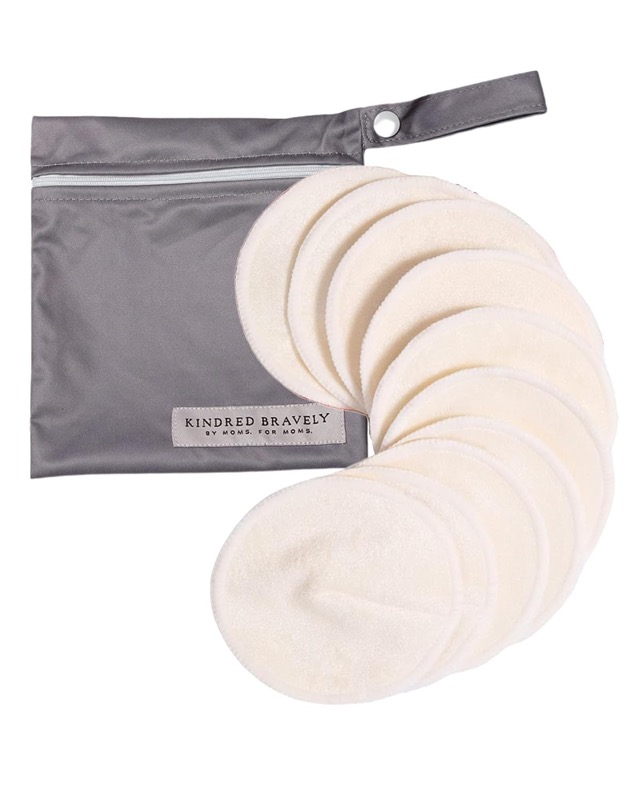
Reusable organic pads, 10 pack
Five pairs plus a wet bag, in a three-layer build with a named certification. This is what a reusable listing looks like when it publishes enough detail to compare: fibre by layer, diameter, wash instructions, and a waterproof back that you can judge against the moisture guidance above.
Washing reusables without wrecking them
Many reusables can go in the machine; others need hand washing, with a gentle detergent and thorough rinsing. A mesh laundry bag protects pads and stops them disappearing into the machine — the same logic as any small delicate, covered in the bra wash bag checklist. Two practical rules: wash before first use if the label says so, and make sure pads are completely dry before storing, since a damp stack is a moisture source in itself.
Why does moisture matter so much?
Because the skin you are protecting may already be sore. A medically reviewed patient guide on nipple soreness says soreness is usually caused by latch and positioning, with engorgement contributing. Its self-care advice includes changing nursing pads often to keep moisture away from the nipples and avoiding pads lined with plastic. Hospital patient libraries carry the same warning about plastic-backed pads, and add that mild soreness is common in the first one to two weeks and should then fade. Manufacturer guidance says too much moisture softens the skin and makes it more vulnerable, and advises soft, absorbent pads changed regularly.
This is why a pad that "feels dry on top" can still be a poor choice: if the back layer traps moisture against the skin, surface feel is not the whole story. Waterproof backing is a legitimate feature for protecting clothes at night, but it is worth knowing that the clinical sources above single out plastic backing as something to avoid when nipples are sore. If you want a waterproof layer, read what the maker says the layer is made of, and change the pad promptly.
Change frequency is the practical lever. Testers suggest changing every two to three hours when leaking heavily, which is why the cost of a "cheap" box adds up faster than it first appears. The simpler rule from parenting guidance: swap a pad as soon as it feels damp, and build checks into the day — on waking, at each feed, at bedtime.
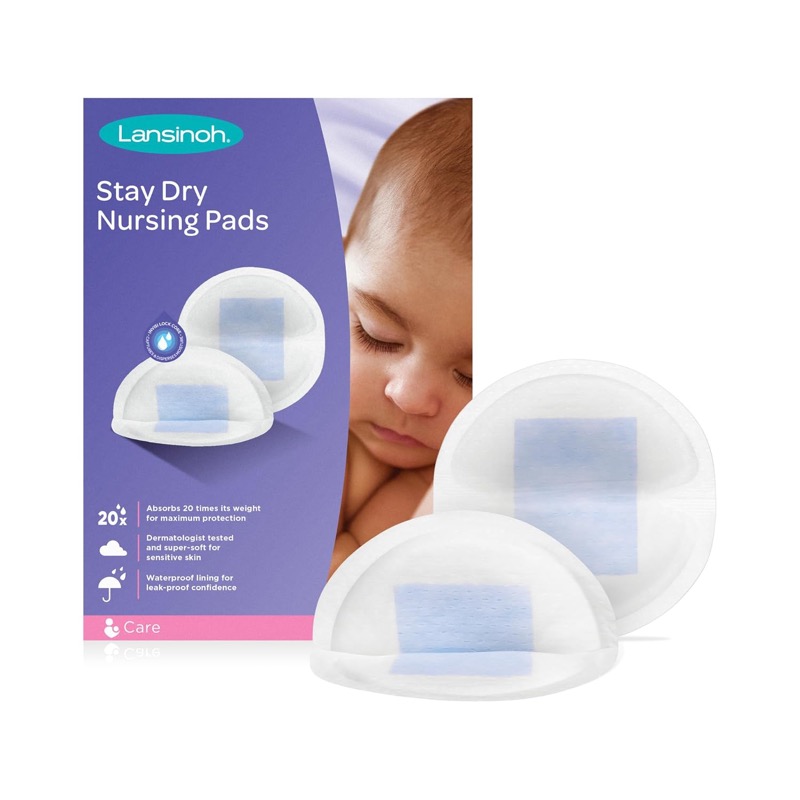
Disposable stay-dry pads, 60 count
A retail example of the disposable route: contoured, individually wrapped, with an adhesive strip and a waterproof backing layer. That backing is the feature to understand — it protects clothing, and it is also what the clinical guidance flags when nipples are already sore.
Are hydrogel pads and milk collectors the same thing?
No, and mixing them up is a common mistake. Retail and brand guides distinguish three products: absorbent pads for leaks, hydrogel pads that soothe sore or cracked nipples (comfort and healing, not leak protection), and silicone milk collectors that catch letdown. A reusable gel product in one testing round was designed to soothe rather than catch leaks, and its cleaning instructions have to be followed to reduce infection risk.
Breastfeeding support organisations and manufacturers both mention hydrogel dressings as an option for nipple care, stressing that they must be kept clean and changed regularly. If you have damaged nipples, ask a lactation consultant whether a dressing makes sense, and do not expect one to protect your top from leaks.
What should you check before you buy?
- What the pad is for. Absorbing leaks, soothing sore skin and collecting milk are three different products.
- The backing. If there is a plastic or waterproof layer, weigh it against the guidance to avoid plastic-lined pads when nipples are sore.
- Absorbency evidence. An independent test, not the words "ultra absorbent".
- Thickness and shape, matched to what you wear.
- Adhesive, if you want strips — and whether reviewers say they hold.
- Washing instructions: machine-washable, drying time, whether a hot wash is allowed.
- Pack size, so a spare exists while another pair dries.
- Return policy. Fit is personal, and testers suggest trying a few before buying in bulk.
What a listing should say
Print if true: the fibre of each layer, the diameter in inches, the pack count, whether the back layer is waterproof and what it is made of, wash and dry instructions including maximum temperature, certification numbers, and whether the pad is intended for leak protection or for soothing.
Avoid: "prevents mastitis", "cures thrush", "one size fits all", "hospital grade", and any claim that a pad fixes sore nipples. Soreness is usually a latch and positioning question; a pad that promises to solve it is selling past what it can do.
Frequently asked questions
How often should I change nursing pads? As soon as they feel damp. Medically reviewed guidance advises changing them often to keep moisture away from the nipples, and testers suggest every two to three hours when leaking heavily.
Can I wear them at night? Yes, if you change them when damp. Some people sleep on a towel instead of, or as well as, a pad.
Are reusable pads really cheaper? Usually over time, but they cost more at the start and need more laundry. One review round found reusables better for long-term value while another noted some cost more up front than expected.
Will pads stop my supply from adjusting? Nothing in the sources we read suggests pads change supply. They manage leaking, not its cause.
When does leaking stop? It varies. It often eases after the first weeks and stops for some within about three months, while others leak throughout nursing.
Do I need different sizes for day and night? Not necessarily, but a larger-diameter or higher-absorbency pad for nights is a common fix if you wake up wet. Check the diameter, not the label "night".